Everyone who buys media has the folder. Screenshot 2026-09-14 at 11.42.13.png, four hundred of them, no idea which brand ran which, or whether any of it still works.
A capture extension fixes the first half of that — one click instead of a screenshot. Only some of them fix the second half, which is the half that matters: knowing why you saved it, months later, when you're writing a brief.
And there's a third problem almost nobody designs for. The best reference you'll see this week is probably not in the Meta Ad Library. It's a Pinterest pin, a YouTube Short, a LinkedIn post from a founder, a Google Images result from a completely different category. If your tool only captures Meta, your swipe file quietly becomes a record of what your competitors did — and nothing else.
This is what to look for, what the main options do, and how to run a swipe file people actually open.
Inspiration doesn't only live in the ad library
Ask a good creative strategist where the last idea came from. It's rarely a competitor. It's a format they saw on Shorts, a layout from a pin, a photograph from a search, a comment thread under a founder's post. The ad library tells you what your category is doing. Everything else tells you what your category isn't doing — which is where the actual advantage sits.
| Source | What it's genuinely good for |
|---|---|
| Meta Ad Library | What competitors are running right now, and for how long |
| Instagram feed and reels | Native format conventions — what an ad has to look like to not look like an ad |
| YouTube Shorts | Hook pacing. The first 1.5 seconds, studied at volume |
| TikTok Ad Library / Top Ads / Spotlight | Format innovation ahead of Meta by a few months |
| Composition, colour, styling — the visual language of a category | |
| Google Images | Reference photography and the honest, unstyled version of a product |
| LinkedIn posts | B2B tone and objections, in the buyer's own words |
Two capabilities follow from that list, and they're the ones to check before you install anything.
Does it capture from all of them, or just Meta? A tool that saves Meta ads is a competitor tracker. A tool that also takes a pin, an image result, a Shorts video and a LinkedIn post into the same board is a swipe file. The difference shows up six months later, when every idea on the board has the same shape as the ads it was collected from.
Can you save from your phone? Most of what you scroll happens on a phone, on a Sunday. If saving an Instagram reel or a YouTube Short means emailing yourself a link to deal with on Monday, you won't do it. Sharing straight from the native share sheet into a board — the same gesture you'd use to send it to a friend — is the difference between a swipe file that grows and one that doesn't. On desktop that means a one-click save from the Meta Ad Library, Instagram, YouTube Shorts, the TikTok libraries, Pinterest, Google Images and LinkedIn; on a phone it means the share sheet. And the board it lands in should be scoped to a client, and to a location if you run multi-location accounts, because a Thane board and an all-locations board are different briefs.
What a capture extension has to do
| Requirement | Why it matters |
|---|---|
| Saves from more than Meta | Pinterest, Google Images, Shorts, TikTok, LinkedIn — inspiration is not category-bound |
| One click from wherever you are | If it takes three steps you'll go back to screenshots |
| Mobile share-sheet capture | Most scrolling is phone scrolling |
| Keeps the whole ad | Copy, headline, CTA, landing page, format — not just the image |
| Records how long it ran | The only honest public signal of whether it worked |
| Classifies it | Hook, offer, format, audience — so you can filter later |
| Boards scoped to client and location | Organised the way the work is organised, shared with the team |
| A path into a brief | Saving is filing. The point is the next ad |
The first five are mechanics. The last three are what separates a swipe file from a graveyard.
The options, honestly
Meta's own Ad Library. Free, authoritative, and the source everything else reads from. You can search any advertiser and see live creative. What it can't do: save, tag, compare or remember — and it only knows about Meta. It's a search box, not a workflow.
Foreplay publishes a Chrome extension listed as "Ad Library — Save Facebook TikTok". Strong swipe-file product with a large shared library; the extension is the capture layer for it. Best for teams whose main need is collecting and browsing ad inspiration at volume.
MagicBrief ships "MagicBrief — Save Facebook & TikTok ads", in the same category: capture into a hosted swipe file with team sharing.
Pinterest's own save button is the oldest version of this idea and still the best pure visual-reference tool. It just has no concept of an ad — no copy, no longevity, no offer.
Creative analytics tools (Motion and similar) sit the other way round: their strength is your own account's performance, with saved competitor ads as a supporting feature rather than the core.
Paid ad-spy libraries index millions of ads and sell search. Useful for breadth, weaker on the bit where research becomes a brief.
Marxx is the capture layer on top of a research and production workspace: it saves from the ad library, Pinterest, Google Images, TikTok, LinkedIn and Instagram, accepts shares from the phone, and drops the ad onto a client- and location-scoped board with its teardown attached — so the reason you saved it is still there months later, next to the account it informs. The same panel searches the ad library in plain language, so an empty board isn't a blank page.
Pick by what happens after the save. Everything on this list handles the click.
What a week of saving actually looks like
Six ads, six categories, three continents, captured in one sitting. This is the raw material a swipe file is made of — and the first thing to notice is how little any of them has to do with the others.
Start with auto finance, which has the hardest emotional job on this list: asking someone to take on debt.
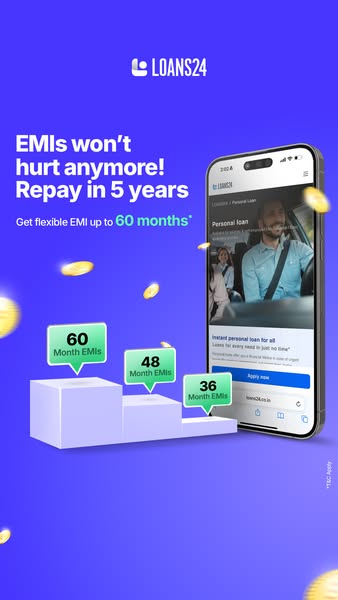
CARS24 doesn't argue that the loan is cheap. It argues that the month won't hurt — repay over five years, EMIs that don't bite. That is payment anxiety addressed directly rather than discounted away, and it ran 116 days, which makes it the strongest single data point in this whole board. File it under "reframe the instalment, not the price" and it transfers to any considered purchase.
Travel does the opposite and sells the feeling first.

Just us in Sri Lanka, over an infinity pool, with the ₹28,000 per person sitting quietly underneath. Ran 31 days. The useful thing to save here isn't the photograph — it's the decision to lead with the privacy of the trip rather than the price of it, in a category where every competitor opens with a number.
Fast fashion goes third, and it is the bluntest ad in the set.

Minimum 50% off, men's ethnic wear, delivered in sixty minutes. Ran 7 days — a short flight, because the speed promise and the discount both have a shelf life. Saved properly, it's filed as "logistics as the offer", which is a different idea from a discount and worth testing wherever delivery is genuinely faster than the category's.
Now step outside India, because a board that only holds one market holds one set of habits.
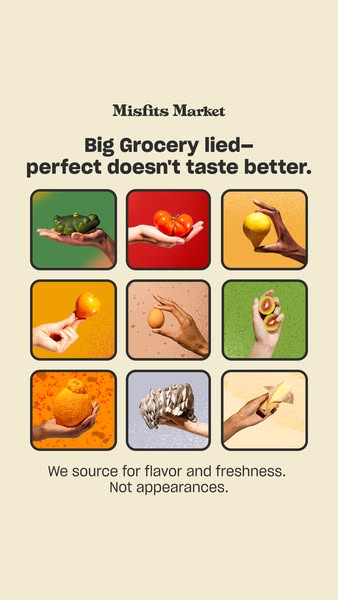
Big Grocery lied — perfect doesn't taste better. A US grocery brand indicting the entire category rather than praising itself. Ran 4 days, so this is not a proven workhorse — but the hook structure is the thing being saved, not the result. Category-indictment hooks travel well, and they almost never come from your own competitors, because your competitors are the category.
The next one is the reason to save from outside the ad library at all.
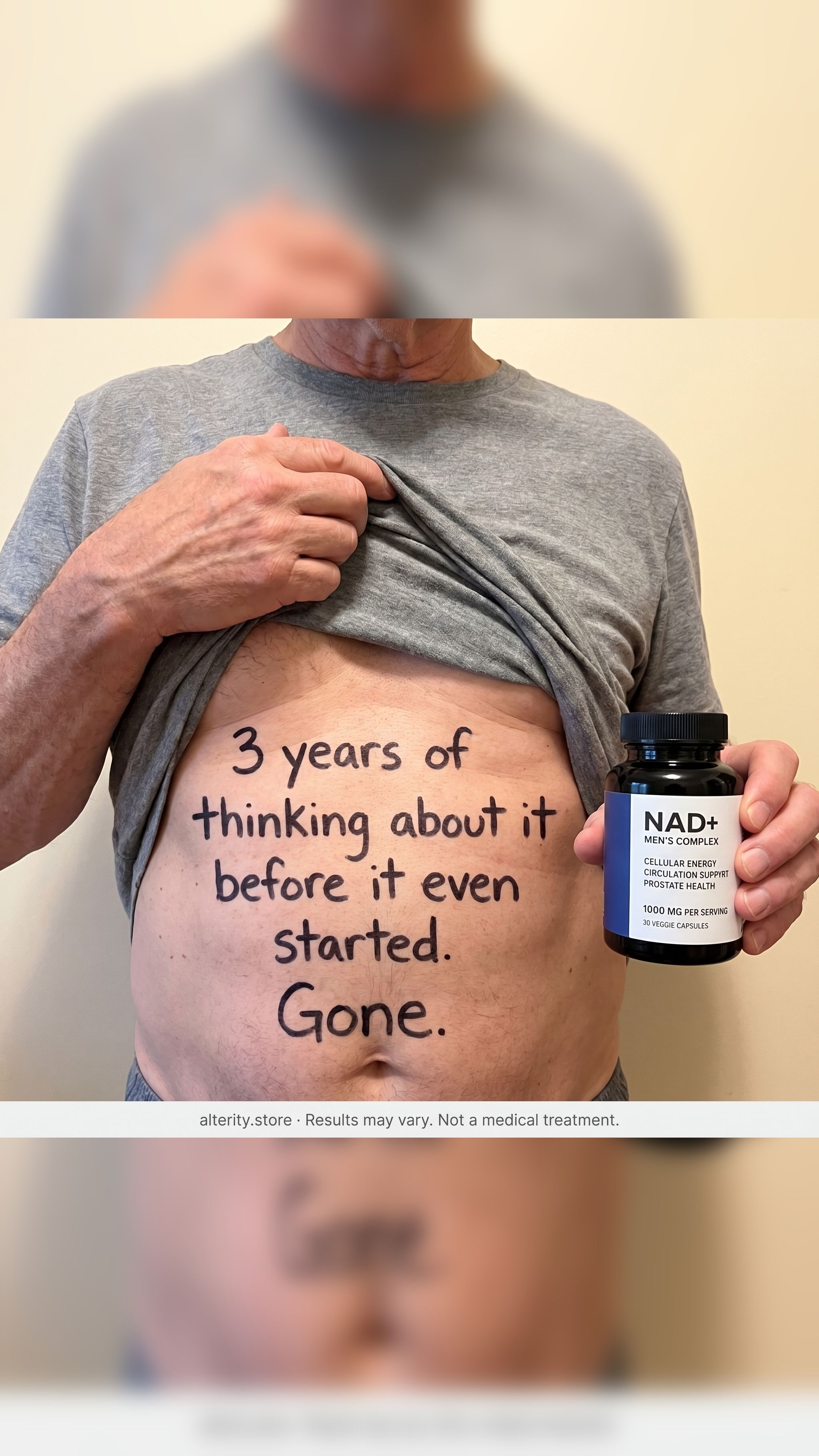
A supplement brand for men over forty, with the hook written directly onto skin. Bring back the old you. Ran 22 days. That device — handwriting as the entire layout — is a Pinterest and editorial convention long before it was an ad convention, and if you only ever capture ads you will never see it until a competitor does it first.
Sixth, the one that proves wit survives any budget.
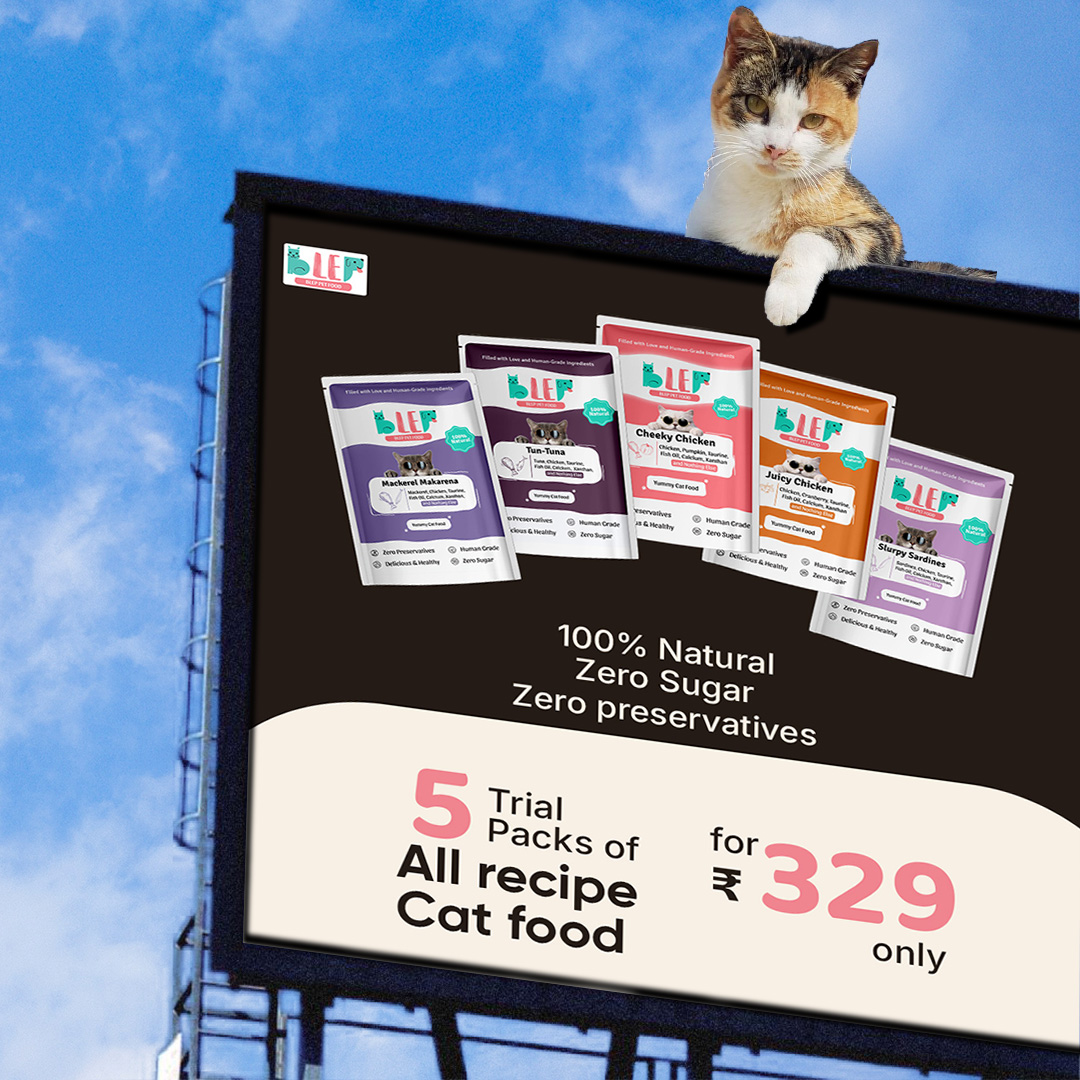
A cat sitting on top of a billboard advertising its own food, five trial packs for ₹329, 9 days in market. A premium Indian pet-food brand, and the visual joke does the whole job of establishing that this is not mass-market kibble.
Auto finance, travel, fashion, grocery, supplements, pet food. India, the US, and a format borrowed from print. None of them is a competitor of the others, and that's the point — a board that only holds your own category is a board that will only ever produce your category's ads. As a folder of PNGs, though, all of that is decoration. The question is what each one is filed as.
Saving is easy. The tags are the product.
A screenshot in a folder gives you Screenshot 2026-09-14 at 11.42.13.png, and in three months the only honest caption for it is "why did I save this?" The same ad as a record gives you the brand and its category, the source it came from, the hook type, the offer and the job the offer is doing, the format, how long it ran, and one line on what you'd steal. That last field is the one everybody skips and everybody later wishes they had.
Three real examples of what that record looks like once it's filled in.
1. The ad that isn't a campaign — it's the engine.
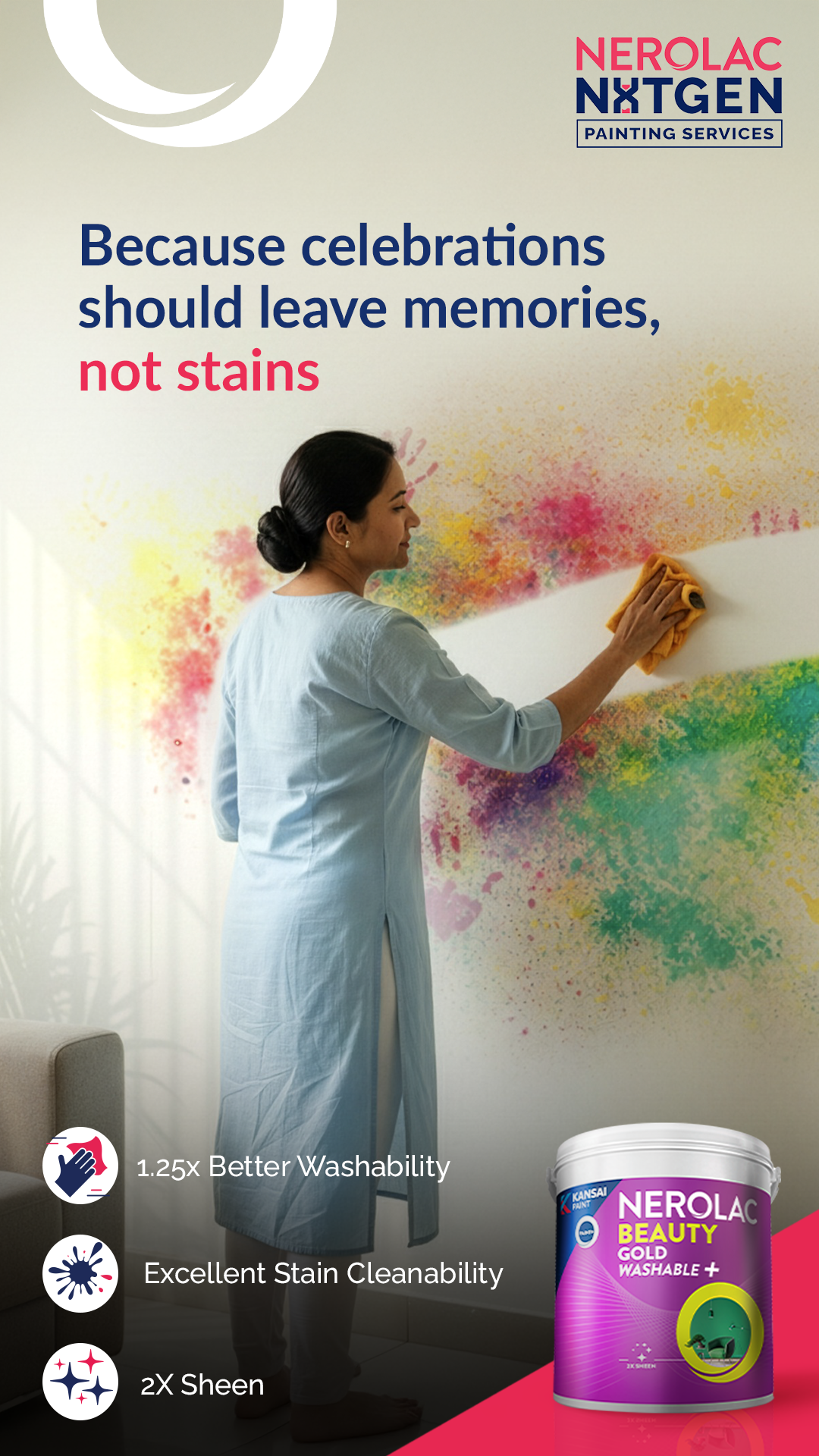
A paint brand selling painters. Most teams would file this under "seasonal home improvement" and move on, which is exactly how a good finding gets lost.
| Tag | Value |
|---|---|
| Hook | Service promise, not product claim |
| Offer's job | Hesitation-reducer — removes the "who will actually do the work" problem |
| Format | Text-led static |
| Longevity | ran 128 days |
| Filed under | Service wrapper on a commodity product |
The 128 days is the finding. This isn't a festive push, it's how they acquire — four months of continuous running is a verdict, not an experiment. Transferable to anyone whose product requires effort after purchase: paint, flooring, furniture, equipment, software.
2. The ad whose proof is a person, not a claim.
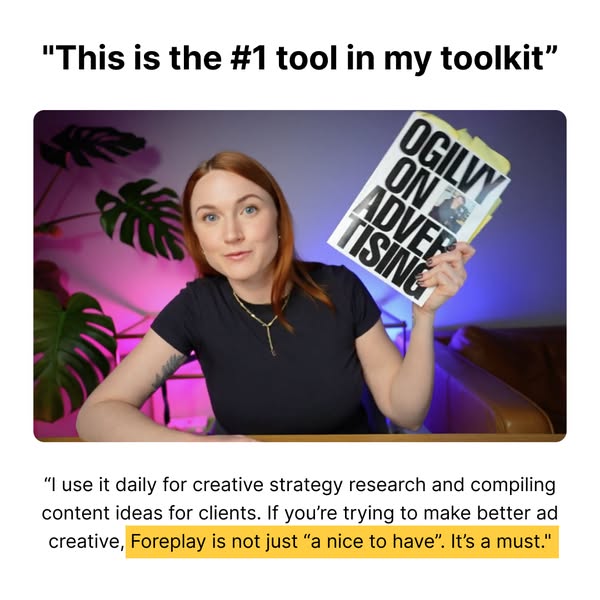
A swipe-file tool advertising itself with a named practitioner's quote — this is the #1 tool in my toolkit — under three words of its own.
| Tag | Value |
|---|---|
| Hook | Superlative, borrowed from a named user |
| Offer's job | None — the ad is pure credibility |
| Format | Testimonial static, quote-led |
| Longevity | ran 89 days |
| Filed under | Named-practitioner proof in a crowded tool category |
Nearly three months on a single testimonial, in a category where every competitor is shouting about features. Worth saving precisely because it argues nothing: in a market where buyers assume all the products are similar, the only differentiator left is who already uses it.
3. The one that's still live — and what that costs you to know.
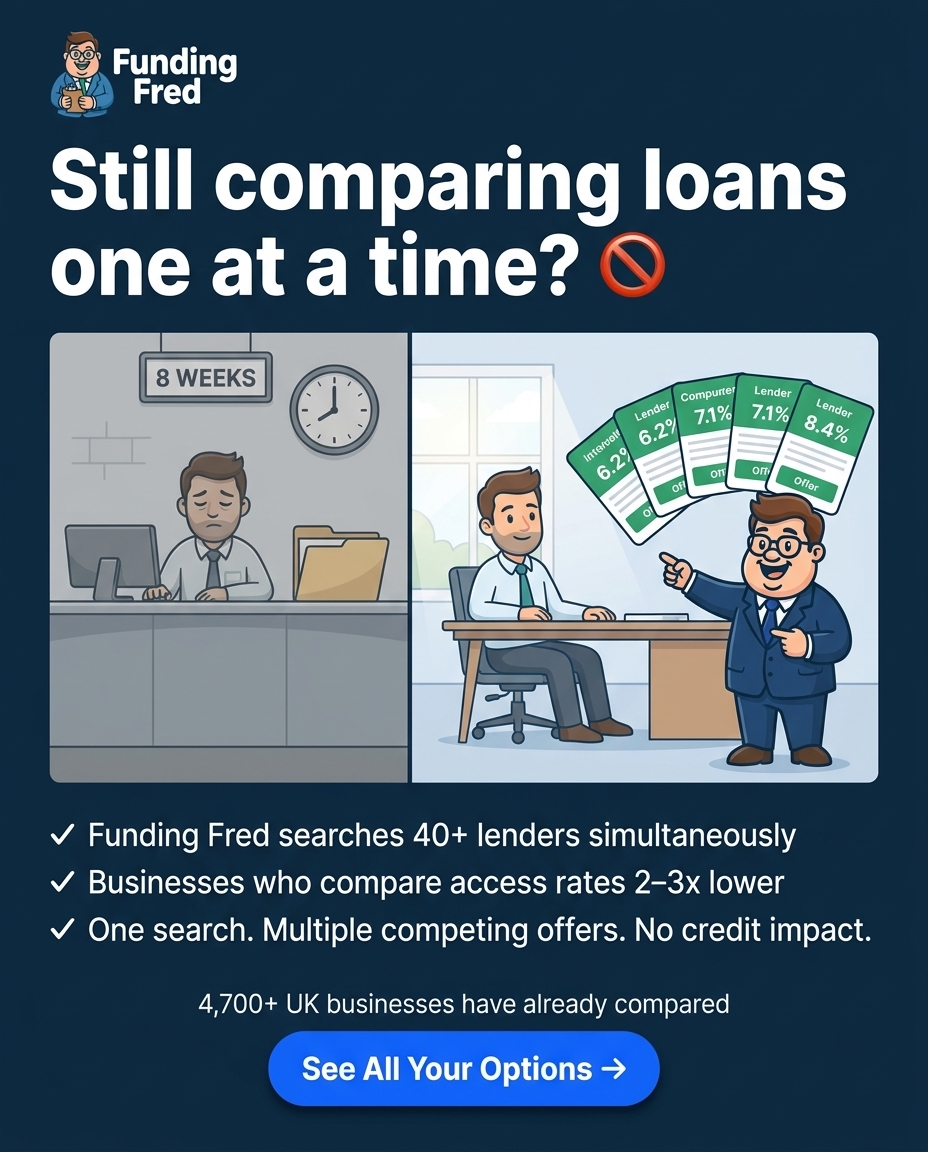
A UK lender asking a question its buyer has definitely asked themselves: still comparing loans one at a time?
| Tag | Value |
|---|---|
| Hook | Question naming a tedious process |
| Offer's job | Accelerator — the whole promise is "all of them at once" |
| Format | Before-and-after static |
| Longevity | still running — live 48 days |
| Filed under | Process-friction hooks, finance |
A still-live ad is a live experiment you get to watch for free. Save it, check it again in three weeks, and the category will have told you something no report will: if it's still there at 70 days, the friction angle is beating the rate angle for a whole market's worth of buyers.
How to run a swipe file people open
- One board per client, and per location if you run them. Never one giant "inspiration" folder.
- Save from outside your category on purpose. Aim for one in three saves to come from Pinterest, Shorts, Google Images or LinkedIn rather than a competitor's ad.
- Write the reason on save. One line: what you'd steal. If you can't write it, don't save it.
- Save the long-runners, not the new launches. Anything past 60 days is telling you something.
- Review monthly, not never. Ten minutes, delete half.
- End at a brief. A board that never produces an ad is a Pinterest account.
Rule two does most of the work, and this is what it buys you. An Australian grocery brand running a "2025 me versus 2026 me" contrast:
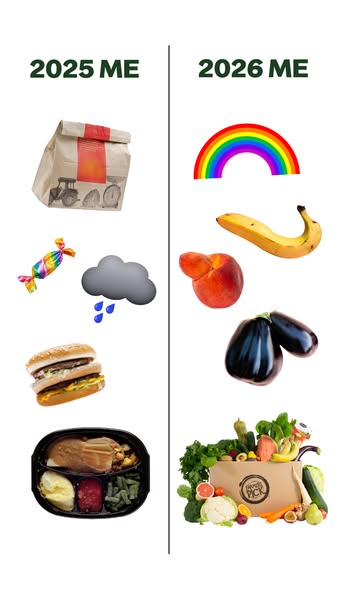
Ran 11 days. The structure is a meme format, not an ad format — and it arrived in advertising from social, where this brand's buyers already spoke that way. You find devices like this by scrolling things that aren't ads, which is precisely what a Meta-only extension cannot help you do.
Rule four is the other half. The temptation is always to save the newest thing, and new launches are guesses — somebody's hypothesis from last Tuesday. A long run is a verdict. And occasionally a long run comes attached to almost nothing at all:
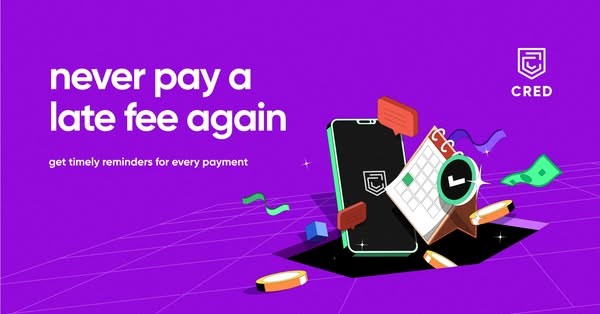
paid on time. every time. Lower case, a near-empty frame, no offer, 21 days. You would not screenshot this, because there is nothing to look at. Filed properly — restraint as the differentiator in a category that shouts — it becomes one of the more useful things on the board, because it is the only ad in your folder arguing that less is a strategy.
Competitors' ads teach you the category ceiling. Everything outside the category is where you get past it.
Install the Marxx extension: save any ad, auto-classified
Save from the Meta Ad Library, Pinterest, Google Images, the TikTok libraries and LinkedIn with one click — and share Instagram posts and YouTube Shorts straight into a board from your phone. Each save lands on a client- and location-scoped board with its teardown attached: hook, offer, format, audience and how long it has been running. Ask the panel for anything across the ad library in plain language, and carry the board through to a brief on the production canvas.
Book a demo and we'll set up your first board on the call. The creative intelligence page explains how each saved ad gets decoded.
FAQs
What is an ad library Chrome extension?
A browser extension that saves ads you find in the Meta Ad Library, your own feed, or elsewhere on the web into a searchable swipe file, usually with the copy, landing page and format captured alongside the image.
Can I save inspiration from Pinterest and Google Images too?
With some extensions, yes — and you should. Pinterest carries a category's visual language and Google Images carries unstyled reference photography, neither of which appears in an ad library. Tools built only around Meta will not capture either.
How do I save an Instagram post or a YouTube Short?
On a phone, through the native share sheet — hit share and send it to a board, the same way you'd send it to a chat. That's what keeps a swipe file growing, because most scrolling doesn't happen at a desk.
Is there a free way to save Facebook ads?
Meta's Ad Library is free to search and you can screenshot anything, but there's no native save, tag or board. That's the gap extensions fill.
What should I tag a saved ad with?
Source, hook type, offer and its job, format, audience, how long it has run, and one line on why you saved it. The last one is the field everyone skips and later wishes they had.
How do I know if a competitor's ad is working?
You can't see their spend. What you can see is how long it has been live and how many near-identical copies are running — longevity and copy count are the honest public signals.
How many ads should a swipe file hold?
Fewer than you think. A board of 30 ads you can explain beats 400 screenshots you can't.
Sources: Foreplay's Chrome extension listing, MagicBrief's Chrome extension listing