# Best AI Video Generators for Ads (Not Just Pretty Clips)
> The category optimises for render quality. Ads need a hook, a voice, captions and nine ratios. Five tool categories scored on the gap between a clip and a shippable ad.
- **Author**: Marxx
- **Published**: 2026-10-03
- **Category**: Production
- **URL**: https://marxx.ai/posts/best-ai-video-generators-for-ads
---
Every AI video tool demos the same way: a slow push through a neon-lit street, a product rotating in impossible light, a model turning to camera. It looks like a trailer. It costs nothing. It is genuinely remarkable.
It is also not an ad.
An ad has to stop a thumb in under a second, make a claim someone believes, handle an objection, show a price or a promise, and end somewhere you can click -- then do all of that again in nine aspect ratios and four languages. Render quality is maybe the fifth most important thing in that list, and most of this category is optimised entirely for render quality.
So this comparison scores tools on the gap between **a clip** and **a shippable ad**, and it groups them by what they're actually for, because buying the wrong category is how teams end up with a folder of beautiful footage and nothing to launch.
*No pricing below. Plans in this category change monthly and a stale number is worse than none -- check the vendor's own page.*
## What an ad needs that a clip doesn't
| Requirement | Why a shot generator can't give it to you |
|---|---|
| **A hook in the first second** | Generators optimise for the whole clip, not the frame that stops the scroll |
| **A spoken claim** | Needs a script and a voice, not a visual |
| **A face people believe** | Synthetic beauty reads as advertising; synthetic *ordinariness* reads as a person |
| **Burned-in captions** | Most feeds play muted. A silent beautiful clip says nothing |
| **An offer and an end card** | Pure generation has no concept of a CTA |
| **Nine aspect ratios** | Feed, Reels, Stories, placements -- reframing is its own job |
| **Variants that differ meaningfully** | Four renders of one idea is one ad, four times |
Any tool you're evaluating should be scored on how many of those seven it hands you finished. Most hand you one.
## The five categories
### 1. Shot generators -- text or image to video
**Runway, Google Veo, OpenAI Sora, Kling, Luma Dream Machine, Pika, Higgsfield.**
The best-looking output in the category and the furthest from an ad. You get footage: no script logic, no captions, no end card, no ratios, no concept of an offer. Brilliant as a source of B-roll and impossible shots you'd otherwise license or film.
Buy one if your bottleneck is *footage*. Most teams' bottleneck isn't footage.
### 2. Avatar and spokesperson tools
**HeyGen, Synthesia, Argil.**
A presenter reads your script. Strong for explainers, training and multilingual versions of the same message; weaker for cold social, where a corporate presenter in a clean background looks like exactly what it is.
The real capability here is **language**. One script, one avatar, a dozen markets -- which matters more in India than almost anywhere.
### 3. AI UGC actors
**Arcads, Creatify, Icon, Topview.**
The fastest-moving part of this category, and the one closest to a working ad: a synthetic ordinary person, in an ordinary room, saying your hook to camera, with captions. It directly replaces the creator brief, the shipping, the scheduling and the two-week wait.
Judged honestly: good for hook testing at volume, weaker when the ad needs a demonstrable result or genuine product handling.
### 4. Assembly, captions and editing
**Captions, Descript, VEED, Canva.**
Unglamorous and frequently the actual bottleneck. Captions, trims, hook swaps, reframing, end cards. A team with great footage and no assembly layer ships slower than a team with mediocre footage and a good one.
### 5. End-to-end ad workflow
**Marxx, AdCreative.ai, Pixis, Creatify's fuller tiers.**
Brief in, launchable ad set out. The pitch is that script, voice, face, captions, resize, variants and publishing live in one place instead of across four subscriptions and a Drive folder.
## The evidence nobody in this category prints
Here's a test you can run on any AI video vendor: **look at their own ads**.
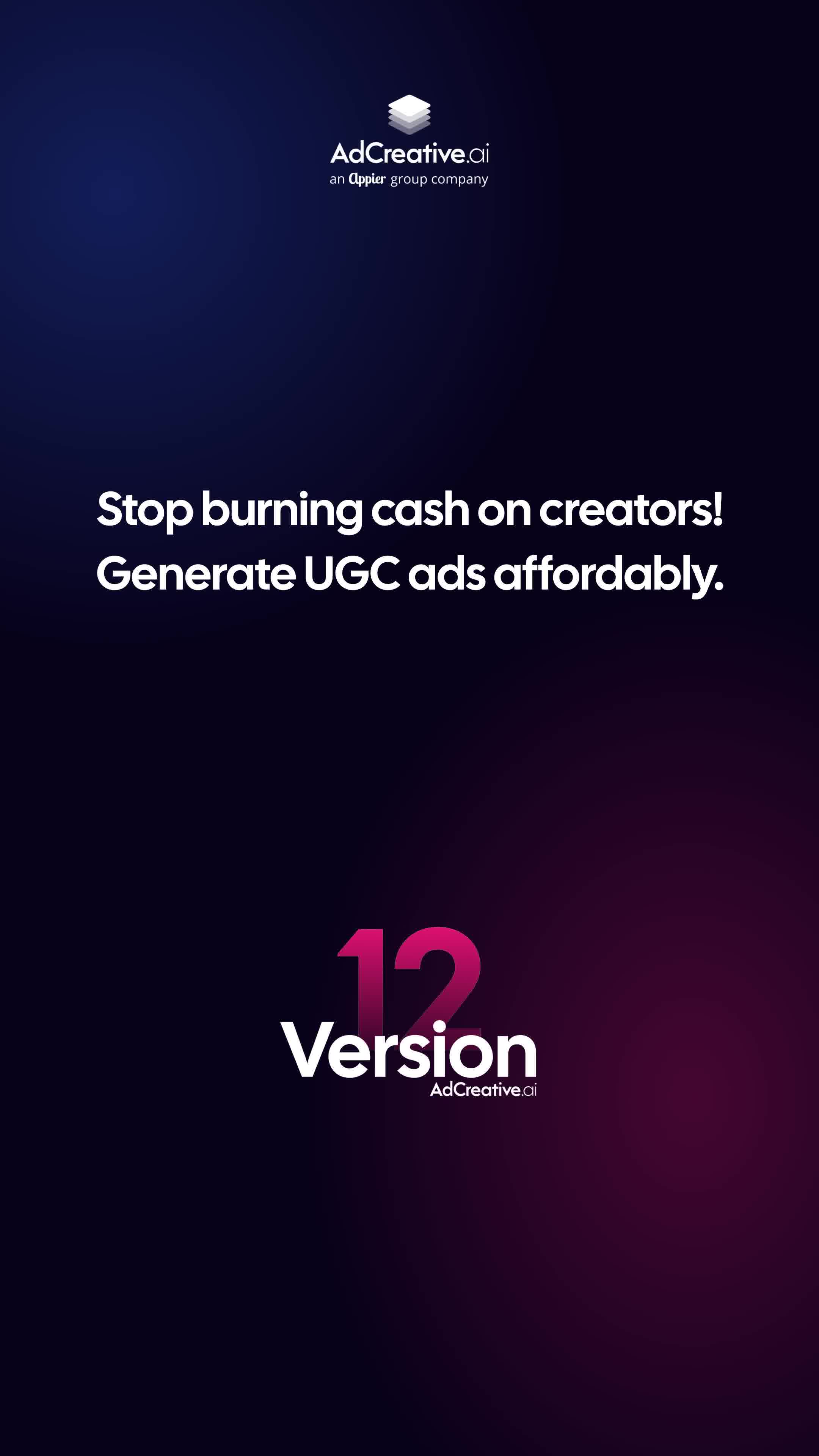
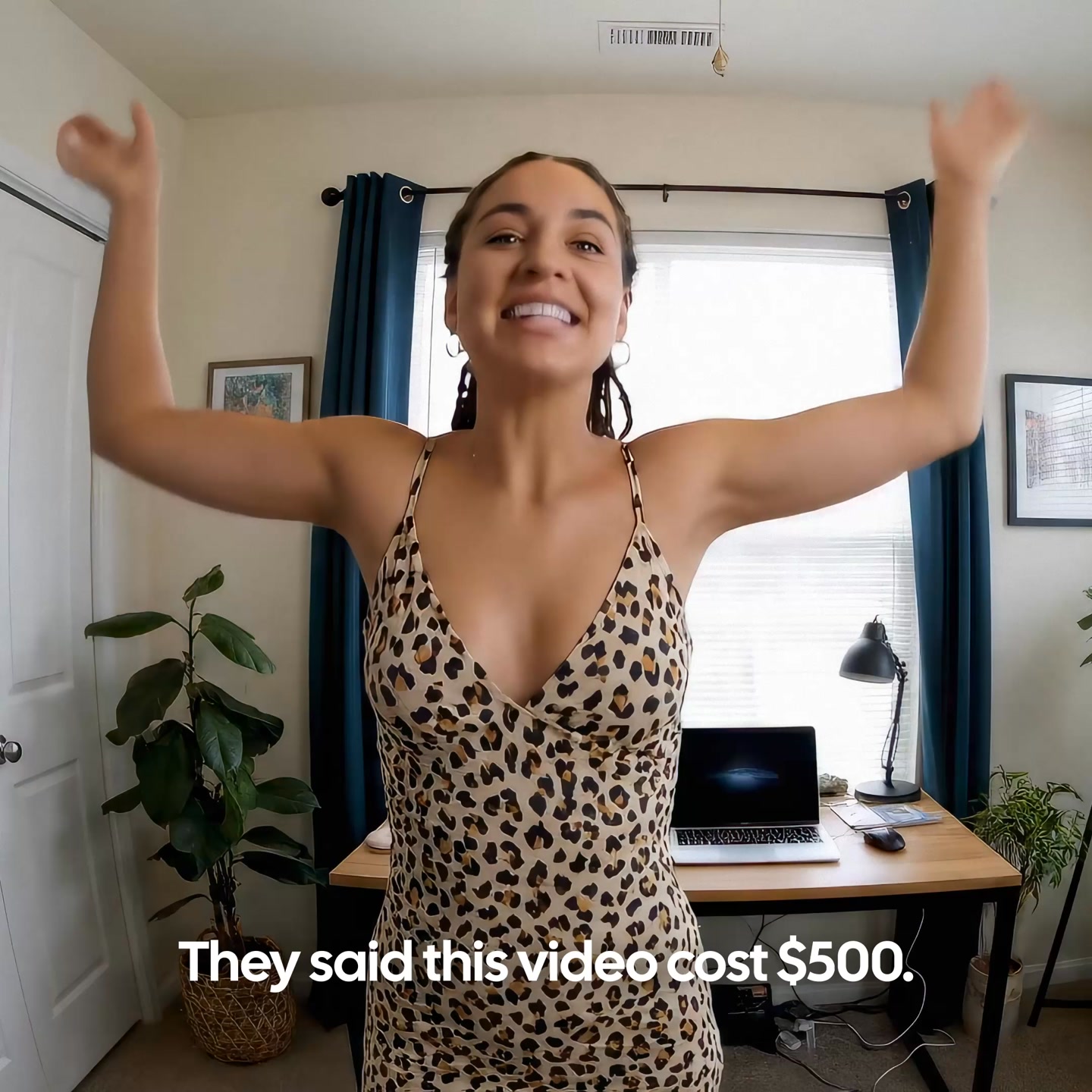
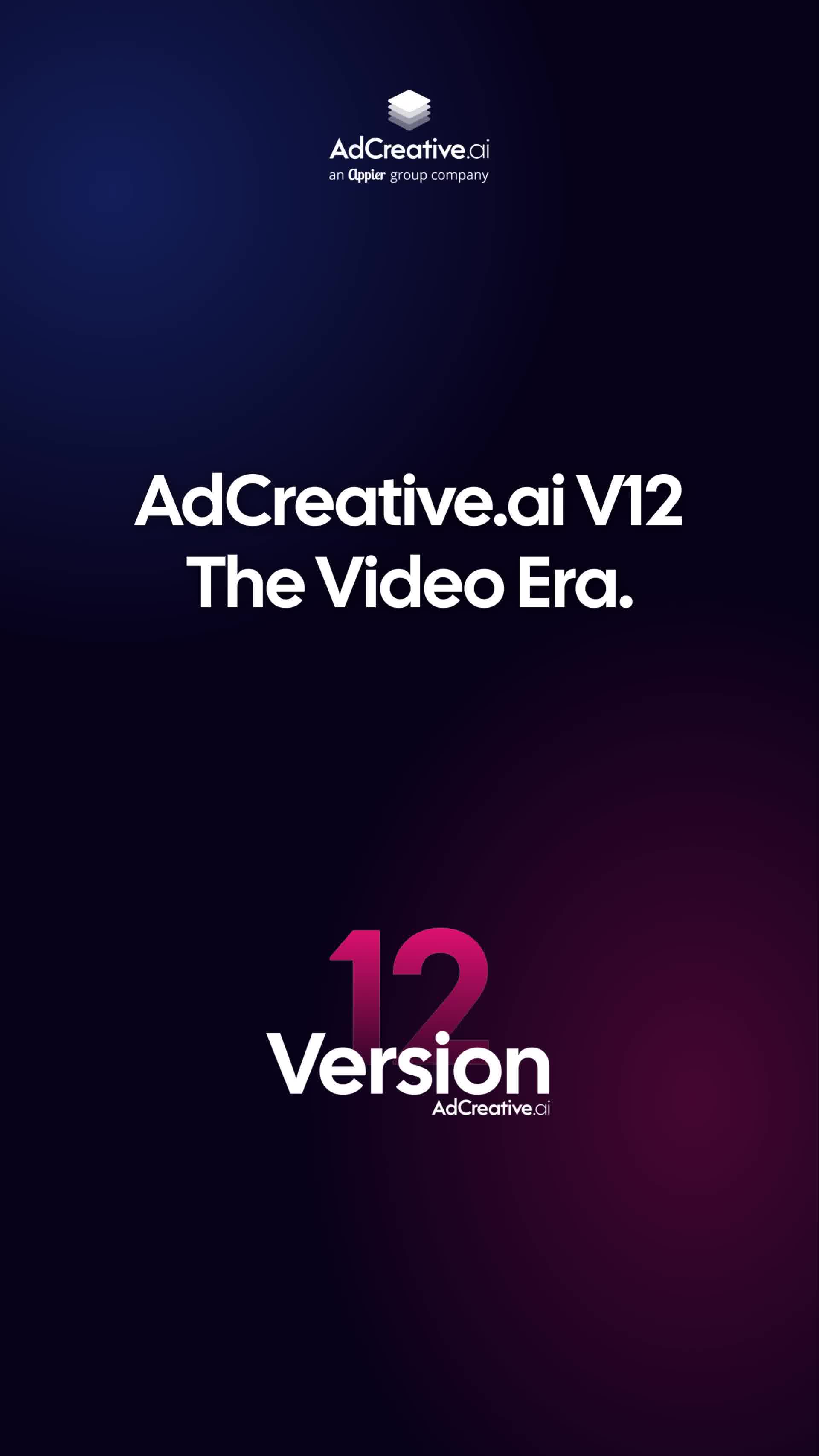
AdCreative.ai launched a video-generation release built on stock AI video and AI UGC creators, and advertised it with AI-generated video. Three of those ads, in descending order of how long they survived:
*Stop burning cash on creators -- generate UGC ads affordably.* **Ran 5 days.** The best of the three, and notice why: it's the only one of them naming a cost the buyer is actually bearing.
*They said this video cost $500.* **Ran 2 days.** An AI-generated creator, in a real-looking room, and the hook is about how cheap the video was to make.
*AdCreative.ai V12 -- the video era.* **Ran 0 days.** A product-version announcement, which is as far from a buyer's problem as this category gets.
Be fair: these are launch ads, and launch ads are short by design. But look at what the hooks are about. *They said this video cost $500.* *The video era.* Both are about the video being impressive. Only the first of the three -- the one that lasted longest -- mentions something the buyer is losing money on.
That is the category's whole pathology in three headlines. When the output is the selling point, the ad ends up arguing about production value with a viewer who doesn't care about production value.
## What actually stays live
Now the other side. These are the long-runners from the same pull, and not one of them is winning on render quality.
Misfits Market -- *you've been settling, Big Grocery counts on it* -- set as a block of type. No footage, no product shot, no model, no render of any kind. **Still running, live 181 days.** If you need one fact to settle the render-quality argument, this is it: six months in market for an ad a generator could not have made any part of.
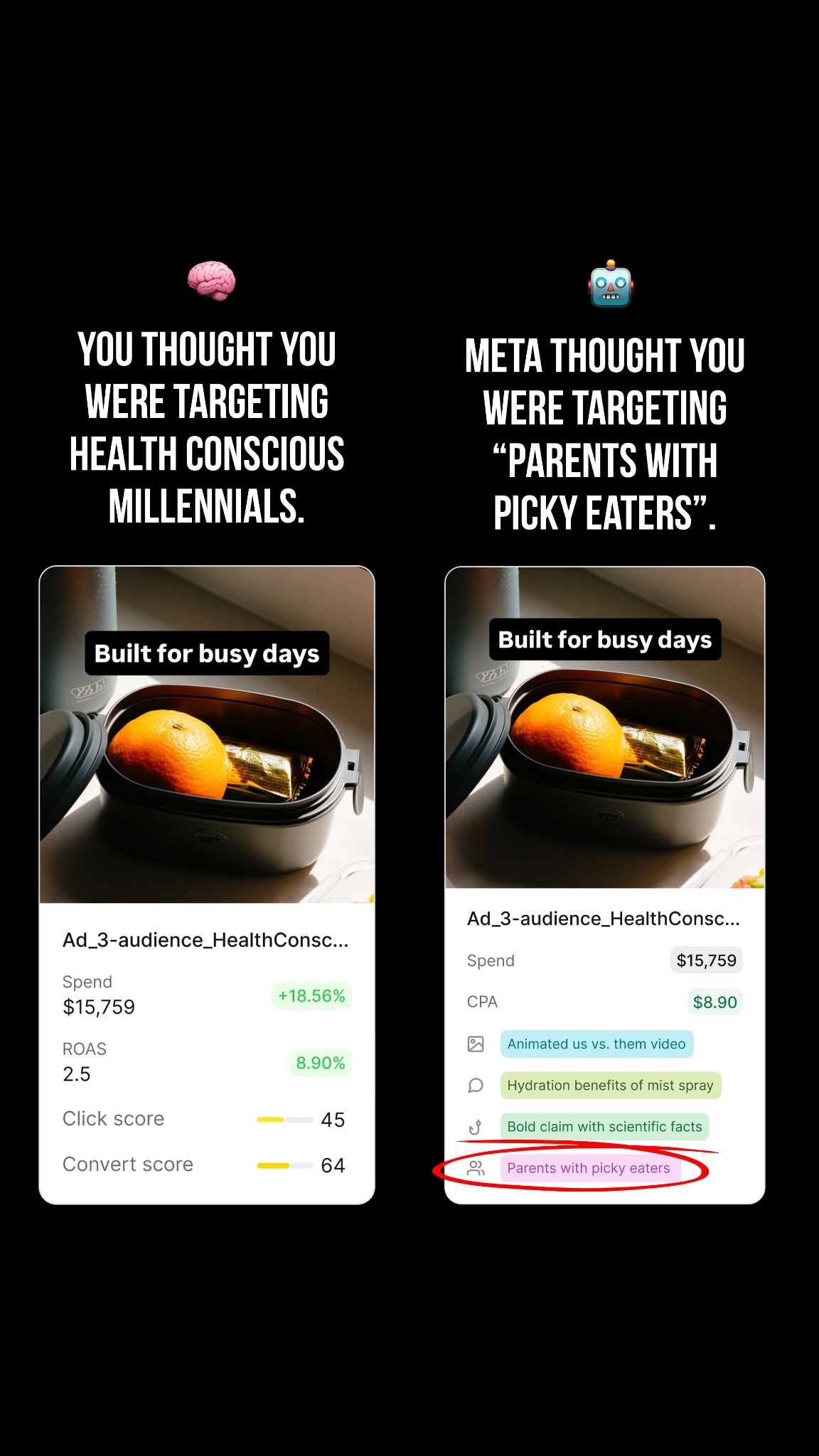
Motion, second: *you thought you were targeting health conscious millennials. Meta thought you were targeting "parents with picky eaters".* **Ran 136 days.** Two columns of plain type over two screenshots. The idea -- that the platform's read of your audience differs from yours -- is the entire creative, and it is a sentence rather than a shot.
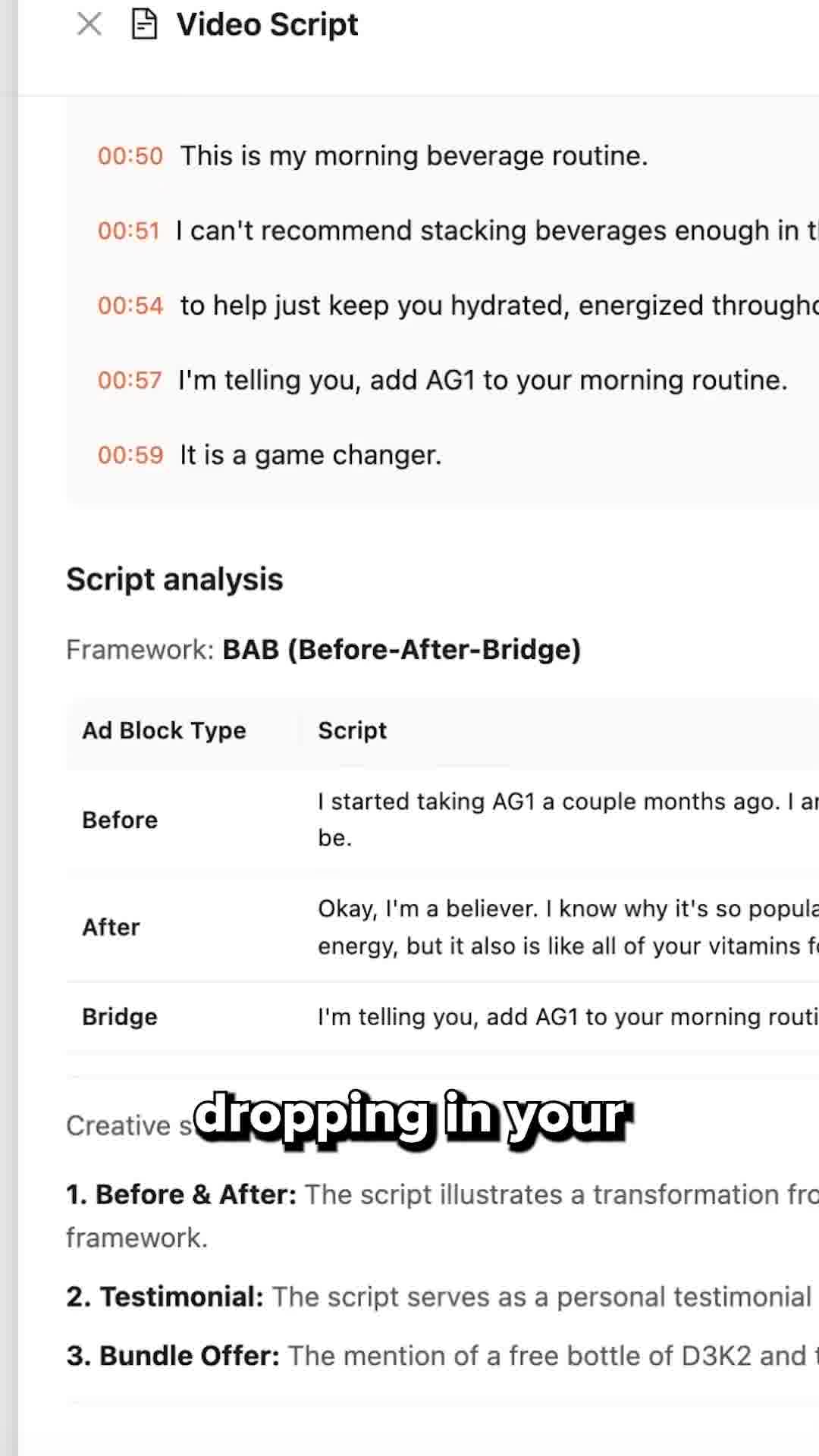
Atria, running a plain screen recording of its own script-analysis interface. **Ran 47 days** -- outrunning the same brand's slicker executions at 22 and 19 days.
The pattern across all three: **a specific problem, named in words, on the creative.** That's a writing output. Every tool in this article is downstream of it.
## The same pattern, in both markets
Worth checking whether this is an India thing or a structure thing. It's a structure thing.
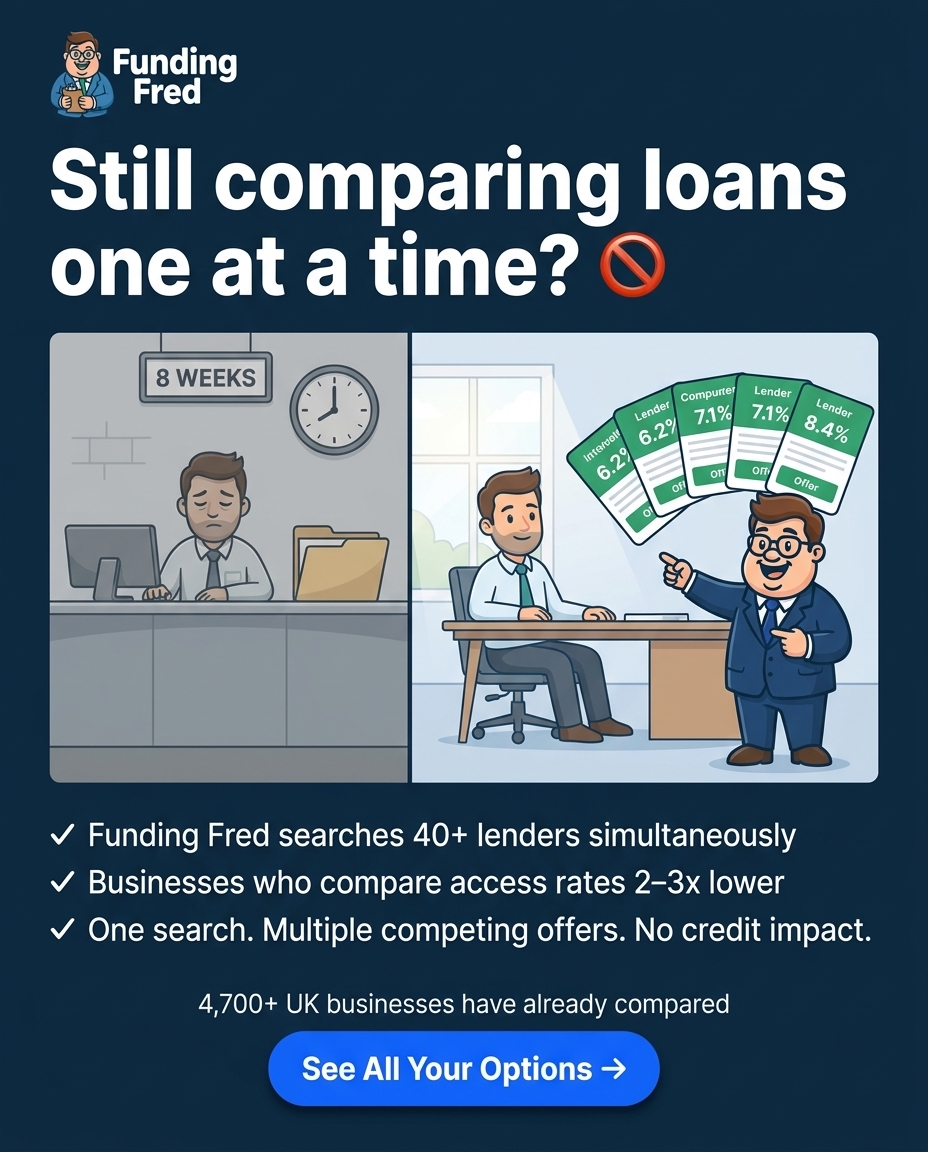
Funding Fred, UK: *still comparing loans one at a time?* **Still running -- live 48 days.** The hook describes the viewer's own process back to them, and the ad is a before-and-after of that process.
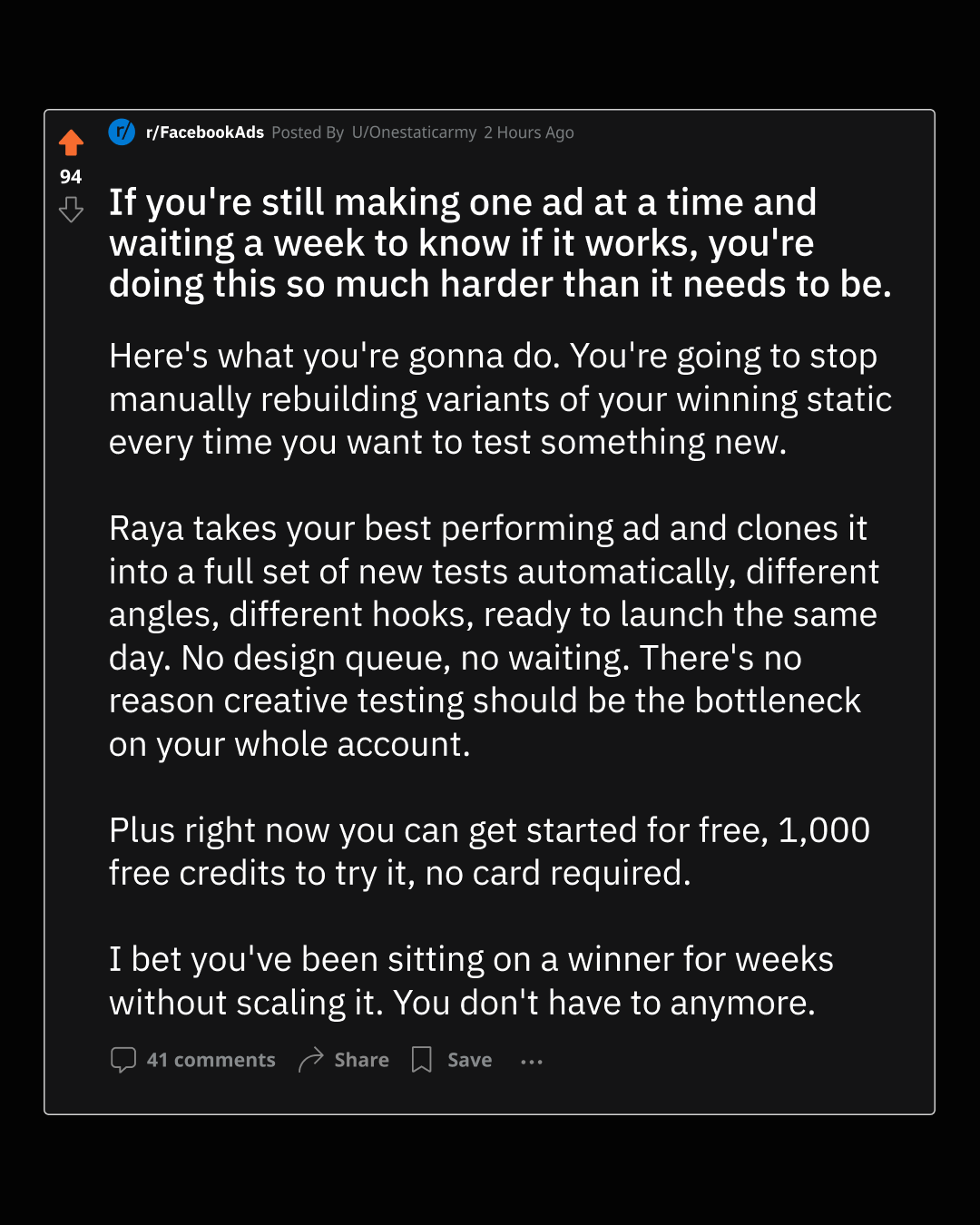
Atria, US: *if you're still making one ad at a time and waiting a week to know if it works, you're doing this so much harder than it needs to be.* **Ran 46 days.** Set as a forum post, no imagery, and the objection is answered inside the hook.
Motion, US: *a top performing ad is a lot like love. It was never meant to last forever.* **Ran 41 days.** A reframe the audience will repeat to each other, delivered over an interface card.
Set those against Misfits' block of type and Motion's two columns and the structures are interchangeable. Funding Fred's "you only ever ask one lender" is the same move as Motion's "you thought you were targeting millennials" -- tell the viewer something about their own behaviour before you sell anything.
What differs between the markets is the *content* of the objection, not the mechanism. A UK business owner has been rejected by a high-street bank; an Indian buyer is suspicious of a dark-coloured jaggery block. Same structural slot, completely different research.
That's the honest reason a generator can't do this part for you in either market: it has no access to what your buyer already believes.
CarGurus sits at the midpoint: rhythm rather than a problem, cutting between vehicle types under labels like "Grocery Getter" and "Cargo Hauler". **Ran 24 days** -- respectable, and well short of the six-month and four-month runs above. Pixis runs the same kind of montage ad at **29 days**. Nothing is wrong with a 24-day ad; it just isn't the thing holding an account together.
## The scorecard
Score any tool out of seven. Most score two.
| Capability | Shot generators | Avatars | AI UGC | Assembly | End-to-end |
|---|---|---|---|---|---|
| Hook written for you | ✗ | ✗ | Partial | ✗ | ✓ |
| Script | ✗ | ✗ | ✓ | ✗ | ✓ |
| Spoken voice | ✗ | ✓ | ✓ | Partial | ✓ |
| Believable face | ✗ | Partial | ✓ | ✗ | ✓ |
| Captions | ✗ | Partial | ✓ | ✓ | ✓ |
| Resize to every placement | ✗ | Partial | Partial | ✓ | ✓ |
| Variants that differ by *idea* | ✗ | ✗ | Partial | ✗ | ✓ |
The honest reading: if you buy only from column one, you are buying the single capability your ads need least.
A stack that works, in the order worth fixing: **the hook** first -- a named problem, and no tool substitutes for it; then **a face and a voice**, where ordinary beats cinematic; then **captions and an end card**, because muted feeds are the default; then **ratios and languages**, which is where volume actually comes from; and last, genuinely last, **beautiful footage**.
## The India question: language is the unlock, not realism
The highest-return use of AI video in an Indian account isn't a cinematic render. It's the same ad in five languages -- and the evidence for that is sitting in one brand's account.
V-Guard's rooftop solar ad in Hindi -- *ab aapki chhat kamayegi*, now your roof will earn. **Ran 54 days.** The English execution of the same concept ran **73**, with a third at 68. One idea, two languages, four months of combined shelf life, and the only thing that changed between them is the script and the voice.
That is the whole argument for this category in one account. Not a better render -- the same creative, re-voiced.
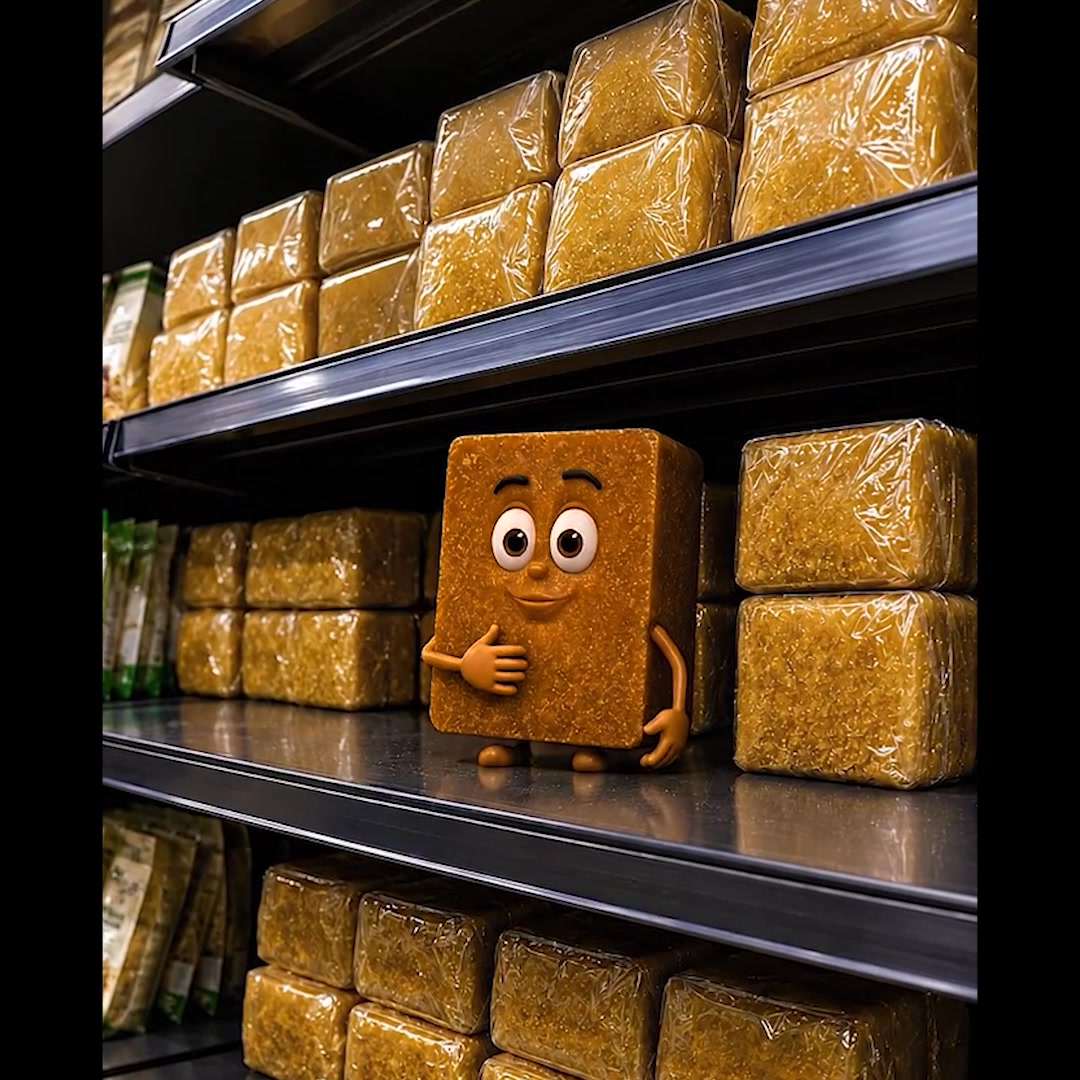
And Two Brothers personifies a block of jaggery to argue that dark colour doesn't mean unhygienic -- a culturally specific objection no stock generator has a concept of. It **ran 0 days**, which is worth stating plainly: a sharp cultural insight still has to clear the same bar as everything else. The insight is right; this execution of it didn't hold.
Neither of these is a rendering problem. All three are **script and voice** problems, and that's where voice cloning, voice changing and dubbing earn their place: one approved concept, re-voiced per market, with the hook rewritten rather than translated.
A tool that can only make the picture prettier cannot help with any of it.
## Where Marxx fits
The Marxx production canvas is the end-to-end column: *roughly sixty node types across research, writing, image, video, audio, talent and publishing* -- so the script, the voice, the face and the cut sit in one graph rather than four tools.
That covers *voice generation, voice cloning, voice changing, dubbing, transcription and music*; *AI avatars, UGC studio and UGC rendering*; and on the video side *generation, animation, motion control, extension, upscaling, resizing, trimming, combining, frame and audio extraction*.
The part that matters for volume: *an approved concept fans out on the canvas by hook, format, avatar or language, so the variant set is generated from the same graph* -- which is the difference between four renders of one idea and four genuinely different tests.
And on publishing, the safeguard worth knowing about: *campaign, ad set and ad are created in a paused state. Nothing starts spending because a graph finished running* -- *a human turns it on in the ad account*.
**[Trial the canvas](/book-a-demo)** -- bring one brief and we'll take it to a finished, resized, launchable ad on the call. The [production canvas](/features/production-canvas) page lists what the nodes actually do.
## FAQs
### What's the best AI video generator for ads?
It depends which job is blocking you. For footage, the shot generators (Runway, Veo, Sora, Kling) lead on quality. For something closest to a launchable ad, AI UGC tools get you furthest. For volume across placements and languages, an end-to-end workflow beats any single generator.
### Can AI video replace UGC creators?
For hook testing at volume, largely yes -- a synthetic ordinary person reading a hook to camera tests the hook perfectly well. For ads needing demonstrable results, real product handling or genuine credibility, not yet.
### Why do my AI-generated video ads underperform?
Usually because the generator solved the picture and nobody solved the hook. The long-running ads in this article win on a named problem in the first line; the best of them is a block of type with no imagery at all, and it has run for six months.
### Does AI video look fake to viewers?
Increasingly less, and it matters less than people assume. The bigger risk isn't that it looks synthetic -- it's that it looks like an *advertisement*. Polished, impossible, frictionless footage reads as a commercial, which is the thing a feed scrolls past.
### What should I look for when comparing AI video tools?
Score them on seven things: hook, script, voice, face, captions, resize, and variants that differ by idea rather than by render. Most tools deliver one or two. Decide which you need before you compare demo reels.
### How do I make multilingual video ads for the Indian market?
Rewrite the hook per language rather than translating it, then use voice cloning or dubbing to keep one presenter across versions. The clearest example above is one rooftop-solar concept running 73 days in English and 54 in Hindi -- same idea, different script and voice.
### Is AI video cheaper than filming?
Per asset, usually. Per *working* ad, only if the tool also handles script, captions, resize and variants -- otherwise you've shifted cost from the shoot to the editor and added a subscription.
---
- [More Production articles](https://marxx.ai/posts/category/production)
- [All articles](https://marxx.ai/posts)