# How to Choose the Right Software for Your Marketing Agency
> What agency software vendors keep paying to say -- and the five tests a generic comparison never gives you.
- **Author**: Marxx
- **Published**: 2026-10-06
- **Category**: Agency operations
- **URL**: https://marxx.ai/posts/choose-software-marketing-agency
---
Most software buying guides are written for a company buying a tool for itself. An agency is not doing that. An agency is buying one tool that has to work across eight clients who have different contracts, different budgets, different levels of sophistication, and a strict expectation that none of them ever sees another one's numbers.
That changes the evaluation entirely, and it is why generic comparison tables are close to useless here. A feature that is excellent for a brand -- a shared dashboard everyone logs into -- is an active liability for an agency.
This guide covers what to actually test. It starts somewhere unusual: with what the software vendors in this category say in their own advertising, because that is the most honest statement of the problem you will get from them.
## What the vendors themselves admit the problem is
If you want to know what a category is really selling, do not read the feature pages. Read the ads the vendors keep paying to run, because those are the messages that survived contact with the market.
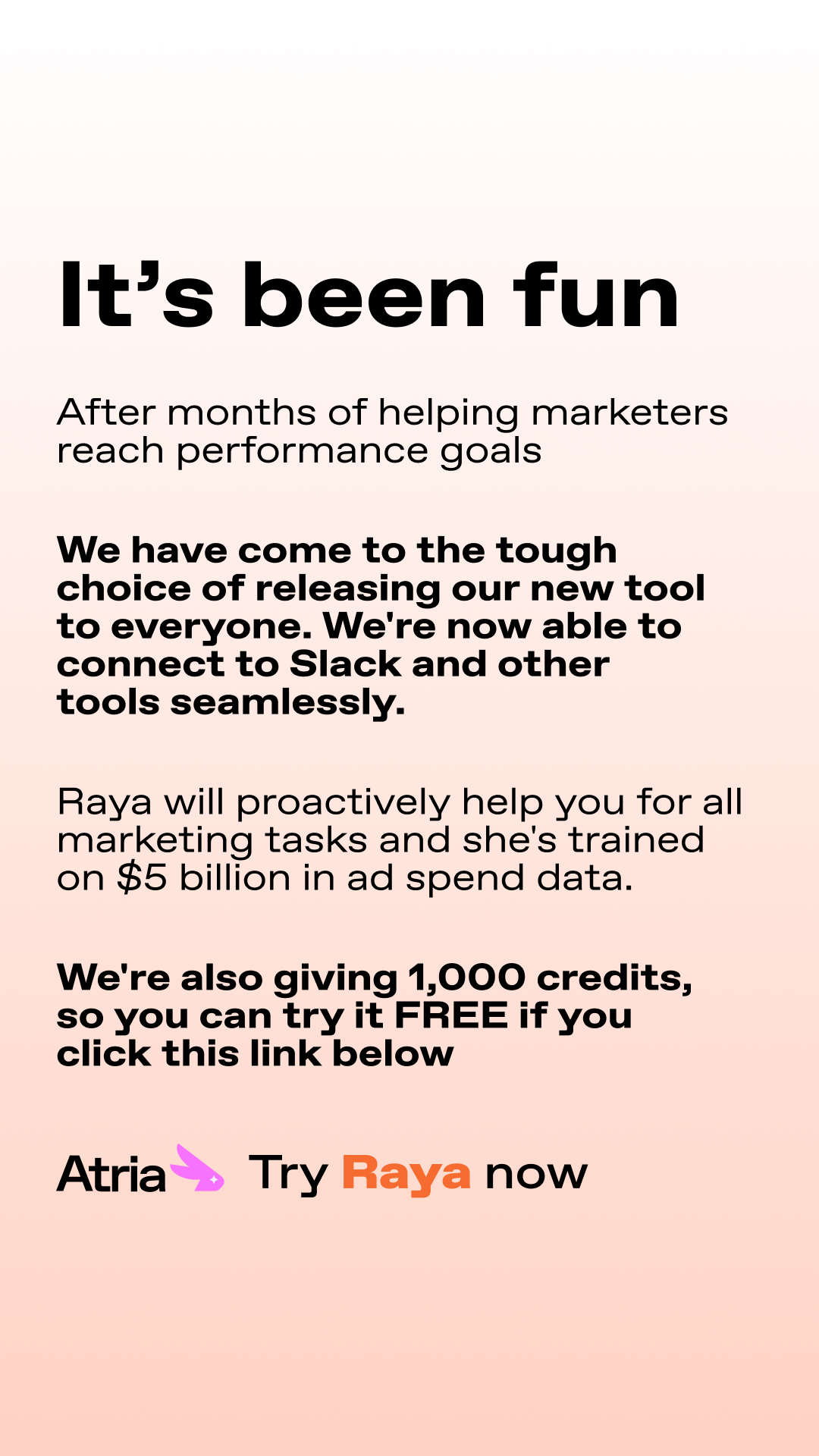
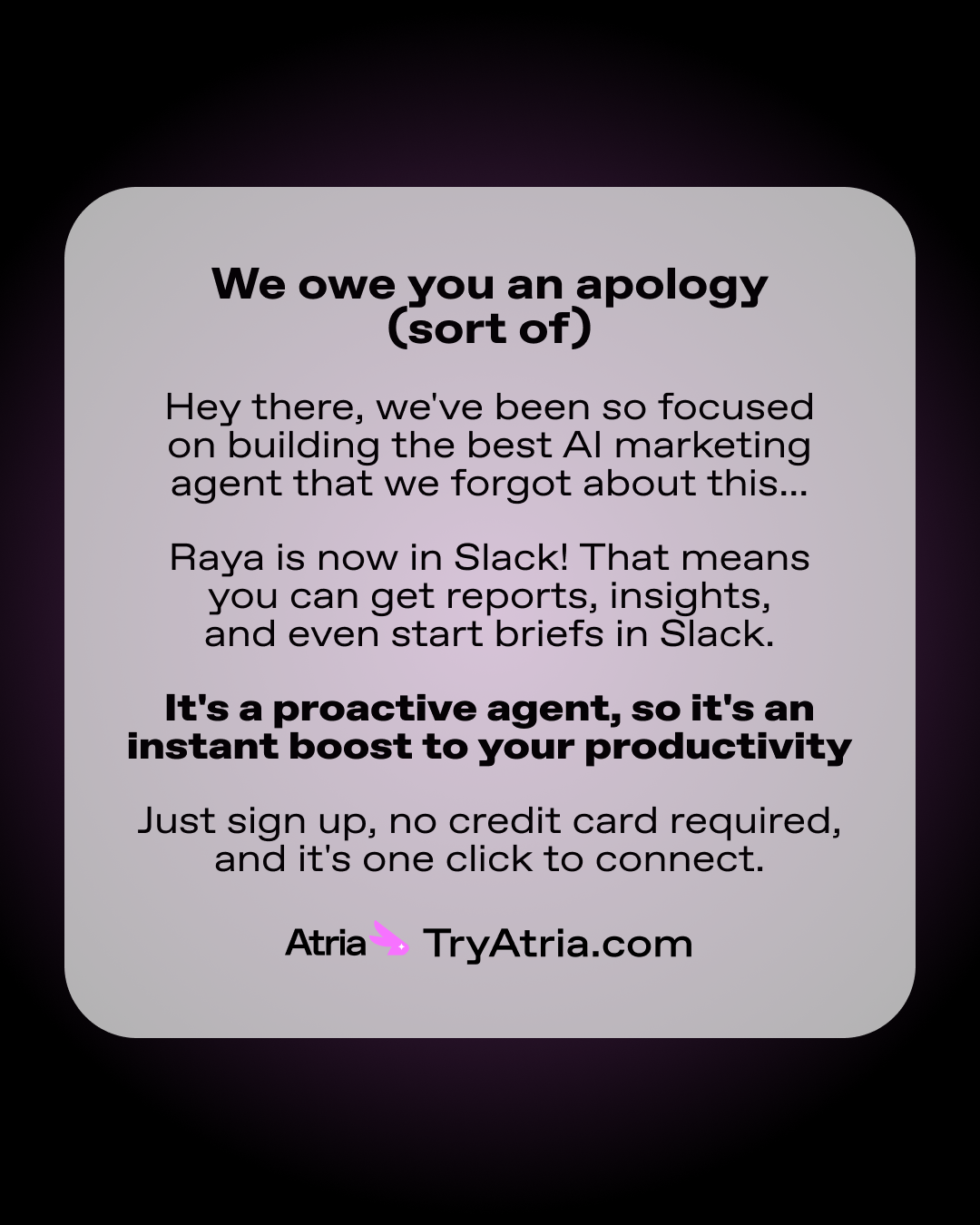
The two longest-running ads in this set both belong to Atria, and both have been live roughly three months -- 85 and 84 days. Neither one mentions a feature of the product's interface. Both announce that it now works inside Slack.
*We're now able to connect to Slack and other tools seamlessly.* That is the pitch that earned 85 days of continuous spend.
The companion ad is even more explicit about what that buys you:
*Raya is now in Slack. That means you can get reports, insights, and even start briefs in Slack.*
Read those two ads as market research rather than as marketing. The most durable message in the agency-tooling category is **not having to open the tool**. The vendor is advertising its own absence.
Motion's advertising says the same thing from the time angle, with campaigns titled *Automated Monday Reporting* and *Get Your Monday Back*, built on a stated problem of manual reporting and siloed data eating the hours that should go to strategy. Pixis runs *One Platform. Less Manual Work.* against fragmented tooling. Foreplay has a current ad whose entire hook is a pricing complaint: *I'm just tired of software companies charging you more just because you spend more on ads.*
Four vendors. Four messages. Not one of them is a feature.
What they are collectively telling you is that in this category the purchase decision turns on four things: **time to a report, number of tools, how the pricing scales, and whether anyone has to log in at all.** That is your evaluation shortlist, written by the people who studied the market hardest.
## The five tests a generic guide will not give you
Everything above applies to any marketing team. These five are specific to running multiple clients, and they are where tools quietly fail after you have already signed.
### 1. Client isolation -- test it adversarially, not by asking
Every vendor will tell you client data is separated. The test is not whether they say so, it is what happens in the interface. During the trial, set up two clients and then try to break it: search from inside client A for a brand you only added under client B. Check whether an export carries any cross-client aggregate. Check what a benchmark or "category average" is computed across -- if it silently includes your other clients' accounts, you have a confidentiality problem that no contract clause fixes.
An agency that fails this test in month seven does not get a bug report. It gets a very difficult phone call.
### 2. Per-client commercial control
Agencies sell in tiers. Client A pays for creative research and reporting. Client B pays for reporting only. If the tool cannot reflect that, you end up either giving away the premium tier to everyone or managing it through sheer discipline, which fails the first time someone shares the wrong screen.
The question to ask is narrow and specific: *can I turn an individual capability on for one client and off for another, without creating a separate account?* Most tools cannot. It is rarely on the feature page either way, so you have to ask.
### 3. Reporting that does not require buying the client a seat
This is the single biggest hidden cost in agency software, and it is almost never priced transparently.
If the only way a client can see their data is to have a login, then every client you report to is a seat, and your software cost scales with your client count rather than your revenue. Worse, a client with a login can see whatever the tool shows them, which is usually more than you intended to expose.
What you want instead is a link -- a view you control, showing the fields you choose, that expires or updates on your terms. Test whether the share is read-only, whether you control which metrics appear, and whether it keeps working when the underlying data refreshes.
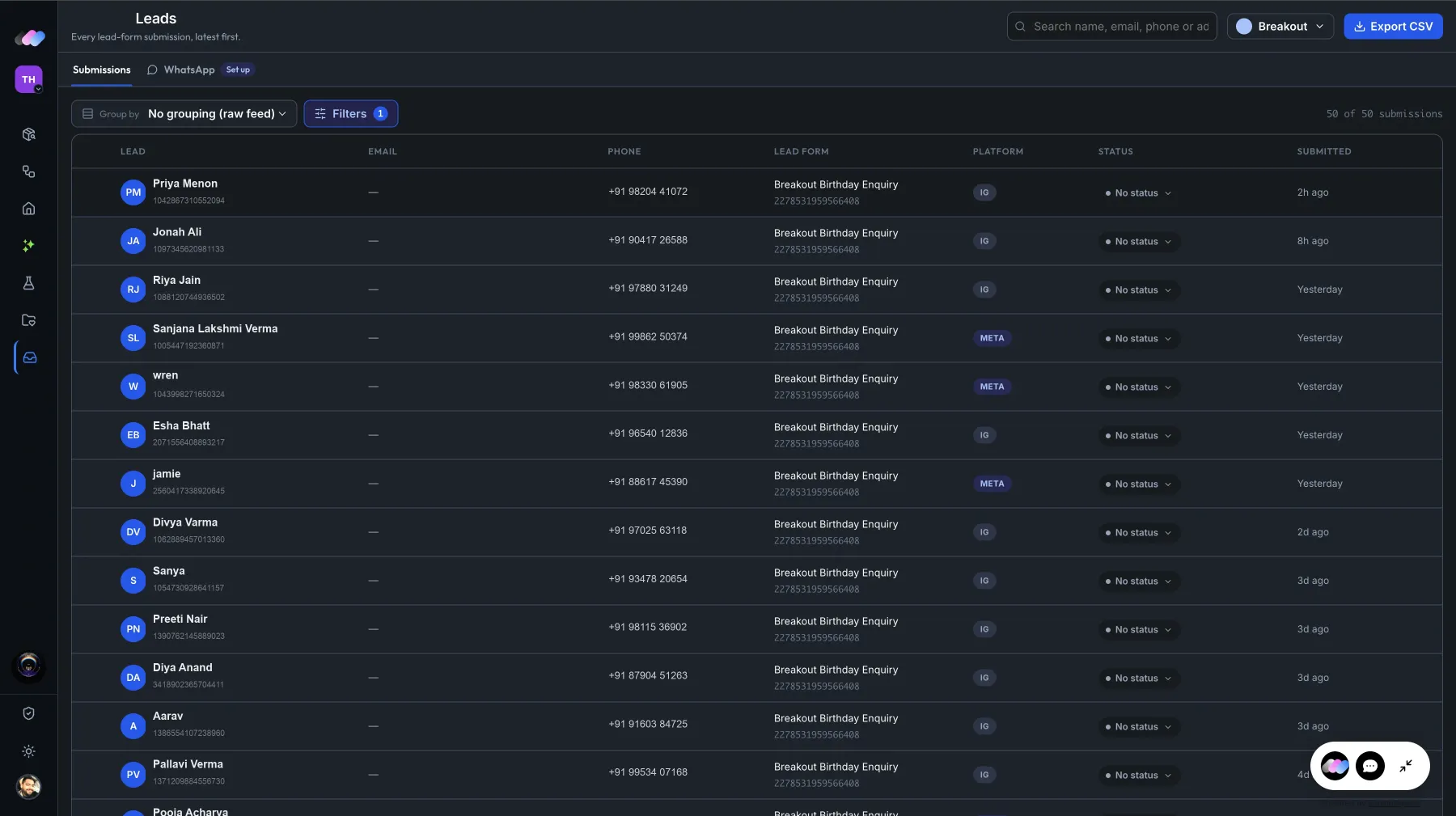
For lead-gen clients the same logic applies one layer down: the client wants to see submissions and where they came from, not your whole account.
### 4. The shape of the pricing, not the size of it
Agencies habitually compare monthly prices. The number that matters more is what the price is indexed to, because that determines whether the tool gets more or less affordable as you succeed.
- **Per seat** -- scales with your team. Predictable, but punishes hiring and makes contractors awkward.
- **Per client or workspace** -- scales with your book. Usually the fairest for agencies, since cost tracks revenue.
- **Per ad spend** -- scales with your clients' budgets. This is the one Foreplay's own ad attacks directly, and the objection is legitimate: your cost rises when a client scales, even though your workload has not changed.
- **Per credit or generation** -- scales with usage. Hard to forecast, and the first month is never representative.
None of these is wrong in the abstract. The error is picking one without modelling it. Take your actual client list, your actual team size and your actual spend under management, and run the number twelve months forward at your intended growth rate. A tool that is cheapest today and indexed to spend is frequently the most expensive one in the set by next year.
### 5. Offboarding -- ask before you sign
You will lose clients. It is the one certainty in agency life, and no vendor's sales call covers it.
Ask three things. What happens to that client's historical data when I remove them -- is it deleted, archived, or still billable? Can I export it in a usable form for handover? And does removing a client free the licence immediately or at renewal? The answers vary enormously, and the bad versions mean you keep paying for churned clients until your anniversary date.
## The evaluation sheet
| Dimension | The question that actually discriminates | Failure signal |
|---|---|---|
| Isolation | Can I surface client B's data from inside client A? | Any cross-client aggregate you did not configure |
| Commercial control | Can I enable a feature per client from one screen? | "You'd need separate accounts for that" |
| Client reporting | Can the client see their data without a seat? | Reporting is gated behind a login |
| Exposure control | Do I choose which fields the client sees? | All-or-nothing sharing |
| Pricing index | What does cost scale with? | Indexed to spend, with no cap |
| Time to report | How long from question to shareable answer? | Measured in hours, not minutes |
| Tool count | What does this let me cancel? | It adds a tool and replaces none |
| Offboarding | What happens when I remove a client? | Billed to renewal, no export |
| Where it lives | Can I get an answer without opening it? | Dashboard-only |
Nine rows. Any tool that fails rows one through three is not an agency tool regardless of how good the analytics are.
## How to run the trial so it tells you something
Trials fail because people explore the product instead of testing it. Two weeks pass, everyone agrees it looked nice, and nobody learned anything.
Run this instead, in one 45-minute block:
Load two real clients, not one. Pick the question you are asked most often -- for most performance agencies it is some version of *why did last month look like that* -- and time how long it takes to produce a shareable answer for each. Then try to break isolation. Then share the result with a colleague playing the client and see exactly what they can see.
If the tool survives that, the feature list is a detail. If it does not, no amount of feature depth will rescue it.
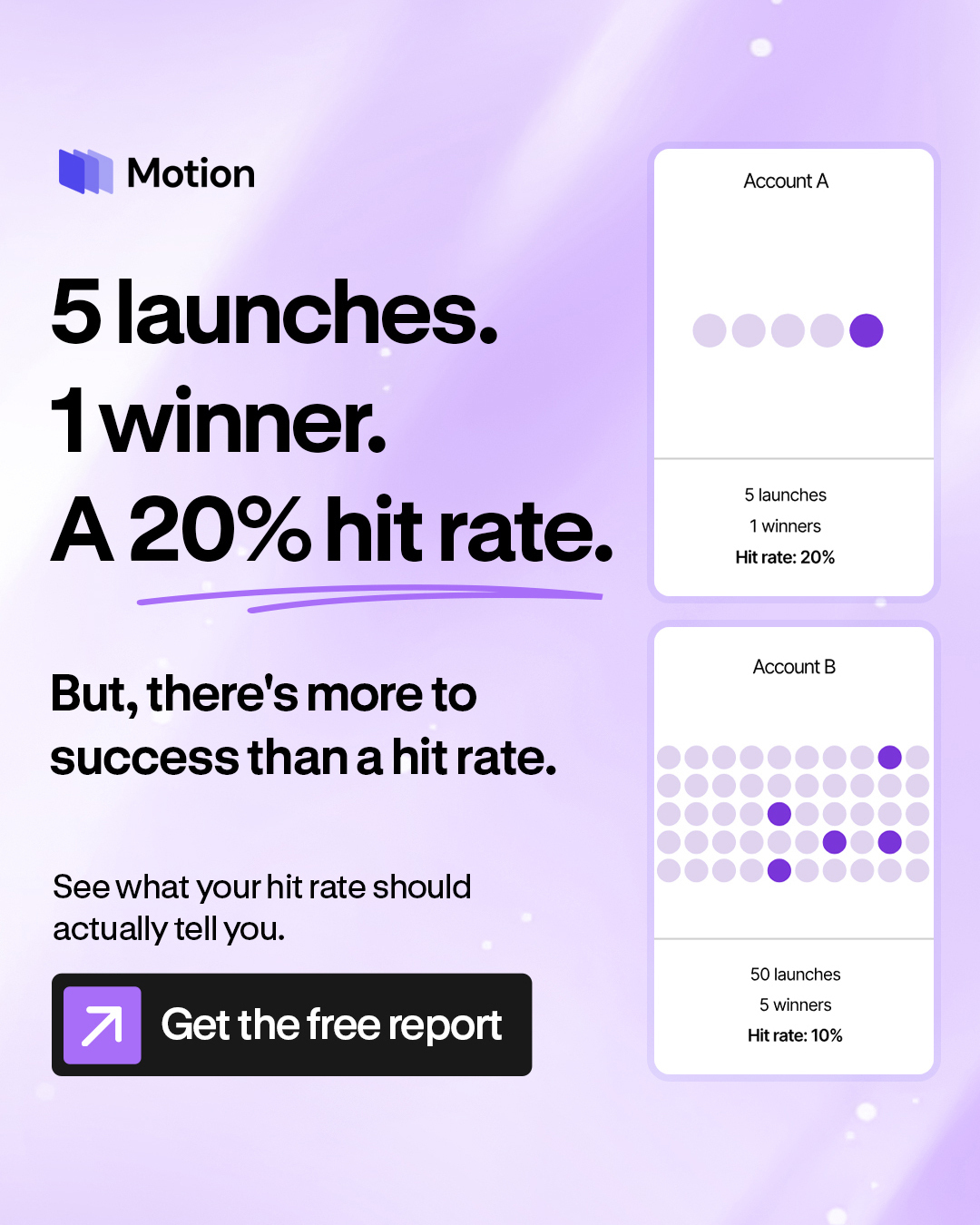
One useful by-product: this exercise also tells you what your current hit rate and reporting cadence actually are, which most agencies cannot state precisely. Motion's own advertising leans on exactly this gap -- the uncomfortable fact that most teams do not track the numbers that would tell them whether their testing is working.
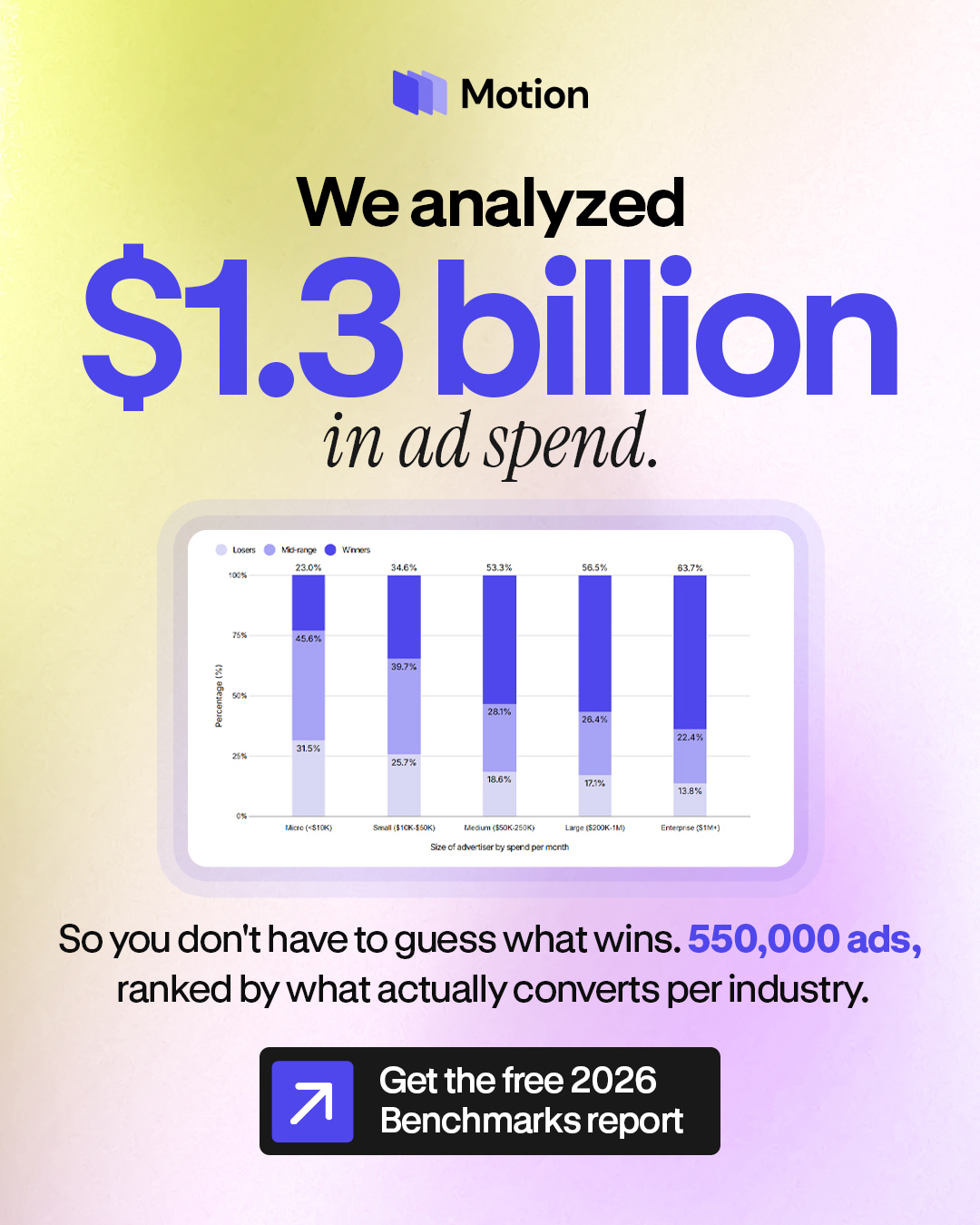
Their other long-running ad in this set makes the same case from scale rather than from self-examination.
Both have been live 33 days, and both sell a benchmark rather than a feature -- which is the same admission the Slack ads make, arriving from a different direction.
## Where Marxx sits in this
Marxx is built for the agency case rather than adapted to it, and the two claims that matter here are on its agency page in plain language.
The first is per-client commercial control: *turn tabs and features on for the clients who bought them and off for the ones who did not, from one config screen.* That is test two above, which most of the category cannot pass.
The second is client reporting without seats: *live client reports share by link with the data you choose to expose, so the Friday deck stops being a person's job.* That is tests three and four -- a link rather than a login, and you decide the fields.
On the "where it lives" row, the same answer the category's longest-running ads are selling applies here too: the account is already indexed, so the question can be asked in Slack, Claude or ChatGPT rather than in another dashboard.
## The short version
Buy on isolation, commercial control, reporting without seats, and the shape of the pricing. Test those four in a single session with two real clients before you look at anything else.
The vendors in this category have told you what matters by what they keep paying to say -- reports without effort, fewer tools, pricing that does not punish growth, and software you do not have to open. Evaluate against that, not against a feature grid.
**Agency demo: isolated client workspaces, scoped live reports.** [Book an agency session](https://marxx.ai/book-a-demo) and we will set up two of your clients side by side so you can try to break the isolation yourself.
---
- [More Agency operations articles](https://marxx.ai/posts/category/agency-operations)
- [All articles](https://marxx.ai/posts)