# Creative Analytics: The 2026 Guide for Meta and Google Advertisers
> Your reporting knows which ad ID won. Creative analytics tells you which attributes won -- the part that transfers to the next brief.
- **Author**: Marxx
- **Published**: 2026-09-29
- **Category**: Creative strategy
- **URL**: https://marxx.ai/posts/creative-analytics-guide
---
Your reporting knows that ad 23847_v3 spent INR 41,000 and produced nine leads. It does not know that the ad was a testimonial, that the proof was a five-star rating rather than a customer story, that the offer was a hesitation-reducer, or that the same structure has been running in your category for eleven months.
That gap is what creative analytics closes. Not "which ad won" -- **which attributes of that ad won**, so the next brief can be written from evidence instead of taste.
This guide covers the unit problem, the attributes worth tagging, the metrics that actually mean something, the tool categories, and how to start without buying anything.
## Media analytics vs creative analytics
| Media analytics answers | Creative analytics answers |
|---|---|
| Which campaign spent most | Which hook type earns the click |
| Which ad set converted | Which offer role converts -- hook, reward or hesitation-reducer |
| When CPA rose | Which attribute stopped working, and in what order |
| What happened | What to make next |
Both matter. Only one of them produces a brief.
## The unit problem
An ad ID is a useless unit of analysis. Two ads with the same ID history can share nothing, and two ads that look unrelated can share the thing that made them work.
So the first job is to stop treating the ad as the unit and start treating its **attributes** as the unit. Here are three live ads, decoded the way an analytics layer should decode them:
| | CarDekho | Master App | Two Brothers |
|---|---|---|---|
| **Category** | Insurance comparison | Personal finance app | Organic food |
| **Hook type** | Savings number in the headline | Relatable morning frustration | A question to the customer |
| **Offer's job** | The saving *is* the offer | None -- the promise is the offer | None |
| **Proof type** | Implied comparison across insurers | None yet | The audience's own voice |
| **Audience** | Someone who just bought a car | Salaried, feeling stuck | Mothers buying for children |
| **Format** | Number-led static | Story-led, Hindi | Question card |
Three categories with nothing in common commercially -- insurance, fintech, organic groceries -- and yet two of them open the same way: *name the moment before you name the product.* That's a finding you can brief from. "Ad 23847 won" isn't.
## The attributes worth tagging
A workable scheme decodes each ad into roughly sixteen attributes. The ones that earn their place:
| Attribute | Why it matters |
|---|---|
| **Hook type** | The single strongest predictor of whether the ad is scrolled past |
| **Offer type and its job** | Hook, reward or hesitation-reducer -- the same discount behaves differently in each role |
| **Ad type / format** | Testimonial, comparison, listicle, POV, unboxing, offer banner |
| **Emotion** | What the first second is trying to produce |
| **Social proof type** | Rating, review quote, customer story, expert, volume claim |
| **Authenticity type** | Studio-polished, creator-shot, screen-recorded, native-feeling |
| **Intended audience** | Who the creative selects -- often different from who you targeted |
| **Placement fit** | Whether it was built for 9:16 or cropped into it |
Tag these consistently and your account stops being a list of ads and becomes a dataset you can ask questions of.
## One attribute, three executions
Here's why "social proof" as a tag is too coarse on its own. All three of these are proof-led, and they're not doing the same job:
| | Proof mechanism | What it's really doing |
|---|---|---|
| Astrotalk | A screenshotted chat where a prediction came true | Removes "is any of this real" using the customer's own words |
| Plum | An ingredient percentage and a timeframe | Removes "will it actually do anything" with a testable claim |
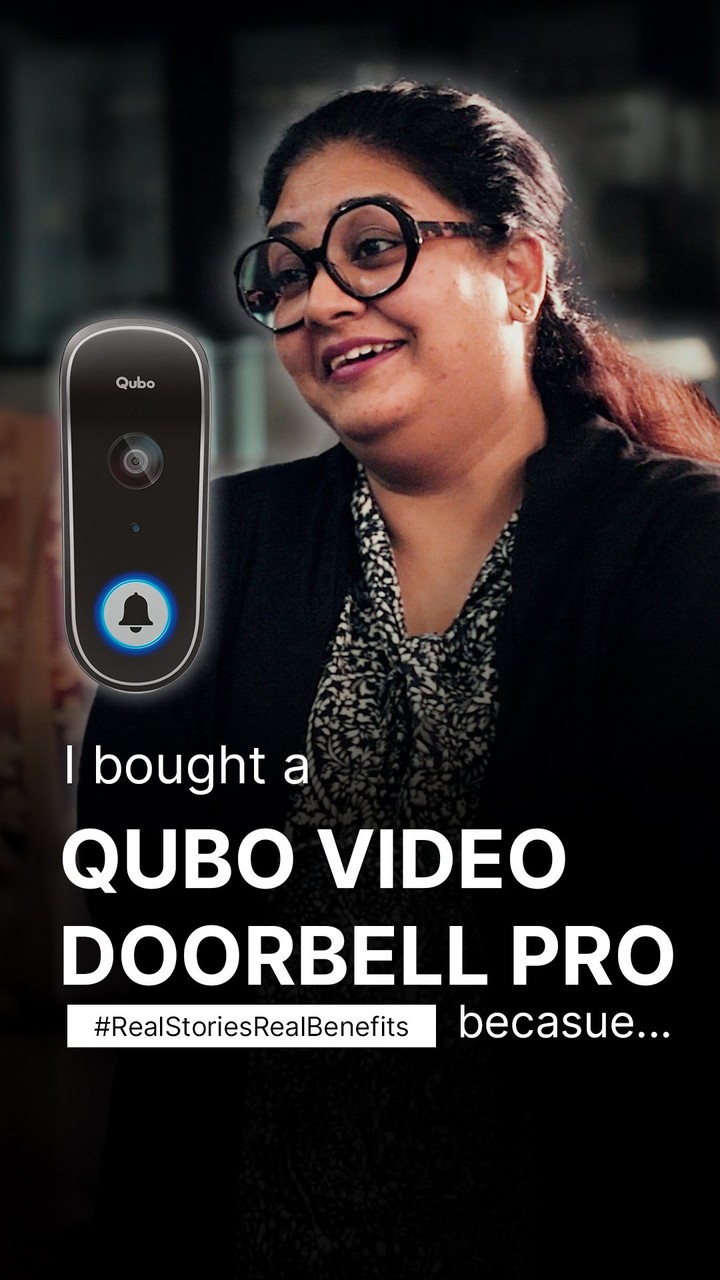
| Qubo | A household anecdote about vanishing milk packets | Removes "do I need this" by naming a problem you'd never search for |
Same tag, three different objections handled, in three different Indian categories. An analytics layer that can't tell these apart will tell you "proof works" -- which is not actionable, because everything is proof if you squint.
## The metrics that actually mean something
Creative analytics has its own measures, separate from CPA and ROAS:
| Metric | What it tells you | Watch for |
|---|---|---|
| **Longevity** | How long an ad stayed live | The only public signal available for competitors |
| **Copy count** | How many near-identical versions run | How hard a brand is backing an idea |
| **Fatigue composite** | CTR decline weighted most, frequency least | Five levels: healthy, watch, moderate, high, critical |
| **Share of spend per creative** | Concentration risk | Above 60% on one ad is a single point of failure |
| **Attribute win rate** | Which hooks and formats convert across ads | Needs consistent tagging or it's noise |
| **Refresh rate** | New concepts shipped per month | Distinguishes production from strategy |
And the diagnosis layer on top: offer fatigue, burnout starting, high CTR with low sales, costs rising but still working, clicks too expensive, only existing buyers left, wrong audience, cold start failure. Eight named states, each with a different correct response -- which is the whole point of naming them.
## The attribute isn't destiny
A caution that keeps teams honest. These two ads share most of their tags -- consumer offer, a price or discount in the headline, app-first purchase:
One ran **72 days**, the other **7**. Both Indian D2C, both offer-led, both leading with a number -- ten times the shelf life. Tagging tells you what an ad *is*; it doesn't tell you it will work. Use attributes to generate hypotheses, not to predict winners -- a team that treats the tag sheet as a formula ends up producing the average ad in its category.
## The tool categories
| Category | What it does | Buy it when |
|---|---|---|
| **In-platform reporting** | Meta and Google's own asset-level breakdowns | Always -- it's free. Thin on the "why" |
| **Creative analytics platforms** | Tag your own ads, tie attributes to performance | You have enough volume for patterns to emerge |
| **Ad libraries and swipe tools** | Competitor creative, searchable and saved | Your gap is inspiration and category awareness |
| **Full-stack: research -> production -> analytics** | Decode, generate, publish, measure in one loop | You want the analysis to end in a brief |
| **BI on top of exports** | Your own warehouse, your own definitions | You have an analyst and unusual questions |
Most teams need the free layer plus one paid tool. The mistake is buying a tagging platform before you have the volume to make tags meaningful -- under about twenty new creatives a quarter, you'll learn more by reading your own ads carefully than by charting them.
## How to start without buying anything
1. **Export your last 90 days of ads.** Just the creatives and their spend.
2. **Tag them by hand, once.** Hook type, offer's job, format, proof type. An afternoon.
3. **Sort by longevity, not spend.** Ads Manager sorts by money; survival is the more interesting column.
4. **Find the attribute your winners share.** There's usually one, and it's usually not the one you'd guess.
5. **Write next month's briefs from it.** Three concepts that share the winning attribute, executed differently.
6. **Then decide whether you need a tool** -- by which point you'll know exactly what you want it to do.
Step two is the one people skip and the one that teaches most. Tagging fifty of your own ads by hand is the cheapest creative education available.
## Demo: get your own ads decoded into 16 attributes
We'll read 180 days of your account, decode every creative into sixteen attributes, score fatigue across five levels, name the failure mode behind anything declining, and set it beside what your category is running -- so you leave with the attribute your winners share and three briefs built on it.
[Book a demo](/book-a-demo), or see how [creative intelligence](/features/creative-intelligence) works.
## FAQs
### What are the best tools for creative analytics?
It depends on which layer you're missing. Meta and Google's asset reporting is free and worth exhausting first. Beyond that: creative analytics platforms for tagging your own ads, ad libraries for competitor creative, and full-stack tools where decoding feeds production. Volume decides -- below roughly twenty new creatives a quarter, manual tagging beats any of them.
### What is creative analytics?
Analysing the *content* of ads rather than the delivery: hooks, offers, formats, proof types and audiences, tied to performance, so you can brief the next ad from evidence.
### How is it different from normal ad reporting?
Normal reporting tells you which ad ID spent and converted. Creative analytics tells you which attributes those ads shared, which is the part that transfers to the next brief.
### What should I tag my ads with?
Start with four: hook type, the offer's job, format and proof type. Add emotion, authenticity and intended audience once the first four are consistent. Consistency matters more than completeness.
### How do I measure creative fatigue?
As a composite, not a single metric: CTR decline carries the most weight, frequency the least, read on a five-level scale so "watch" triggers a brief and only "high" triggers a replacement.
### Can I see competitors' creative performance?
Not their spend or conversions -- nobody can. You can see how long each ad has run and how many near-identical copies exist, which together are a reliable read on conviction.
### How much creative volume do I need for this to work?
Enough for patterns to survive noise: roughly twenty new concepts a quarter before charts beat careful reading. Below that, tag by hand and trust your eyes.
---
- [More Creative strategy articles](https://marxx.ai/posts/category/creative-strategy)
- [All articles](https://marxx.ai/posts)