# Creative Testing on Meta: The 2026 Framework (ABO, CBO, ASC)
> Sixteen attributes, one variable at a time -- and the budget structure that decides whether you learn anything.
- **Author**: Marxx
- **Published**: 2026-10-06
- **Category**: Creative strategy
- **URL**: https://marxx.ai/posts/creative-testing-meta-framework
---
Most creative testing on Meta is not testing. It is launching several ads at once, waiting, and then describing whatever survived. That produces a winner and no knowledge, which is why the same team runs the same exercise again next month with nothing carried forward.
A test needs three things the usual process skips: a named variable, everything else held constant, and a campaign structure that lets the result be attributed rather than overwritten by the delivery system.
This guide covers all three -- the attribute layer first, because that is where the thinking happens, then ABO, CBO and ASC, because that is where the thinking either survives or gets destroyed.
## The problem, shown rather than argued
Here are two ads from the same advertiser. Same offer, same landing page, launched the same day, both live 14 days.
The first sets the playbook against a dark, professional graphic treatment, with client case studies carrying the proof.
The second puts the same headline on a white grid background with a product photograph, and the case studies are gone.
Decode them attribute by attribute and the picture is unambiguous. The hook text is identical. The hook type is identical -- curiosity in both. The offer is identical. The product, the benefit category, the campaign objective and the language are identical.
Five things differ: the scene, the ad type, the social proof, the stated reliability signal and the emotional register. And here is the part that matters -- **only one of those five was chosen.** The team changed the image. Swapping a case-study layout for a plain product shot removed the proof element, which removed the reliability signal, which changed the emotional read. Four of the five differences are side effects of the one decision.
So when one of these outperforms, what has been learned? Not whether proof helps, because proof was not the variable. Not whether curiosity beats authority, because the hook never moved. The only clean conclusion available is "image B did better than image A," which does not generalise to the next ad.
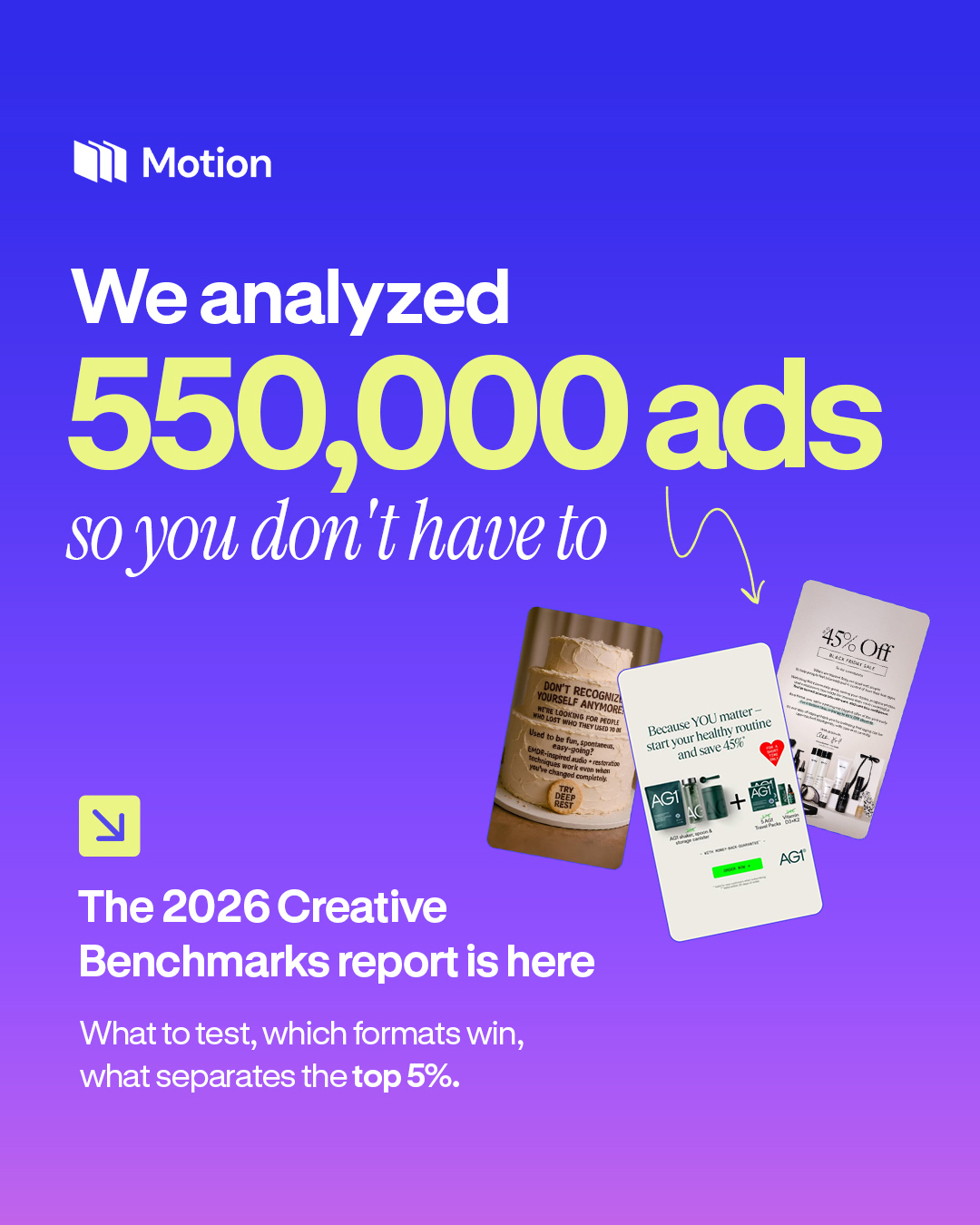
Now the same comparison run properly. Two Motion ads, same offer, same landing page, same format.
Negative hook. Curiosity. A trusted-by proof claim. Headline-only treatment.
Facts-and-numbers hook. Same emotion, same objective, same format family -- but the proof shifts from a trust claim to a case-number claim, deliberately, because the hook changed from refusal to scale.
One attribute moved on purpose, and the supporting attributes moved with it in a direction the team chose. The first has been live 32 days, the second 7. That comparison means something; the AdYogi one does not.
## The 16 attributes a Meta creative actually contains
You cannot hold things constant that you have not named. A creative decomposes into roughly sixteen attributes, and every one of them is a candidate variable:
| # | Attribute | What it answers |
|---|---|---|
| 1 | Hook text | The literal opening line |
| 2 | Hook type | The mechanism -- question, negative, stat, mistake, POV |
| 3 | Problem statement | The pain named |
| 4 | Problem type | The category of pain |
| 5 | Offer text | What is actually offered |
| 6 | Offer type | Discount, free trial, consultation, BOGO |
| 7 | Emotion | Relief, curiosity, anxiety, confidence |
| 8 | Ad type | Demo, UGC selfie, spokesperson, before/after, skit |
| 9 | Audience | Who it addresses, as a situation not a demographic |
| 10 | Social proof type | Testimonials, trusted-by, case studies, star ratings |
| 11 | Feature/benefit | The claim and its category |
| 12 | Authenticity signal | Real people versus actors |
| 13 | Reliability signal | Case numbers, transparent data, support access |
| 14 | Product framing | Which product, described how |
| 15 | Scene | The setting the creative takes place in |
| 16 | Duration and sound | Runtime, music or none |
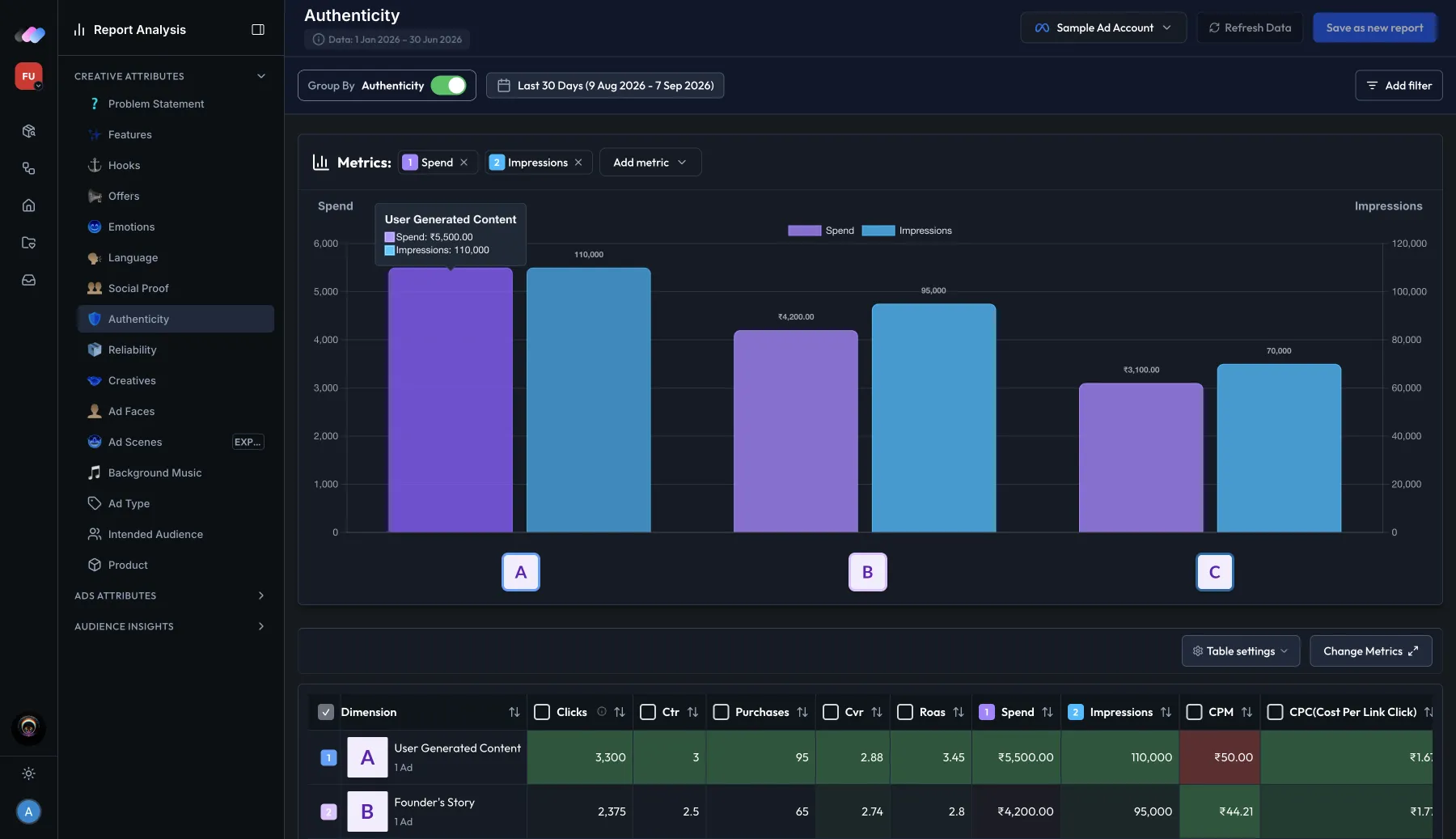
Read the AdYogi pair against that list and you can mark eleven identical and five different. Read the Motion pair and you can name the one that was chosen. That is the whole discipline: **before you launch, write down which row you are testing.** If you cannot, you are not running a test.
A useful corollary: attribute 16 is more measurable than most teams assume, and it behaves nothing like the folklore. Across three long-running ads, runtime ranges from 4.0 seconds to 57.5 seconds.
That Foxtale cut runs 4.0 seconds and stayed in market 120 days.
That Grow Digitally ad runs 57.5 seconds and has been live 205 days. The Man Company's runs 56.5 seconds across 130 days. Duration is a real variable you can test, but it is clearly not the one that decides longevity -- which is a good reason to stop spending test budget on it and spend it on rows 1 to 8 instead.
## Where budget structure decides whether you learn anything
Here is the part that ruins otherwise well-designed tests. Meta's budget structures differ in how much they let the delivery system reallocate spend between your variants, and reallocation is the enemy of attribution.
The three structures practitioners refer to as ABO, CBO and ASC sit on a spectrum from manual control to full automation. Meta's interface labels for these have been moving toward Advantage+ naming, so check the current wording in your own account -- but the underlying mechanics are what matter.
**Budget at the ad set level (ABO).** You set spend per ad set, so each variant is guaranteed its own budget. The delivery system optimises within an ad set but cannot starve one variant to feed another. This is the only structure in which a clean attribute test is possible, because it is the only one where your variants are guaranteed comparable exposure.
**Budget at the campaign level (CBO).** You set one budget and the system distributes it across ad sets by predicted performance. This is excellent for efficiency and actively hostile to learning: a variant can be starved within hours, before it has accumulated enough data to say anything, purely because early signals looked weak. You will get a winner. You will not get a reason.
**Advantage+ style automated campaigns (ASC).** Maximum automation, minimum structural control. Creative is pooled and the system decides almost everything. This is a scaling and delivery surface, not a testing surface. Running attribute tests inside it is how teams end up with confident conclusions built on wildly unequal exposure.
The practical sequence that follows from this is simple and widely used because it works:
| Stage | Structure | Purpose | What you take forward |
|---|---|---|---|
| Learn | Ad set budgets (ABO) | Isolate one attribute, equal exposure | A statement about an attribute |
| Confirm | Ad set budgets, higher spend | Does it hold at volume? | A validated angle |
| Scale | Campaign budget (CBO) | Let the system allocate | Efficiency, not insight |
| Harvest | Advantage+ (ASC) | Maximum delivery | Volume |
The error almost everyone makes is testing in stage three or four because it is cheaper and faster. It is cheaper and faster because it is not a test.
## Designing a test that returns a sentence
A good test produces a sentence you can write down and reuse. Not "version B won" but "an explicit proof element beat an implicit one for this audience at this stage."
To get there:
**Name the row.** Pick one attribute from the sixteen. Write it on the brief before anything is made.
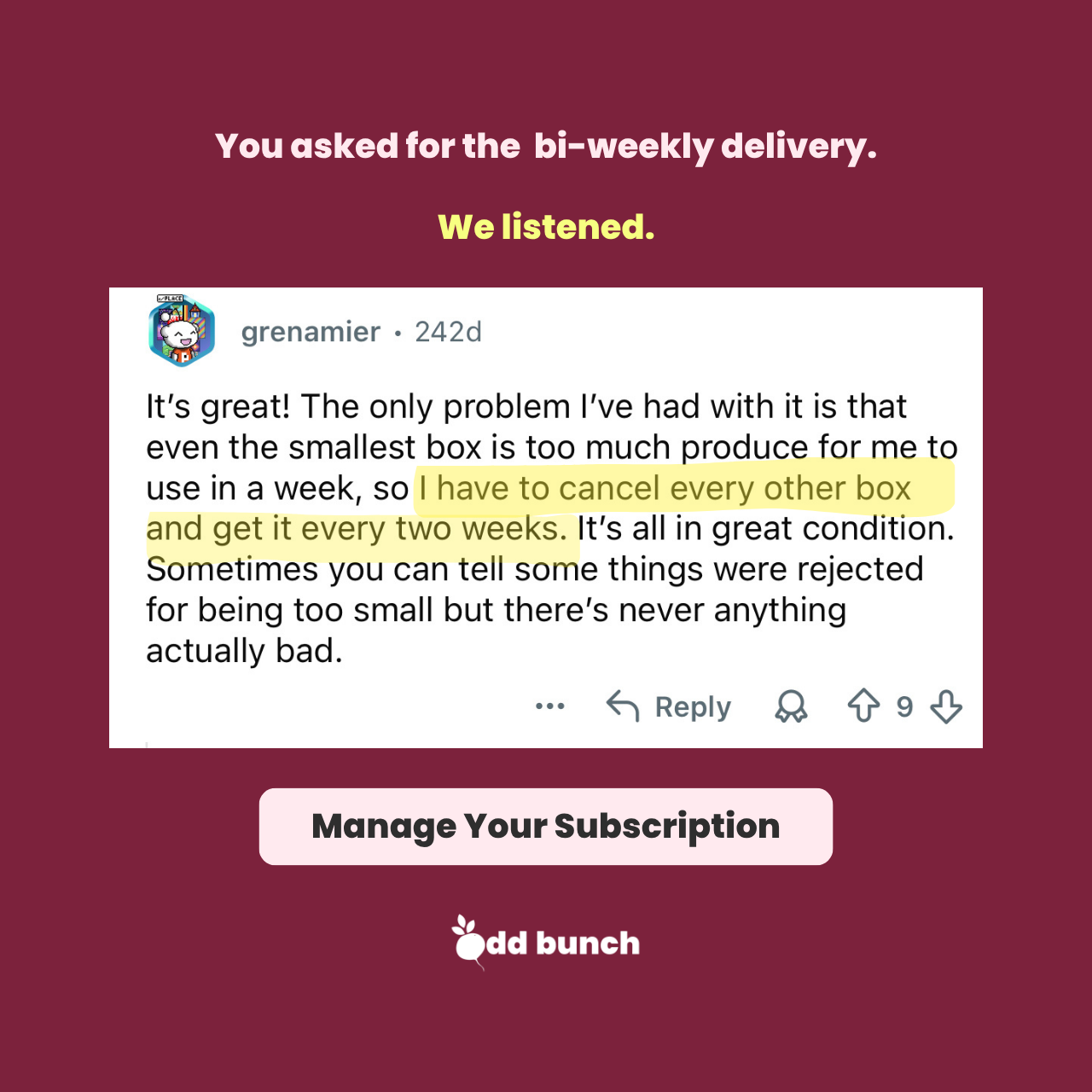
**Hold the rest.** Everything else identical -- same shell, same scene, same offer, same length. The Odd Bunch ad below is a useful model of what a single-attribute creative looks like: the entire variable is the proof element, and nothing else in the frame competes with it.
**Give each variant its own budget.** Ad set level. Equal. No exceptions during the learning phase.
**Decide the stopping rule before launch.** Spend threshold or time, written down. Deciding when to stop after you have seen the numbers is how teams talk themselves into results.
**Write the conclusion as an attribute statement.** If you cannot phrase the finding in terms of one of the sixteen rows, the test was not clean and the result should not inform the next brief.
## Knowing when the answer has expired
A tested result has a shelf life. The angle that won in March is not wrong in September; it is worn out, which is a different problem with a different fix.
The distinction matters because it tells you where to re-enter. If the attribute still holds and only the execution is tired, you rebuild the same angle with a new shell -- cheap, fast, high hit rate. If the attribute itself has stopped working, you go back to the sixteen rows and pick a different one. Treating the second case like the first is how accounts spend a quarter producing variations of something that stopped working in week three.
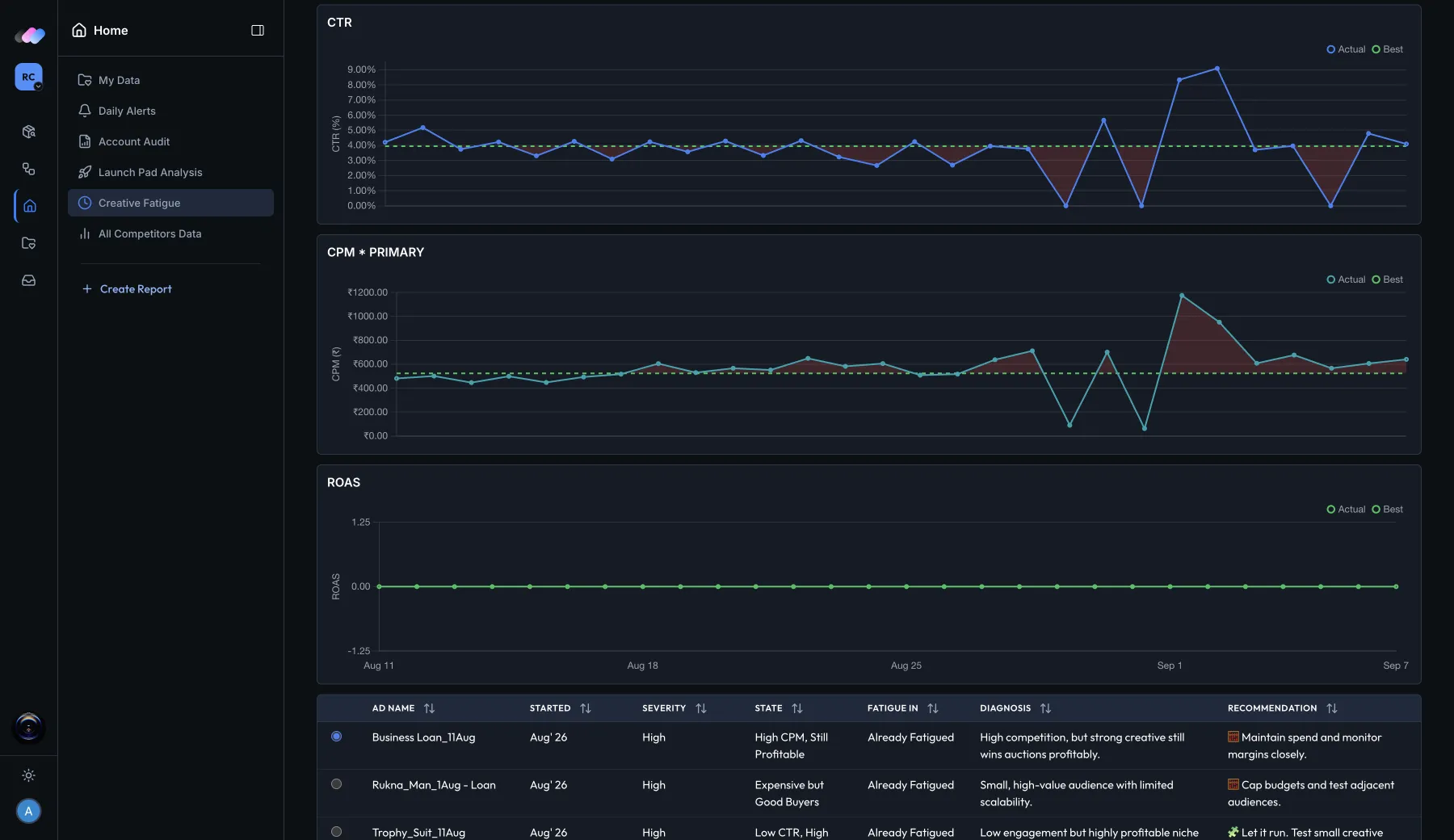
Reading this at the account level rather than per-ad is what makes it actionable, because fatigue rarely announces itself on a single creative.
## The short version
Name one attribute of sixteen. Hold the other fifteen. Give every variant its own ad set budget while you are learning, and only hand control to campaign-level or Advantage+ automation once you already know the answer. Write the finding as a sentence about an attribute, not about a file.
Do that four times and you have four durable statements about your audience. Launch four ads into a single automated campaign and you have one winner and nothing to carry forward.
**Demo: get your own ads decoded into 16 attributes.** [Book a session](https://marxx.ai/book-a-demo) and we will decode your live creatives row by row, so you can see which of your recent tests actually isolated a variable -- and which only looked like they did.
---
- [More Creative strategy articles](https://marxx.ai/posts/category/creative-strategy)
- [All articles](https://marxx.ai/posts)