Every Indian brand runs the same Diwali plan: a discount, a diya, a deadline. Then everyone wonders why the festive CPMs hurt so much.
This playbook is built from what competitors are actually shipping right now, pulled from the Marxx ad library between 19 and 23 September 2026, three weeks before the festive run-in. It covers what the discount wave looks like, which creative outlives it, and the six-week calendar to plan against.
What the festive wave looks like in the wild
Offer banners are already replacing storytelling. In the accounts we track, the formats growing fastest week on week are graphic overlays (+84%) and text overlays (+35%), while montages (−63%) and skits (−88%) fall away. The festive switch has already happened: brands are pulling back the narrative work and pushing price cards.
And the offers are landing on the same weekend. Across beauty, supplements and dining, the same mechanic shows up in the same fortnight.
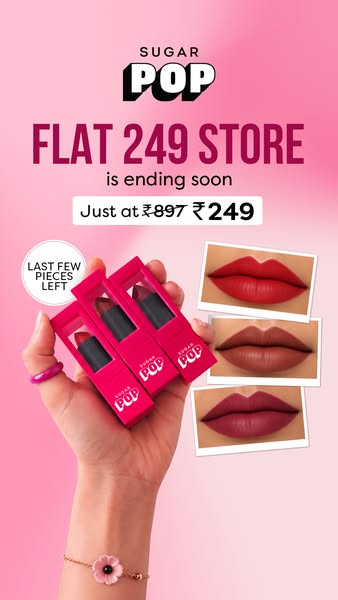
SUGAR Cosmetics opens with a price floor and a countdown — a flat ₹249 store, "ending soon", "last few pieces left". The product barely has to argue; the number is the argument.
MCaffeine runs the same play one step up the basket: buy 3 at ₹999 with a code, plus 5% off prepaid. A bundle instead of a markdown, but the mechanic underneath is identical — a number, a code, and a reason to go now.

The Good Bug stacks all three devices at once: 50% off, a free self-stirring mug over ₹1,999, and "last 24 hours" across the top. Discount, threshold gift, deadline.

| Brand | What shipped | The mechanic |
|---|---|---|
| SUGAR Cosmetics | Flat ₹249 store, "ending soon" | Price floor plus a deadline |
| MCaffeine | Buy 3 at ₹999 | Bundle to raise basket size |
| The Good Bug | Up to 50% off, free gift over ₹1,999 | Discount plus a threshold gift |
| Barbeque Nation | ₹699 happy-hour buffet, one language per city | Same offer, localised |
Three categories, three versions of the same sentence: buy now, it's cheaper, it ends soon. If your festive plan is a markdown, this is the feed you're buying into — the same offer, the same week, against brands running dozens of copies of it.
The number that should shape your plan
Here's one Indian consumer account, grouped by hook type and sorted by how long each kind of ad stayed live.
| Hook type | Share of ads | Average days live |
|---|---|---|
| Offer-led | 31% | 13 |
| Price-focused | 30% | 12 |
| Curiosity | 7% | 13 |
| Aspirational | 7% | 13 |
| Problem-solution | 2% | 37 |
Six ads in ten lead with a price, and they burn out in under two weeks. The rare problem-led ads run three times longer.
Festive is exactly when that gap matters. Discount creative has a short shelf life at the best of times; in a feed where everyone is discounting, it's shorter. So the plan isn't "no offer". It's one offer, many entry points — and only one of those entry points is the price.
Five festive angles that aren't a discount
Diwali is not one occasion. It's five or six different reasons someone books or buys, each with its own moment.
| Angle | The moment | Example to copy |
|---|---|---|
| Getting the house ready | The host, two weeks out, looking at the walls | Asian Paints sells a painting service against the party deadline |
| Hosting and travel | Family arriving, or escaping before they do | ITC Hotels sells "pay for 2 nights, stay for 3" — more time, not a lower price |
| Gifting | Buying for someone whose taste you don't know | Gift cards, personalisation, "ordinary gifts are so last year" |
| Muhurat and new beginnings | First purchase of the year, a decision long postponed | Astrotalk runs a Navratri code against "ghar lene ka soch rahe ho?" |
| Post-festive comedown | Everyone's broke, bored and back at work | The cheapest window to buy attention all quarter |
Asian Paints is the model for the first one. The ad sells a service against a deadline everybody in the market recognises — guests are coming and the house isn't ready — and the incentive on the creative is a money-back guarantee and a free site visit rather than a price cut. The ask is an appointment, not a purchase.

ITC does the same trick in hospitality. "Stay 3 nights for the price of 2" is a discount in arithmetic but not in feel: the guest hears more time, the rate card stays intact, and the offer has a booking date attached rather than running until someone turns it off.

Astrotalk goes further and sells the festival itself as permission. Ghar lene ka soch rahe ho? — thinking of buying a house? — against a Navratri code. The discount is real, but it isn't the hook; the hook is a decision the viewer has been postponing and a culturally sanctioned moment to stop postponing it.

All three survive the festive fortnight because they were never priced into it. The offer is present in each, but none of them leads with it.
Localise like you mean it
The other thing the data shows: the brands that scale festive creative don't make 40 different ads. They make one and change the part that's local.
Barbeque Nation's Pune creative leads with Kadak Buffet — Mansokt Khao, over a buffet spread and a price grid.
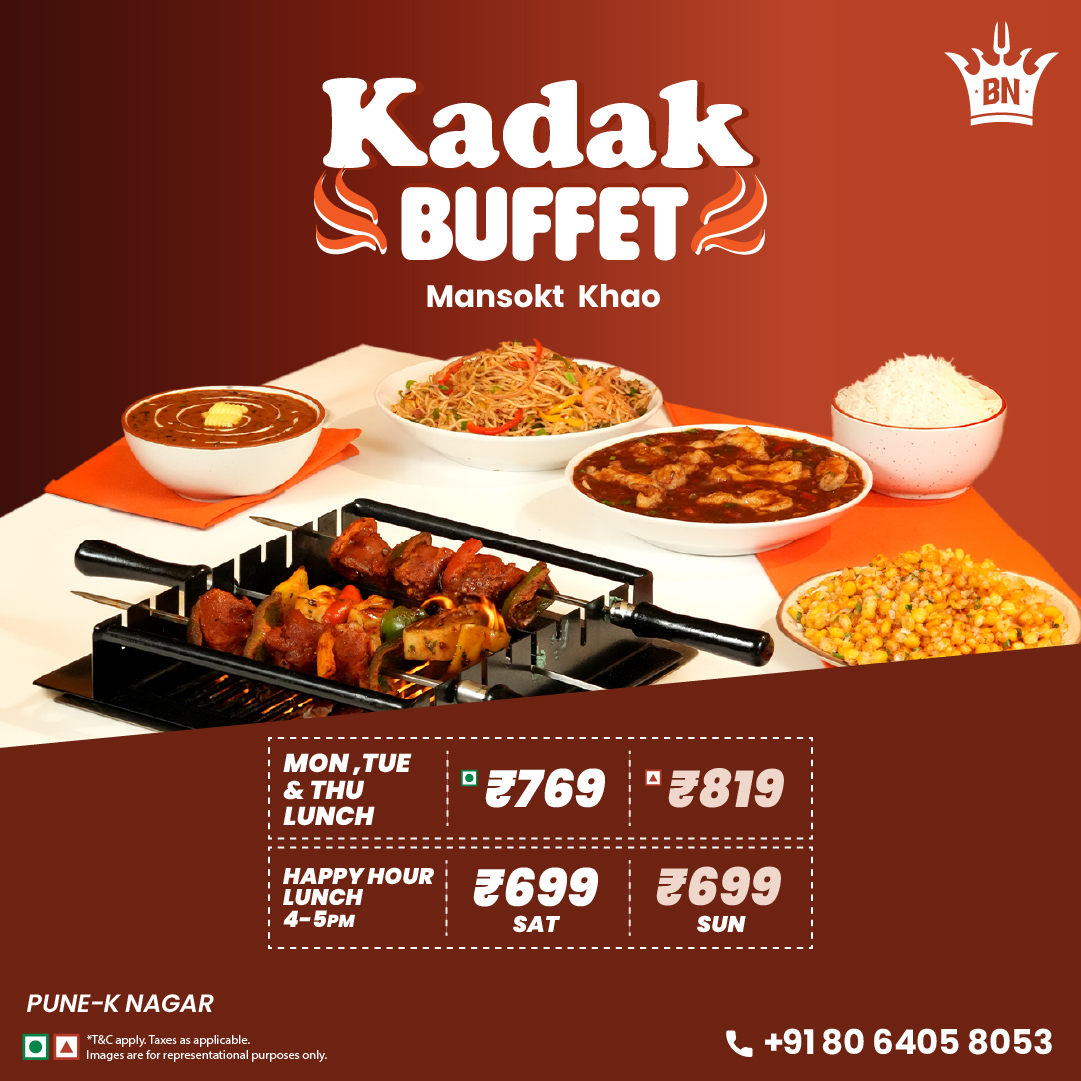
The Guntur creative is the identical layout, the identical photography and the identical grid — with the headline rewritten in Telugu as Kiraak Buffet — Manasaara Thinandi, and the local lunch prices dropped in.
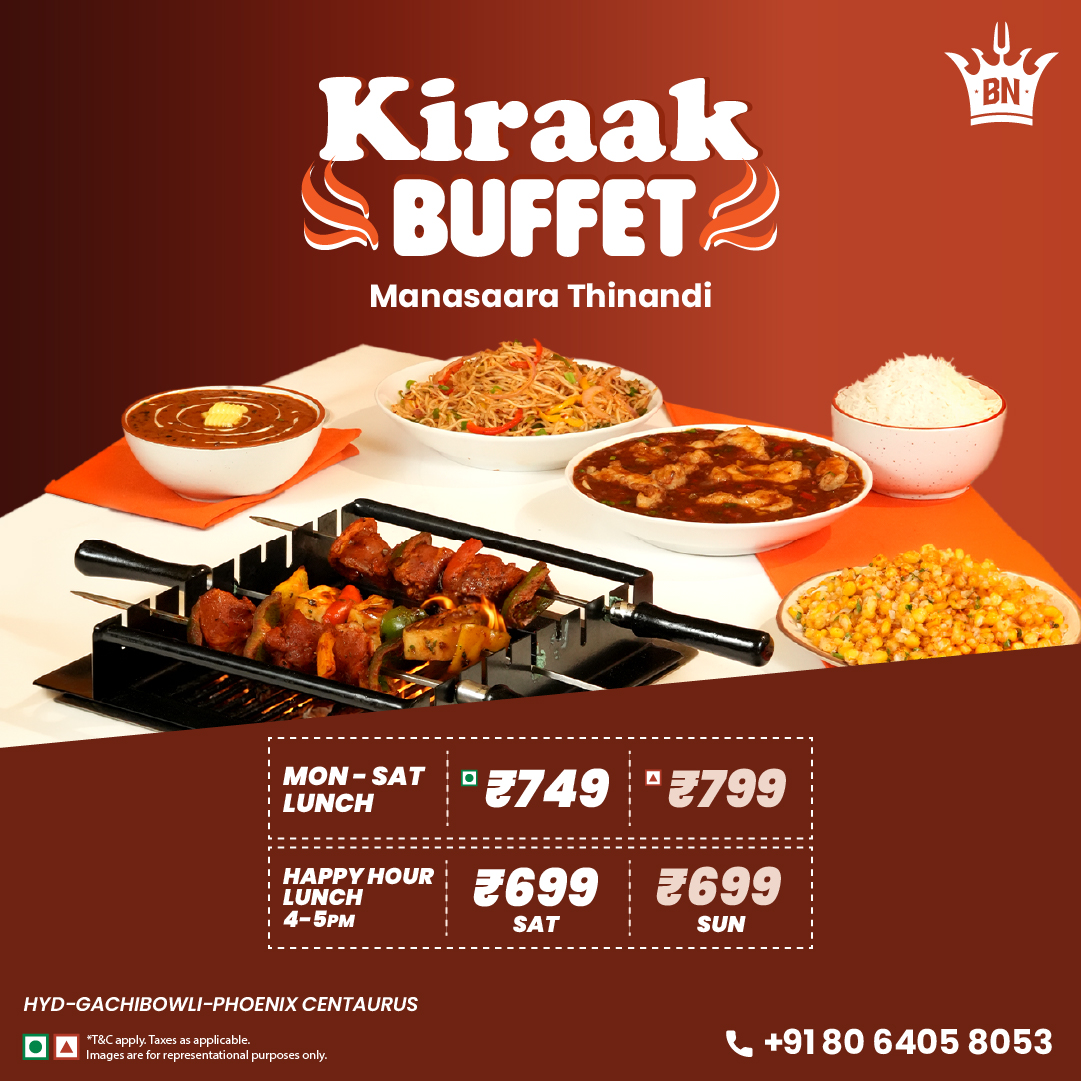
One master, one line swapped, one city at a time. For festive in India that is the highest-leverage version strategy there is — and note what they did not do: they didn't translate. "Kadak" and "Kiraak" are both local slang for the same idea, chosen per market. A translation would have produced one word that worked in neither.
The six-week festive calendar
| Week | What to run | Formats |
|---|---|---|
| T-6: Listen | No launch. Pull competitors' live ads and note which hooks are rising in your sector | — |
| T-5: Occasion ads | Office party, family visiting, gifting. No discount yet | Problem-led statics, creator videos |
| T-4: Proof | Reviews, "last year sold out", capacity, safety | Review cards, UGC, stats |
| T-3: The offer lands | Your one festive offer, with a named window | Offer banners, price grids, carousels that explain tiers |
| T-2 to T-1: Localise and scale | Same offer, per city and language; add urgency as the window closes | Copies of the winner, countdown cards |
| T+1: Post-festive | Off-peak slots, memberships, "we're still open" | Low-cost reach formats, occasion ads again |
Two rules that make it work: your offer needs a named job (is it the hook, the reward, or the thing that removes hesitation?), and every week needs one ad that would still make sense without the discount.
Watch the sector, not just your rivals
Individual brands are noisy. What's useful in the run-up is the lifecycle of tactics across your whole sector: which hooks and formats are emerging, growing, plateaued or declining.
In the account above, in one week: graphic overlays +84%, text overlays +35%, offer-first banners +29%, montage −63%, skit −88%. That's the shape of a market walking into festive. If you can see it a fortnight early, you can either join the wave with better versions of it, or go where nobody is (the occasion angles above) while everyone else fights over price.
Sign up for sector trend digests and get the emerging, growing and declining tactics in your category every week, with the live ads behind each one.
Festive checklist
- Have you got one offer, or five competing ones?
- What's the offer's job: hook, reward, or hesitation-reducer?
- Do you have at least three non-discount angles (office, family, gifting)?
- Is the offer window named and dated?
- Are you localising by city and language, or running one national ad?
- What's your post-festive plan, when attention is cheapest?
- Which of last year's festive ads ran longest, and why?
Common festive mistakes
- Starting at the discount. The occasion ads need three weeks of head start to build the audience the offer converts.
- One national creative. The Barbeque Nation model exists because "Kadak" doesn't land in Guntur.
- Running the offer until it dies. Discount hooks fade in about two weeks. Plan a replacement, not an extension.
- Ignoring the post-festive window. Competitors go quiet, CPMs fall, and your occasion creative still works.
- No record of last year. The single cheapest research you can do is check which of your own festive ads ran longest.
FAQs
When should Diwali ad campaigns start in India?
Give yourself about six weeks. Spend the first two on occasion-led creative and proof, land the offer roughly three weeks out, then localise and scale it. Leave budget for the week after.
What are good Diwali ad ideas that aren't discounts?
Office parties, family visiting, gifting, muhurat purchases and post-festive plans. Each is a different person in a different moment, which is what makes them different ads rather than different headlines.
How long do festive discount ads last?
Not long. In the account we analysed, offer-led and price-led hooks averaged about 12 to 13 days live, against 37 for problem-led ads. Plan to refresh inside a fortnight.
Should festive creative be localised by language?
For India, yes, if you're multi-city. The strongest example here keeps one layout and one price grid and swaps only the headline language per city — and rewrites the slang rather than translating it.
How do I know what competitors are planning?
You can't see their plan, but you can see their ads. Watch what they launch weekly, how many copies they run, and whether their offers carry dates. That tells you the wave before it peaks.
What should I do the week after Diwali?
Come back with occasion creative while everyone else is quiet. Attention is cheaper, and the audience you built in the run-up hasn't gone anywhere.