# Facebook Lead Ads: The Complete 2026 Guide
> Capture, enrich, route, and send the result back -- the four stages most lead-gen accounts never build.
- **Author**: Marxx
- **Published**: 2026-10-07
- **Category**: Agency operations
- **URL**: https://marxx.ai/posts/facebook-lead-ads-guide
---
Lead ads are the easiest campaign type on Meta to make work and the easiest to misread. Volume arrives almost immediately, cost per lead looks excellent next to anything else you run, and three weeks later the sales team says the leads are rubbish. Nothing in the ads manager disagrees with them, because the ads manager cannot see what happened after the form was submitted.
That blind spot is the subject of this guide -- but the fix is not a longer list of tactics. It is one idea applied six times.
## The idea: one qualifier, carried all the way through
Most lead-gen advice treats the creative, the form and the CRM as three separate problems owned by three different people. That is exactly why the chain breaks.
Working lead systems do something simpler. They decide **who this is for**, state it in the ad, ask it again in the form, attach the answer to the record, route on it, and send it back to Meta as the thing worth optimising toward. The same qualifier, surviving every handover.
When that one thread is intact, the account gets better as it scales. When it snaps -- and it usually snaps at the form -- you get cheap leads, an angry sales team, and an algorithm getting steadily better at finding people who will never buy.
Six stages. We will follow the qualifier through all of them.
## Stage one: qualify in the creative
The most common mistake in lead gen is treating the ad as a net and the sales team as the filter. The long-running lead ads do the opposite. They disqualify people on purpose, before anyone fills in anything.
One Park Financial, lending to US small businesses, puts the requirements panel directly in the frame alongside the promise.
The copy states the threshold outright -- $10K+ monthly revenue -- so a business below that line is told so before it costs anyone a submission. Live 67 days.
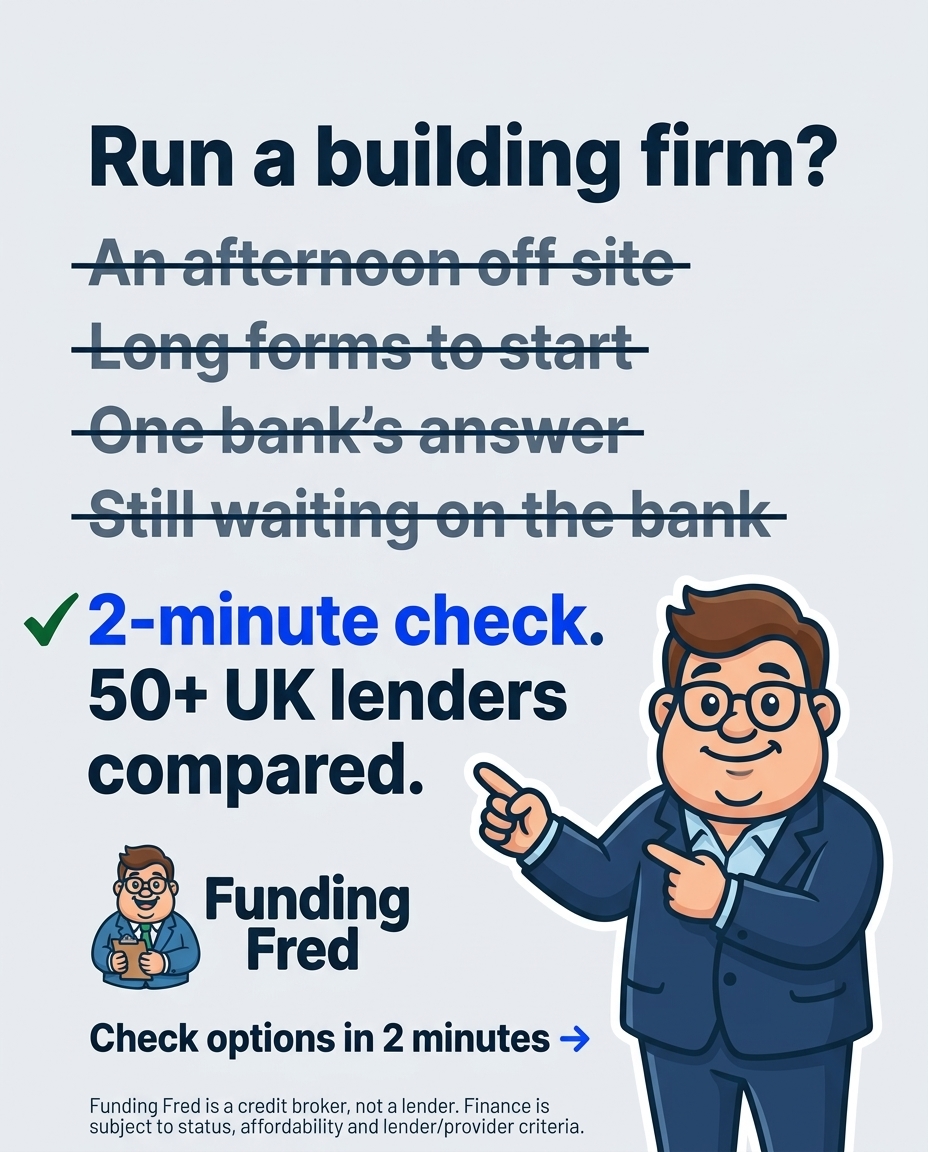
Funding Fred does this more aggressively than anyone in the set. One current ad opens on a single qualifying question, then strikes through the reasons not to bother.
*Run a building firm?* If you do not, you have been excused in four words. A sister ad makes eligibility itself the hook -- *the scheme your bank won't mention* -- with "Check My Eligibility" as the action rather than "Get a quote". Live 47 days.
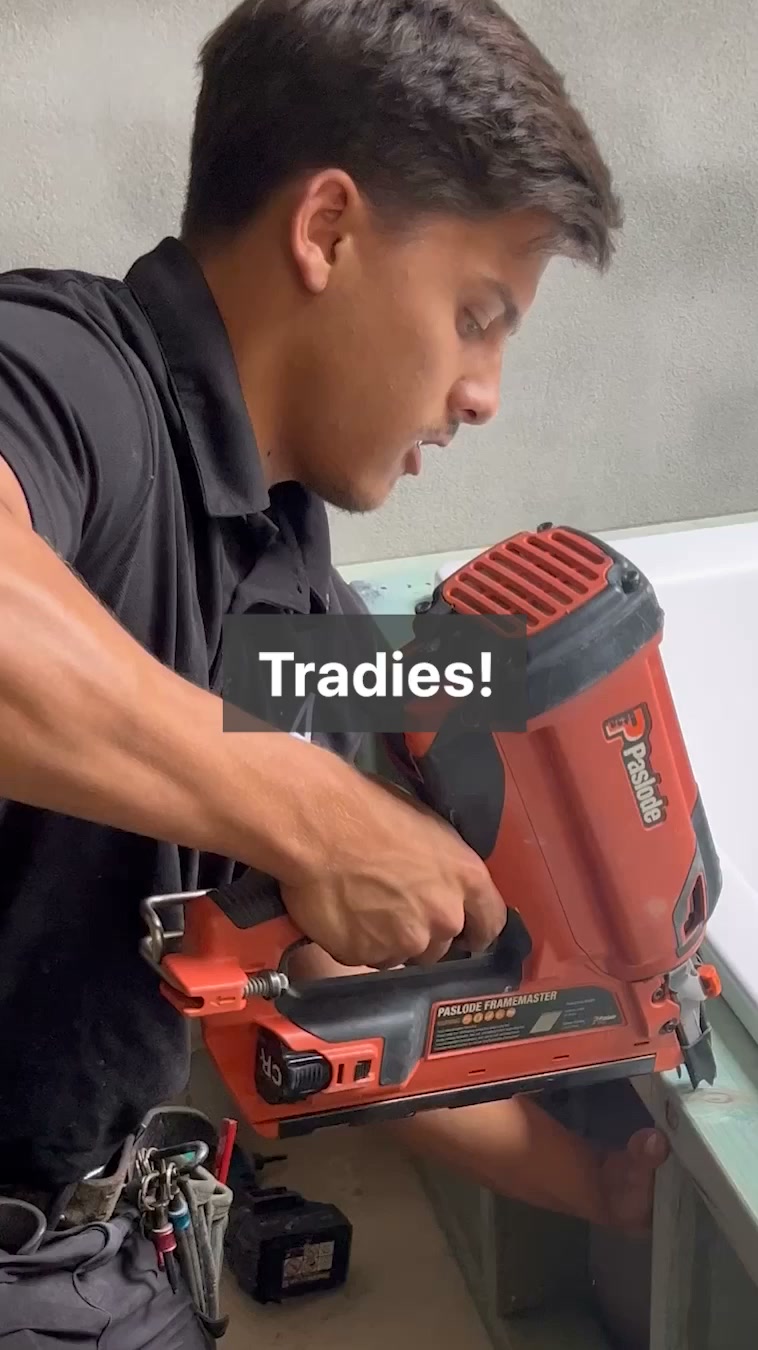
Valiant, in Australia, compresses the whole idea into one word of on-screen text.
*Tradies!* That is the entire qualifier, and it does more filtering work than most forms do.
The pattern holds at the top of the longevity table. The longest-running lead ad in this set -- **232 days** -- belongs to Guaranteed Car Buyers, and its hook is *got a faulty or damaged car?* It is not advertising car sales. It is advertising a narrow, self-selecting condition, and it has outlasted every broad "sell your car" ad around it. Capital-Infusion opens on *earning $20K+ per month?* for the same reason.
The logic is uncomfortable but consistent: **an ad that is easy for everyone to respond to produces leads that are expensive for everyone to process.** Narrowing the creative raises cost per lead and lowers cost per customer -- and only one of those two numbers appears in your ads manager by default.
## Stage two: ask the same question again in the form
This is the stage almost every guide skips, and it is where the qualifier usually dies.
Meta's instant forms default toward volume. Contact fields arrive prefilled from the user's profile, the flow is two taps, and submission is close to frictionless. That is excellent for cost per lead and frequently terrible for cost per customer, because a prefilled form collects identity, not intent. The person has confirmed who they are. They have not confirmed that they qualify, that they are ready, or that they understood the offer.
Three decisions fix most of it.
**Choose intent over volume where the option exists.** Meta offers form configurations that trade submission rate for lead quality -- typically by adding a review or confirmation step before submit. If your sales team is the bottleneck rather than your pipeline, that trade is almost always correct.
**Ask one custom question, and make it the disqualifying one.** Not "how can we help?" -- that is an open text field nobody reads. Ask the thing that determines whether this lead is workable, in the same words the ad used. If the creative said *$10K+ monthly revenue*, the form asks for a revenue band. If it said *run a building firm?*, the form asks the trade. The question should have a wrong answer.
**Resist adding fields that only serve the CRM.** Every field you add costs volume. Spend that budget on qualification, not on data you could enrich automatically later. Company size you can often resolve from a domain; whether someone has a damaged car you cannot.
The through-line matters more than any individual setting: the form's job is not to collect a person, it is to **confirm the claim the ad made**. A form that asks nothing the creative implied has already broken the chain, and everything downstream inherits the damage.
## Stage three: capture the submission in real time
Meta's forms collect submissions into the platform. Left alone, that is where they stay, and someone downloads a CSV when they remember.
This is the most expensive failure in lead gen because lead value decays by the hour. A business owner who enquired about funding on Tuesday morning has usually spoken to two competitors by Tuesday afternoon.
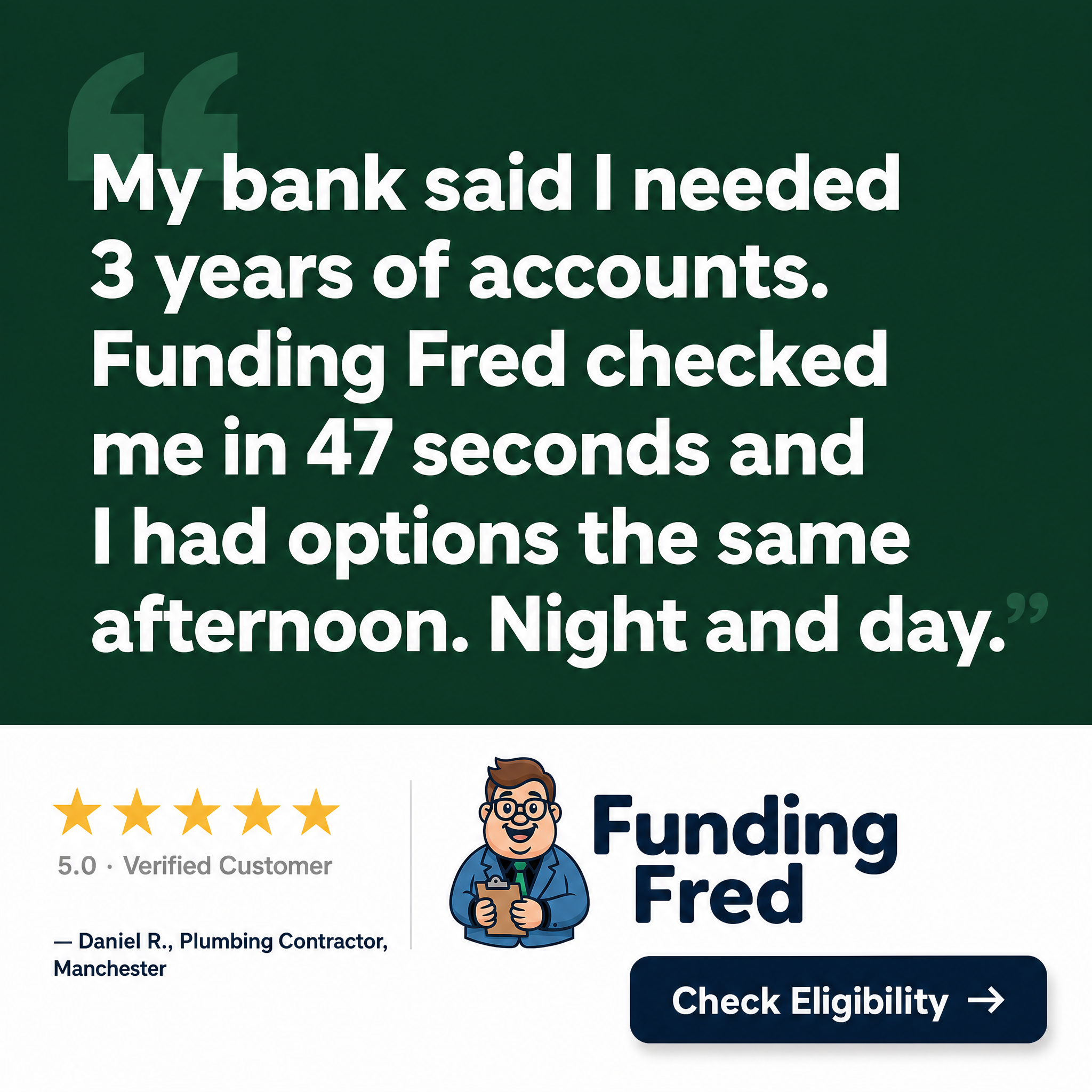
It is also a promise-keeping problem. Look at what these advertisers are actually selling: Funding Fred's testimonial contrasts a bank that wanted three years of accounts with a check that took 47 seconds.
Speed *is* the product. An ad that sells 47 seconds and then follows up on Thursday has not mis-sold anything -- it has mis-built the plumbing behind a true claim, which is worse, because the lead now knows the claim was decorative.
What capture should mean in practice: submissions arrive by webhook, in real time, into something that can act on them. Not a scheduled export. Not a manual download.
One test, and it is unforgiving: **how many minutes pass between form submit and first outbound contact?** If nobody can answer, that is the answer.
## Stage four: enrich the record with what the ad promised
A raw lead record gives you what the person typed. It does not tell you the thing that determines whether the lead is good: which ad produced it, and therefore what they were promised.
That cuts both ways. Downstream, a salesperson needs to know whether this person responded to *the scheme your bank won't mention* or to a generic rate comparison -- those are different conversations with different objections already loaded. Upstream, you cannot improve creative you cannot attribute.
MotorMoolah's ad shows why the promise travels with the lead. It pre-empts specific objections -- instant online valuation, free nationwide collection, outstanding finance settled, payment direct to bank -- so a lead from this creative arrives expecting a particular process.
If that lead reaches a CRM as "web lead, name, phone", every one of those expectations has been discarded at the handover, and the first call starts from zero.
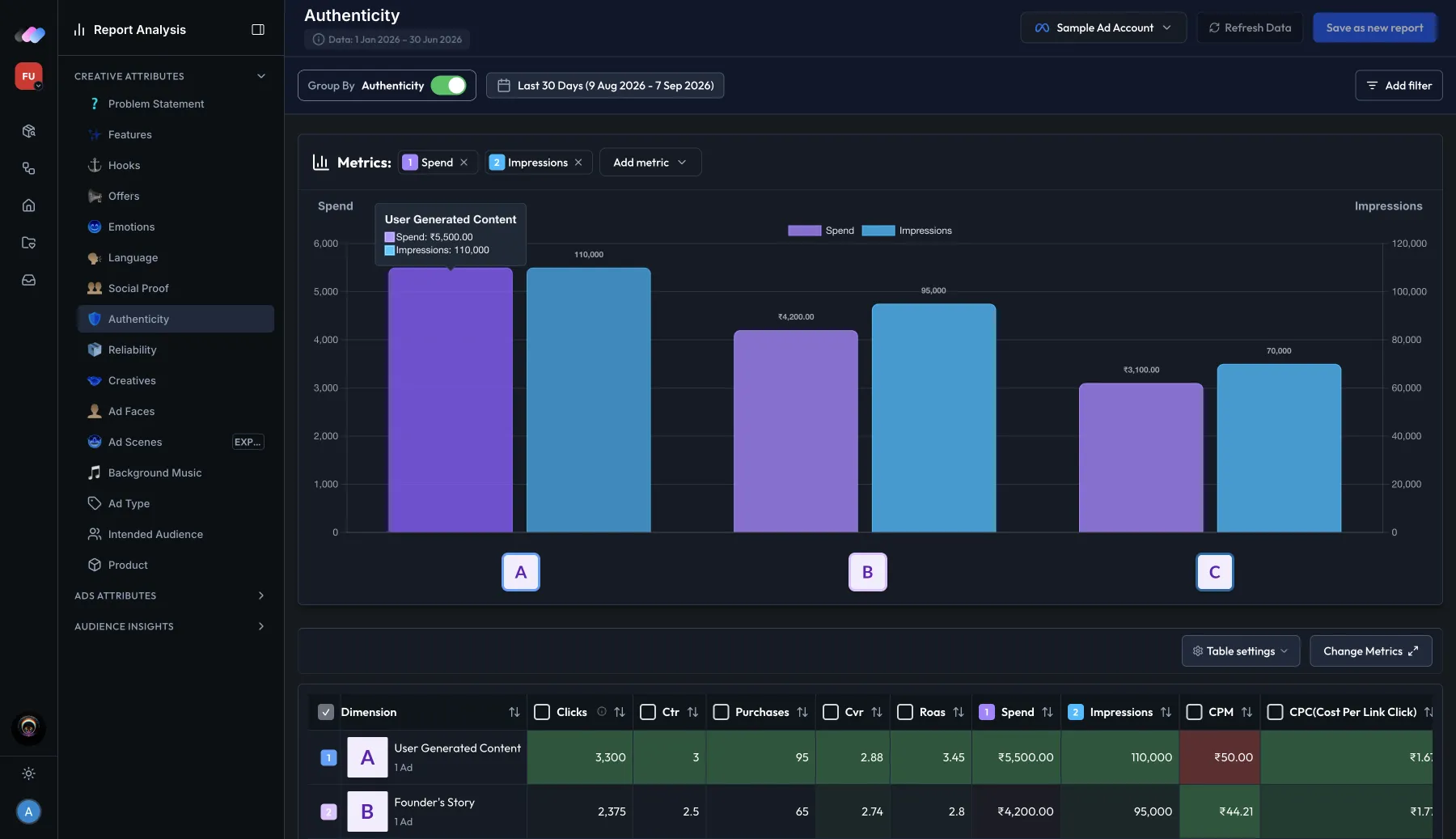
Enrichment means attaching the source ad, the promise it made, the qualifying answer, and whatever contact detail can be resolved automatically. Done properly it also runs backwards: the creative board stops being a list of ads and starts answering which of them produced leads worth having.
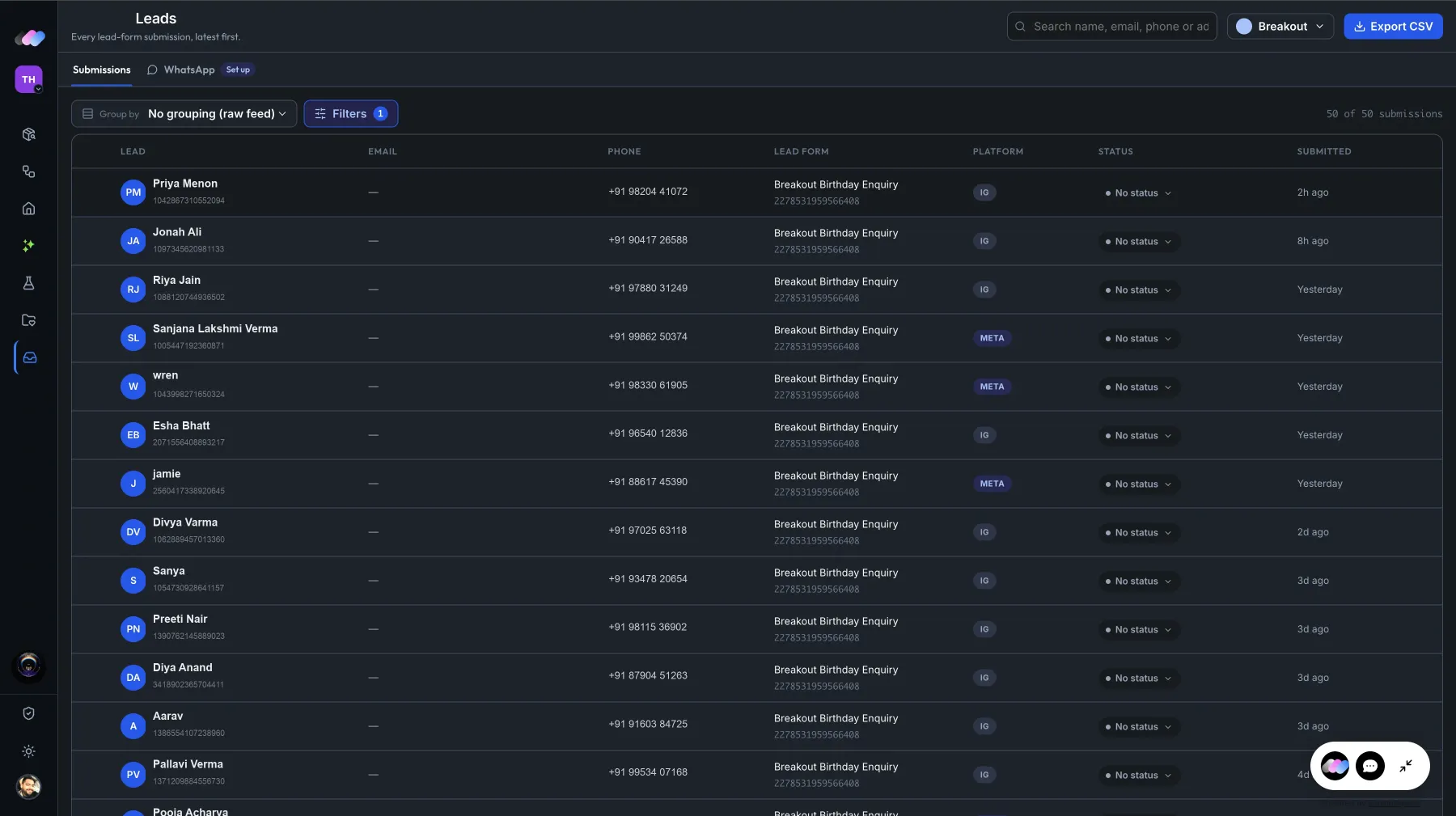
At the record level, that same attribution is what lets a salesperson sort a list instead of working it top to bottom.
## Stage five: route on the qualifier
Routing is where lead gen quietly stops being a marketing problem and becomes an operations one.
Settle these before you scale spend, because each has a default answer you will not like:
- Who owns a lead by default, and who owns it if that person is on leave?
- What happens to one that arrives at 11pm, or on a Sunday?
- How long does a lead sit unworked before it reassigns?
- What happens to a disqualified lead -- is it **marked**, or does it just disappear?
That last one is not housekeeping. Disqualification data is the raw material for stage six, and a CRM that silently deletes bad leads has destroyed the only signal that would have stopped them arriving.
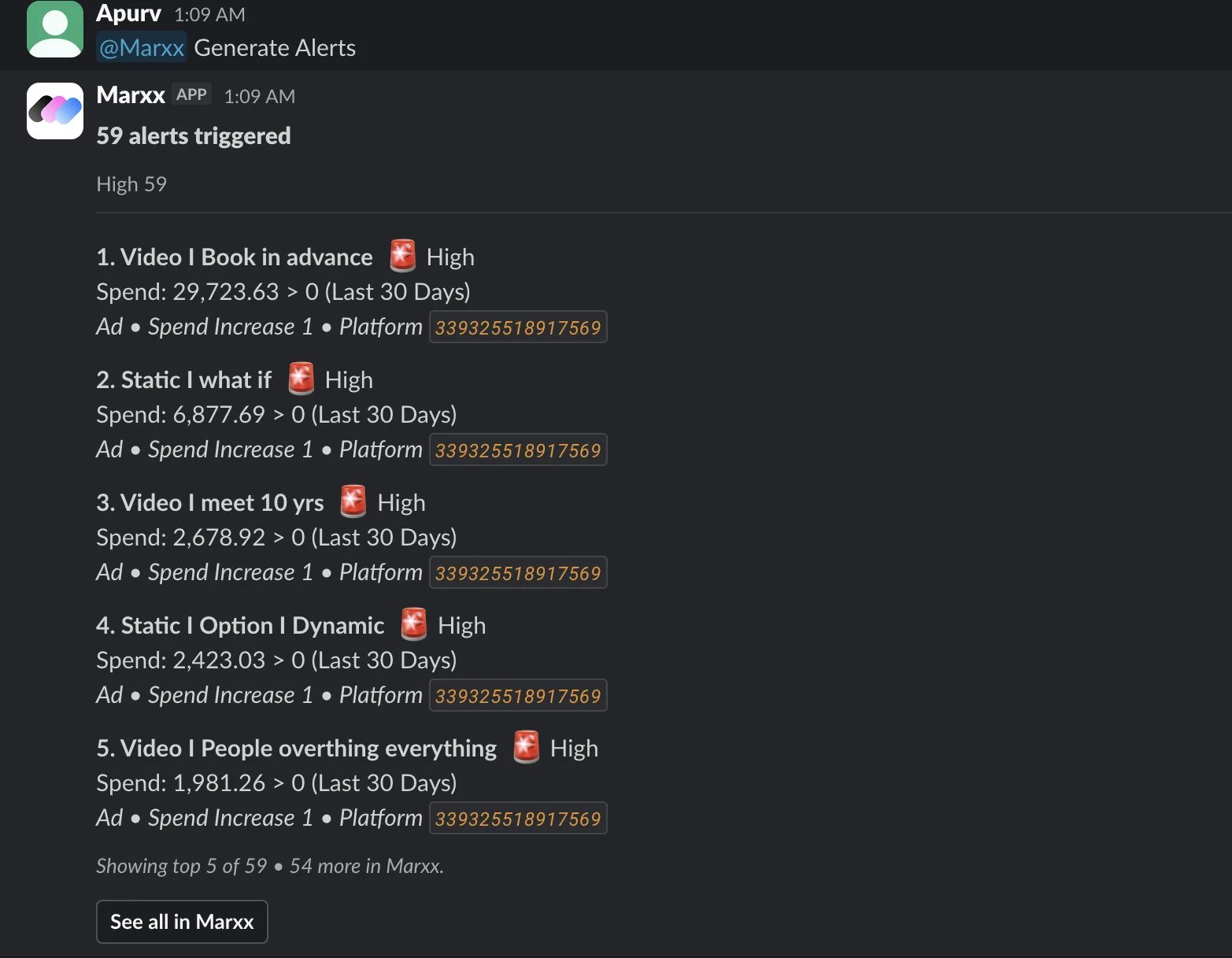
In practice routing looks like an alert reaching a person where they already are, carrying enough context to act on without opening anything else.
A lead that arrives in a channel with the source ad, the promise, the qualifying answer and an owner already assigned is a lead someone can work in the next two minutes. One that arrives as a row in an export is a lead someone will get to.
## Stage six: send the result back
Here is the stage that decides whether the whole system compounds or rots.
By default, Meta optimises toward the event it can see -- the form submission. It will therefore get relentlessly better at finding people who fill in forms. People who fill in forms are not the same population as people who buy, and over a few weeks the two groups separate. That divergence is the precise mechanism behind *the leads got worse as we scaled*. Nothing broke. The system did exactly what you asked.
The fix is to feed the downstream outcome back through the Conversions API, so the optimisation target becomes a qualified lead rather than a submission. When a lead is marked qualified, books, or buys, that event returns to Meta attached to the original click.
Two things decide whether this works.
**Pick an event that is fast enough to steer with.** An outcome confirmed ninety days later cannot shape delivery today. Most teams send a mid-funnel event -- "qualified by sales", "meeting booked" -- precisely because it arrives while the campaign is still running.
**It only works if stages two to five are real.** You cannot send back a qualification signal you never asked for, never attached, and never recorded. This is why the chain has to be intact rather than mostly intact: stage six is where the earlier work either pays off or turns out to have been theatre.
Run without it and the account optimises toward cheap form-fills. Run with it and the same budget drifts, week by week, toward people who actually convert.
## The chain
| Stage | What it does | Failure mode | The one question |
|---|---|---|---|
| Qualify | Filters in the creative | Broad hook, cheap leads, poor close | Does the ad name who it is *not* for? |
| Form | Confirms the ad's claim | Prefilled, frictionless, no custom question | Does the form have a wrong answer? |
| Capture | Submission reaches a system live | CSV exports, delayed follow-up | Minutes from submit to first contact? |
| Enrich | Attaches source ad, promise, answer | Leads arrive as bare contacts | Can sales see which ad produced this? |
| Route | Right owner, with context, with an SLA | Weekend leads rot, bad leads vanish | What happens to a Sunday 11pm lead? |
| Send back | Outcome returns to Meta | Optimised for form-fills | Is any post-submit event going back? |
If you cannot answer the right-hand column for all six rows, your lead quality problem is not the creative and not the audience.
## Diagnosing it from the symptom
Most teams arrive at this knowing something is wrong but not where. The symptom usually names the stage.
| Symptom | Most likely stage | What to check first |
|---|---|---|
| Cheap leads, nobody qualifies | One and two | Does anything in the ad or form exclude anyone? |
| Leads were fine, then degraded as spend rose | Six | Are you still optimising on submissions? |
| Sales says leads "don't remember enquiring" | Two and three | Prefilled form plus slow follow-up |
| Good leads, poor conversion | Four | Is the promise reaching the salesperson? |
| Volume fine, pipeline lumpy | Five | After-hours and weekend routing |
| Same bad leads keep coming back | Five and six | Disqualification is being deleted, not recorded |
The pattern worth noticing: only the first row is a creative problem. Every other symptom that gets blamed on creative is a handover failure somewhere further down.
## Where Marxx fits
Marxx treats these as one system rather than six tools. For lead-gen accounts it takes the submission through to the follow-up and back to Meta -- capturing lead ads by webhook, enriching records with contact details and source ad information, then routing conversions back.
The practical consequence is that the creative data and the lead data sit in the same place. *Which hook produced leads that actually closed* becomes a question you ask, rather than a reconciliation project between two exports that nobody has time to run.
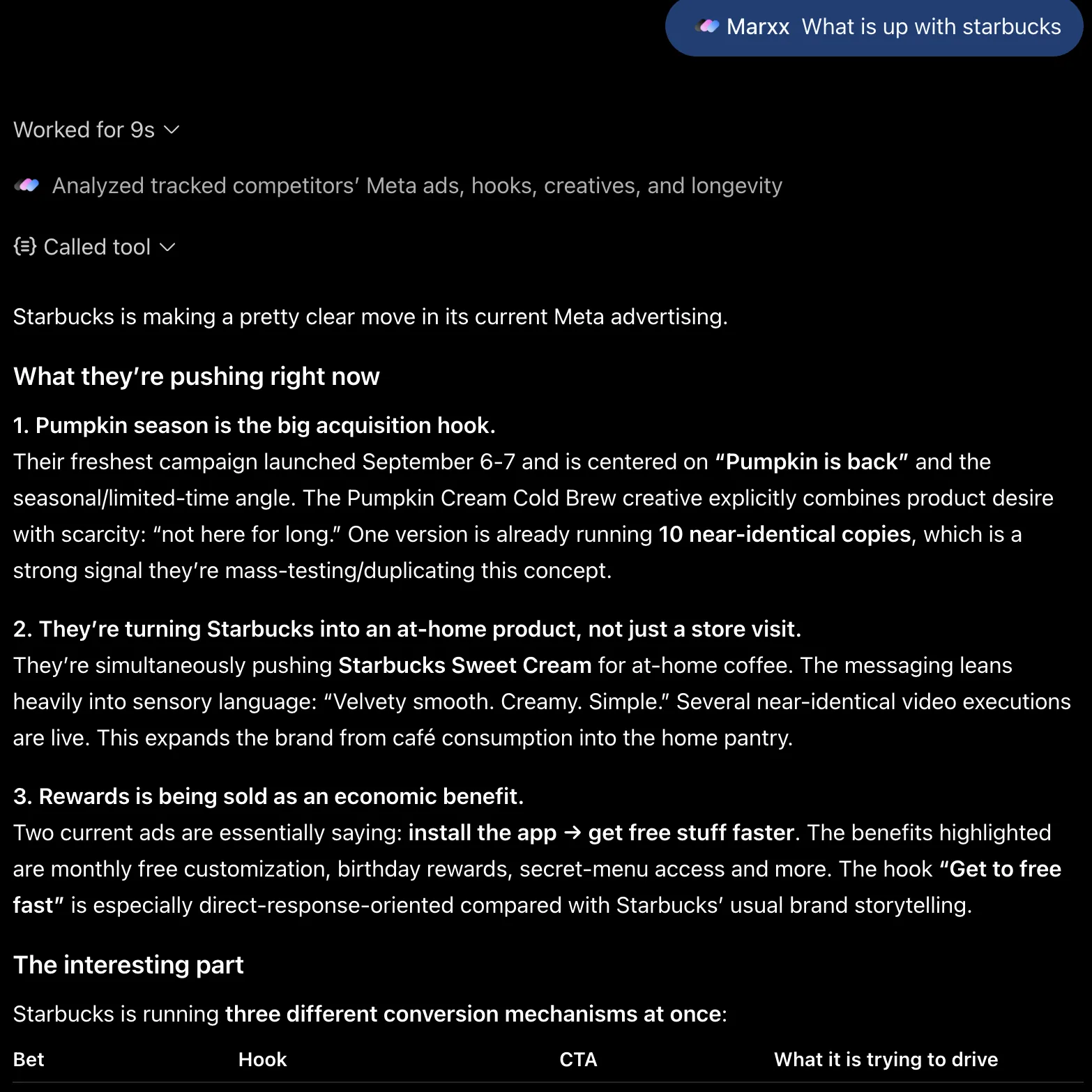
Because the account is already indexed, that question can be asked in Claude, ChatGPT or Slack rather than by assembling a report first.
## Start here
Do not rebuild the whole chain this week. Run the six-row table against one live campaign and find the first row you cannot answer -- that is your constraint, and nothing downstream of it is worth fixing yet.
For most accounts the first failure is stage two: a frictionless prefilled form sitting underneath a creative that was doing real qualifying work. Adding one question with a wrong answer is an afternoon's work, and it changes what every stage after it receives.
**Demo: lead capture -> enrich -> route -> conversion back to Meta.** [Book a session](https://marxx.ai/book-a-demo) and we will wire one of your live lead campaigns through the full chain, so you can see which ads produce leads that survive contact with your sales team.
---
- [More Agency operations articles](https://marxx.ai/posts/category/agency-operations)
- [All articles](https://marxx.ai/posts)