Higgsfield is an excellent answer to a question most ad teams aren't asking.
That question is "how do I render this shot?" — and if you already know the shot, Higgsfield's camera and motion control is as deep as anything on the market. The question a paid social team actually has is different: what should we make this month, in how many versions, and how does it get live in the ad account?
That's the whole comparison. One is a camera. The other is a studio with a media team attached.
The short version. Buy Higgsfield if the render is your bottleneck — you know the concept, you want cinematic control, and someone downstream handles cuts, uploads and campaigns. Buy Marxx if deciding what to make is your bottleneck — you need 10–30 ads a month, cut per placement, live in Meta, with the next brief coming out of what just happened in the account. Buy both if you make hero films and run volume. They barely overlap.
Everything below about Higgsfield comes from their own site, checked 26 September 2026.
What Higgsfield actually is
A generation platform with unusually deep creative control:
| Capability | What it gives you |
|---|---|
| Model access | Kling 3.0, Kling o1 and 2.6, Seedance 2.0 and 2.5, Sora 2, Veo 3.1, Wan 2.7, Nano Banana Pro, ElevenLabs audio |
| Cinema Studio | Virtual camera bodies, lens types, focal lengths — simulated optical physics |
| Motion control | Up to three simultaneous camera movements; motion reference upload to set pace and gesture |
| Consistency | First and last frame locking, character locking across shots |
| Character and UGC | Soul 2.0, Lipsync Studio, UGC Factory, Fashion Factory, AI face swap |
| Marketing Studio | Product photos into video ads, aimed at ecommerce |
| Output | HD, and cinematic 21:9 alongside standard formats |
That is a genuinely strong toolkit. If your complaint about AI video is that it looks like AI video, this is the category of product that answers it.
What it costs
| Plan | Price | Credits | Notes |
|---|---|---|---|
| Basic Monthly | $9/mo | 120 credits/mo | No unlimited models |
| Pro Monthly | $43/mo | 900 credits/mo | 7 unlimited models |
| Pro Annual | $29 → $23/mo billed annually | 900 credits/mo | Same, cheaper annually |
| One-time pass | $3 | 40 credits | 2-day unlimited Soul 2.0 |
Credit value rises with tier: roughly $1 = 14 credits on Basic, 27 on Pro, 31 on Max, 33 on Team.
Two details worth reading twice before you budget. Credits are consumed per generation, and an ad rarely survives its first render — so the real number to model is generations per finished ad, not price per month. And the footnote on the pricing page states that unlimited models and free generations are available only on higgsfield.ai itself, not via MCP/CLI, Canvas or Supercomputer — so the automated paths, the ones an ads team would want to script, sit outside the unlimited tiers.
What Marxx is
Marxx sits one layer out, around the generation rather than inside it.
The canvas is roughly sixty node types — research, writing, image, video, audio, voice, avatars, UGC, talent — plus the Meta objects themselves: campaign, ad set, ad, carousel card.
- Voice: generation, cloning, changing, dubbing, transcription
- Video: generation, animation, motion control, extension, upscaling, trimming, combining, resizing, frame and audio extraction
- Image: generation, editing, face swap, background removal
- Publishing: campaign, ad set and ad created in your Meta account, paused, so nothing spends before a human looks
The input side is the part a generation engine doesn't have: competitor tracking across Meta, Google and keywords, natural-language search across the ad library, creative decoded across its hook, offer, format, emotion, social proof and audience, account audits with fatigue scoring, and a browser extension for capturing live ads.
Pricing is per workspace, not per seat — which is the difference between a three-person agency pod costing one licence or three.
Side by side
| Marxx | Higgsfield | |
|---|---|---|
| Primary job | Decide what to make, make it, publish it | Make the best-looking generation |
| Decides what to generate | Yes — competitor and account data drive the brief | No — you bring the concept |
| Depth of camera control | Basic motion control | Deep: lenses, bodies, focal lengths, multi-axis motion |
| Model breadth | Generation across the whole asset chain | Nine-plus named models, deep control over each |
| Voice and dubbing | Cloning, changing, dubbing, transcription | Lipsync Studio, ElevenLabs audio |
| Avatars / UGC | AI avatars, UGC studio | Soul 2.0, UGC Factory, face swap |
| Placement cuts | 9:16, 4:5, 1:1, carousel, in-flow | Standard formats plus 21:9 |
| Publishes to Meta | Yes — campaign, ad set, ad, paused | No — export and upload yourself |
| Competitor research | Built in | Not part of the product |
| Post-launch loop | Fatigue scoring, hook comparison, audits | Not part of the product |
| Pricing model | Per workspace | Per seat, credit-metered |
| Best for | Paid social teams and agencies shipping volume | Creators and studios who know the shot |
The three questions that decide it
Who decides what to make? If a strategist already writes briefs from competitor and account data, a generation engine is enough. If deciding what to make is the bottleneck — and for most teams shipping three to five concepts a month, it is — the research layer is the product you're buying.
What happens after the render? Count the steps between "video is ready" and "ad is live". With a generation engine you write the brief yourself, prompt until the render holds, download, re-cut to 9:16, 4:5 and 1:1 in another tool, check safe zones per placement, re-render the local-language version, upload to Ads Manager, rebuild campaign, ad set and ad, re-enter copy and links, launch, then track the result somewhere else. With a workflow the brief comes out of competitor and account data, the script, generation, voice and avatar sit on one canvas, placement cuts are nodes rather than a separate tool, and the campaign, ad set and ad are created paused in Meta for a human to review. Those middle steps aren't hard. They're just where two days a week go, and they're the reason accounts ship six ads a month instead of twenty.
What tells you it worked? A generation tool has no opinion about the ad after launch. If nothing feeds fatigue and hook performance back into the next brief, you produce faster without learning faster — which, after three months, is just a more expensive way to guess.
The last mile a beautiful render doesn't cover
The fastest way to test whether render quality is really your constraint is to look at what is actually in market, winning, right now. Start with a hospital selling maternity care — a category where trust is the entire purchase.

A photograph, a line of warm copy about being there for every first scan and snuggle, an offer badge. No camera simulation could improve this ad, because the thing doing the work is the promise, not the production. What Cloudnine needs is twelve more of these aimed at twelve different moments in a pregnancy — which is a throughput problem, not a rendering one.
B2B software has the same shape, and tends to be blunter about it. Motion's ad names the pressure its buyer is actually under: your boss says do more with AI.
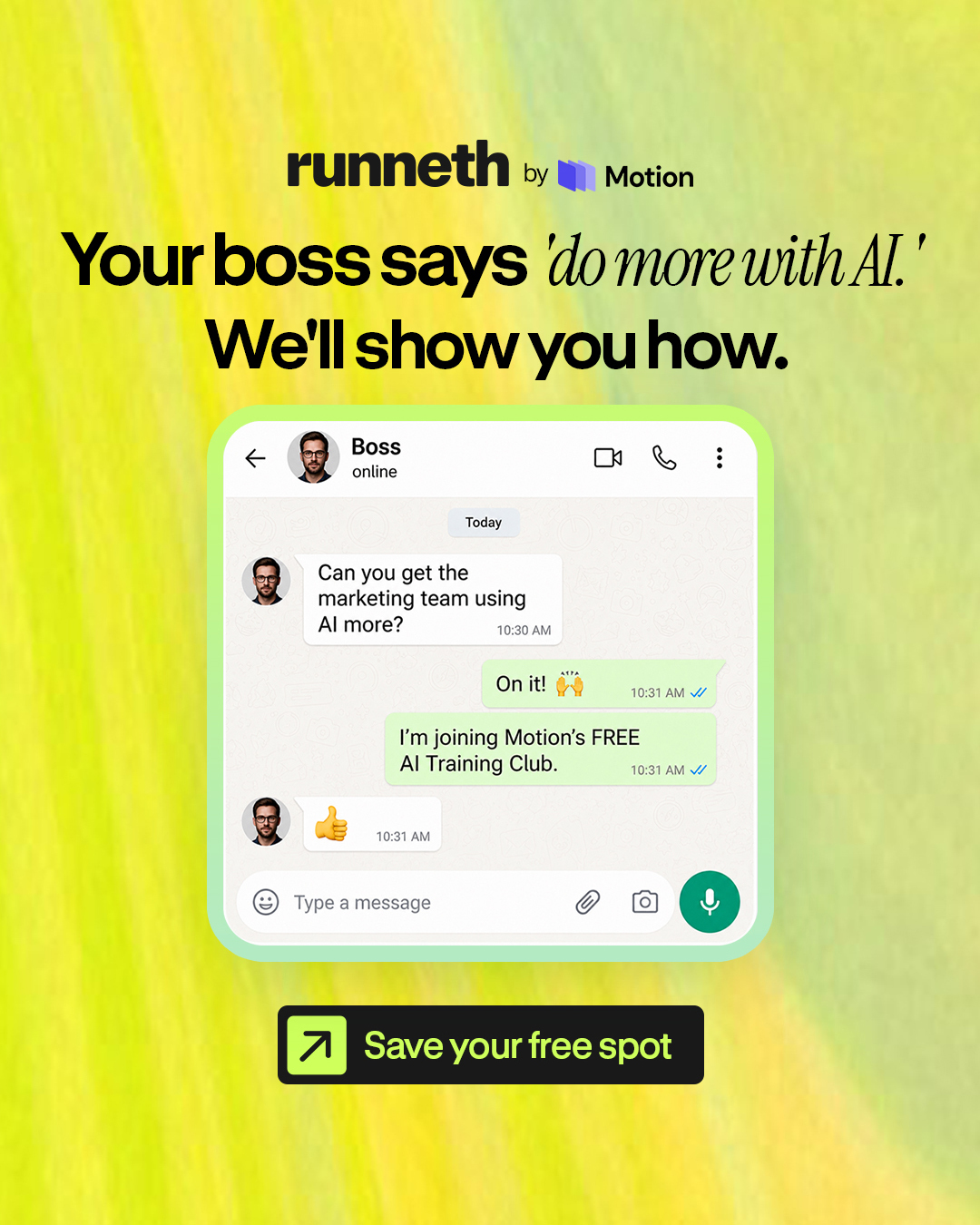
Type on a flat background. That's the whole creative. It works because it repeats a sentence the reader heard in a meeting last week — and the only way to find the next sentence like it is to look at what the category is saying and what has stopped working in your own account. Neither of those is a generation problem.
Motion runs a second concept in the same window that makes the point even more sharply, and it is built entirely on one borrowed observation.
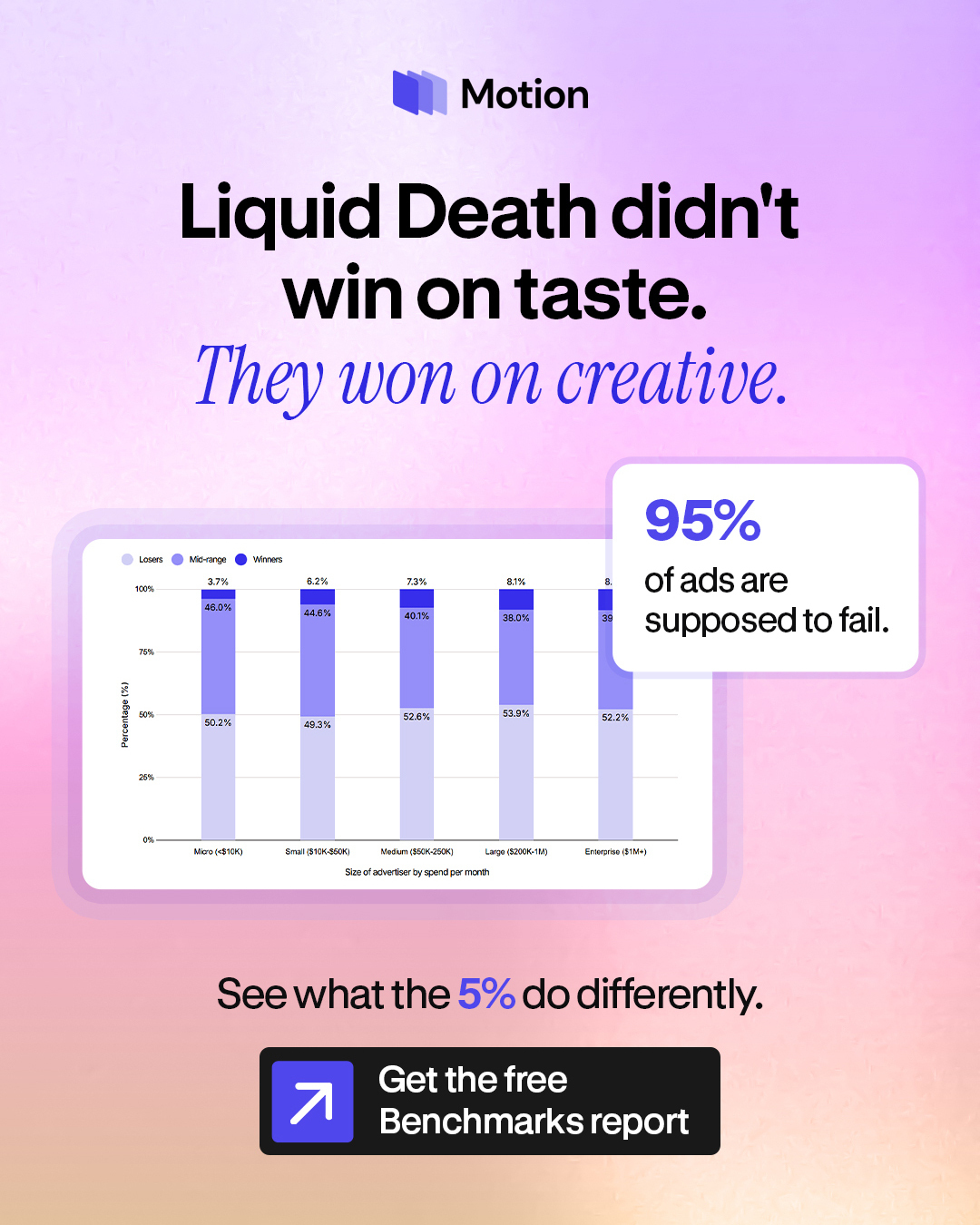
Liquid Death didn't win on taste. They won on creative. Live 32 days, alongside several siblings running the same length — a brand backing a whole family of argument-led statics at once. Volume plus variety, with the production values of a slide.
Atria does the same job through tone instead, with a mock apology for how much better its Slack integration made everyone's lives.
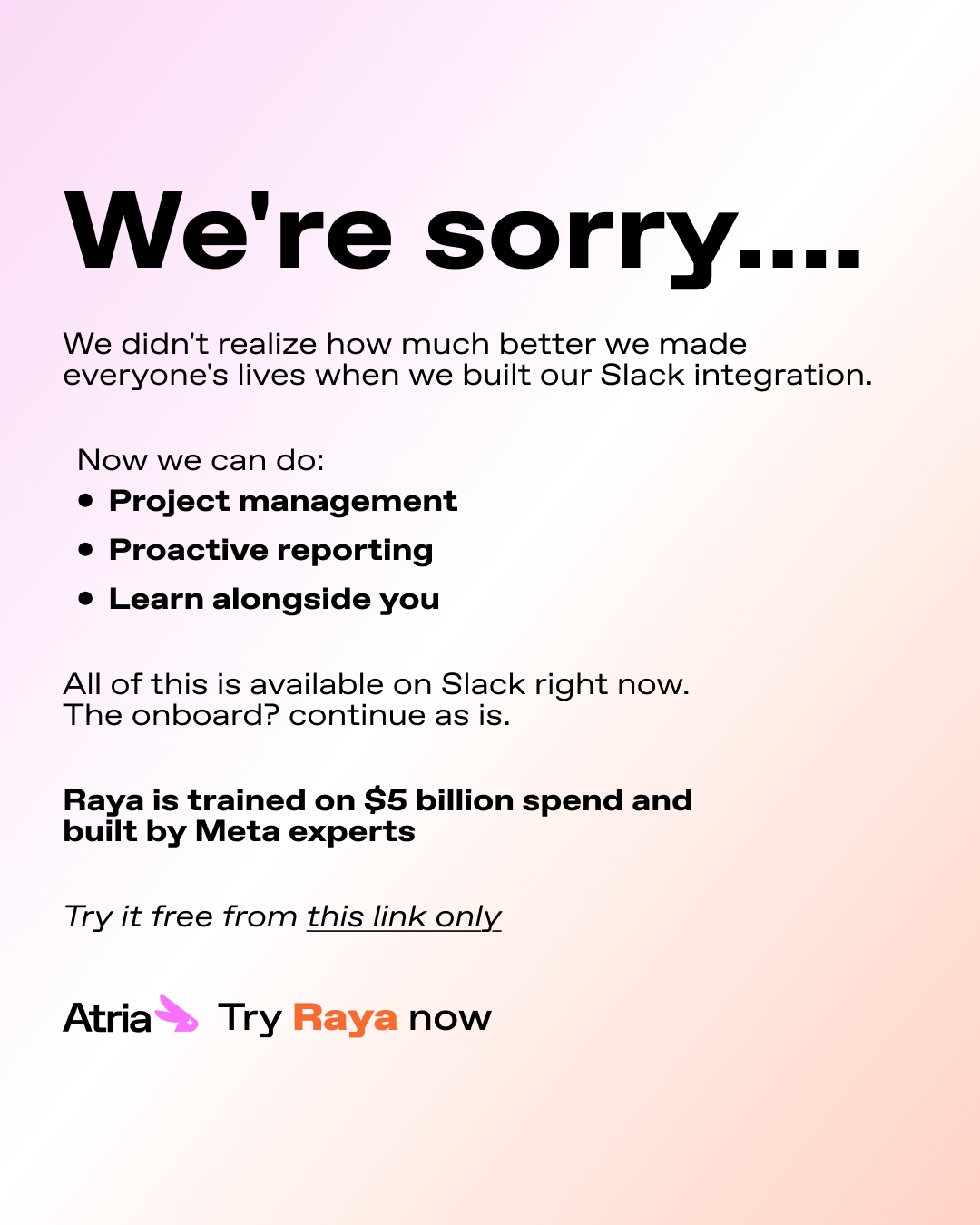
That one has been live 84 days — the longest-running B2B creative in this set — and it is a screenshot with a joke on it. Whatever the ceiling on cinematic quality is, this ad is nowhere near it, and it does not matter, because the concept is doing all the work. Finding that concept is the expensive part.
Education lending needs a different kind of nerve. GyanDhan's ad flatters a student with average marks and real ability, then dares them to prove it.

Got the skills? Then prove it. One test, a ₹2.5 lakh scholarship, 68 days in market. The tension here is psychological rather than visual — it works on someone who has been quietly told their grades define them — and no amount of lens control would have found it.
Business lending goes the other way: it states a mechanism, flatly, in the plainest possible layout.
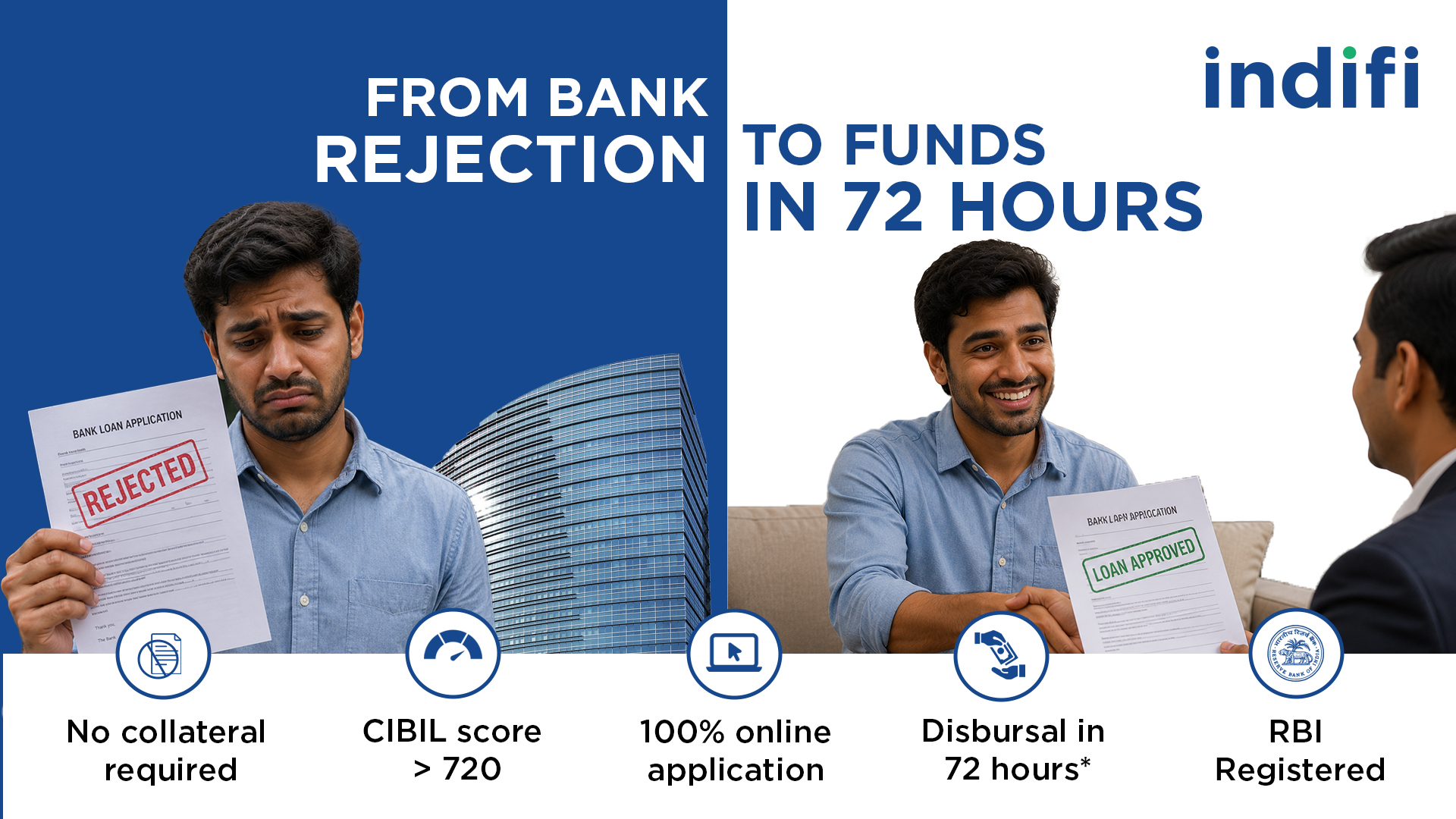
From bank rejection to funds in 72 hours. Live 33 days, with siblings running 30 and 33 alongside it. The claims are specific and checkable, the design is a template, and the ad's job is to be believed rather than admired. Again: nothing a better render fixes.
Meal kits are worth looking at because they are the most heavily produced category on this list, and even here the running ads are simple.
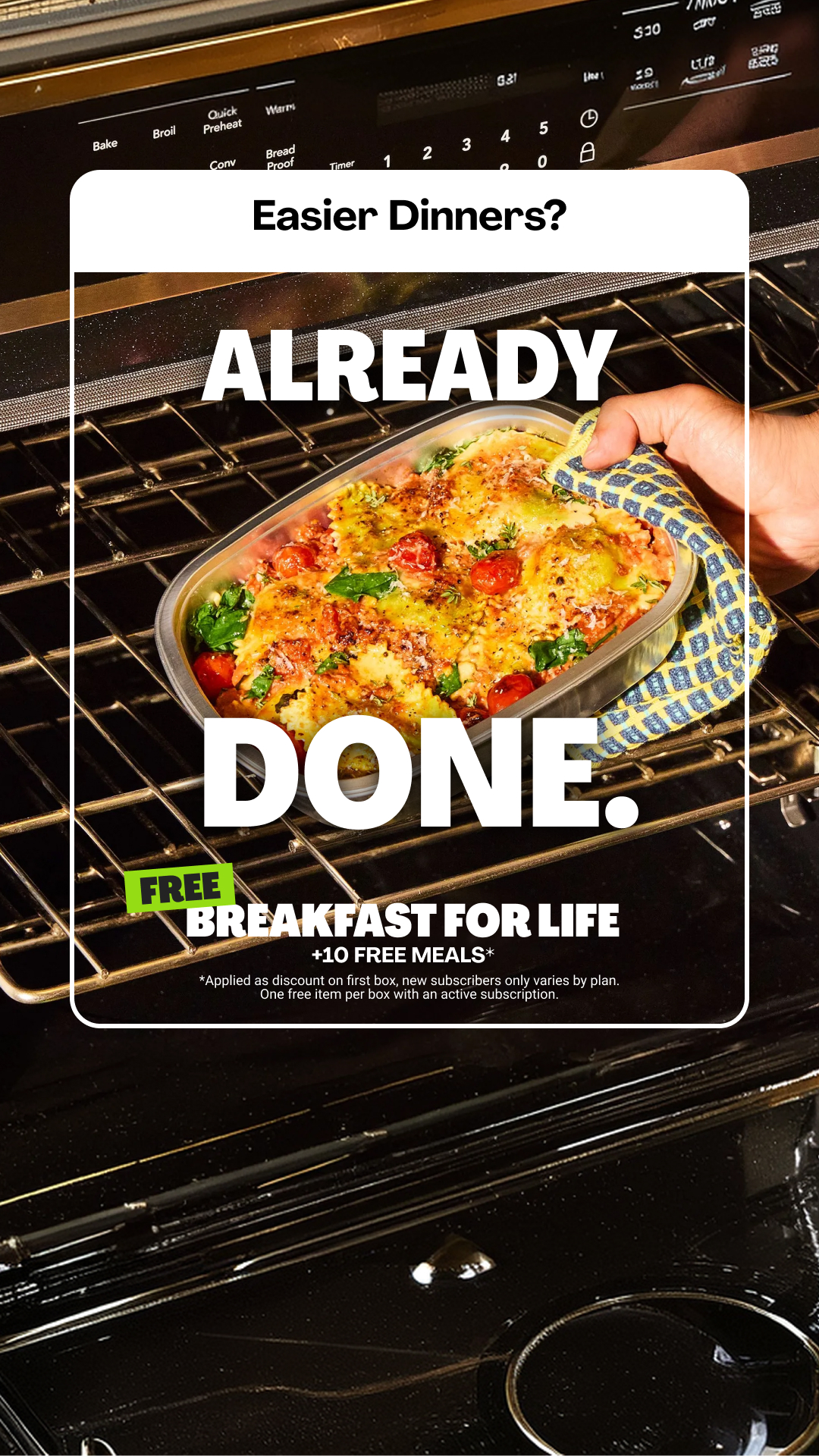
Easier dinners? Already done. A plated photo, a headline, ten free meals. HelloFresh has the budget for anything it wants, and this is what it chooses to run, because the variable that matters is how many of these it can put in market against how many dinner-time moments.
Its stablemate Factor targets a completely different person with the same machinery.

Staying strong after 50? Same production kit, same offer structure, different human being — and that is the versioning problem in one image. A team that can only produce one hero asset a month cannot address both of these people. A team that can produce thirty can.
An Indian AI course ad shows how far a plain layout can go when the line is right.

You're one skill away from being replaced by someone who knows AI. Live 40 days, part of a set running 46, 48 and 49 days on the same premise phrased differently. That is a concept being exploited properly: one insight, many angles, all cheap to make.
Apparel is the category you would most expect to need beautiful video, and this one doesn't.

No wrinkles. No loose collars. Live 46 days on a product shot and two short lines. The ad is a specification, aimed at a man who has been let down by a shirt before.
And then the plainest thing in this entire post, which has also run longer than everything else in it by an order of magnitude.

A used-car inventory listing — a model and a price set on an image — running 535 days. Not a concept, not a hook, barely a design. It survives because it answers the only question its reader has. That is the honest limit of "which model looks best": a 21:9 cinematic render is a beautiful asset and a poor Reel, and none of the eleven ads above needed a camera simulation to exist. What each of those teams needs is twelve more a month, cut per placement, live the same week.
One brief, end to end
What the canvas runs in one pass, in order: research — what rivals are running, what's fatiguing in your account — then brief and script, then image and video generation, then voice cloning, dubbing and lip sync, then the avatar or UGC render, then resizing to 9:16, 4:5, 1:1 and carousel, and finally the campaign, ad set and ad, created paused in your Meta account.
No exports and no re-uploads between steps, and nothing spends until someone unpauses it. The point isn't that each step is impossible elsewhere — it's that each handoff between tools is where a version gets skipped, a safe zone gets missed, or a launch slips a week.
The wider alternative landscape
"Higgsfield alternative" means four different things depending on what's broken. Buy from the row that matches your bottleneck:
| If your bottleneck is… | The category | What to look for |
|---|---|---|
| Render quality and control | Model aggregators and generation engines | Model breadth, camera and motion control, consistency tools |
| Faces and spokespeople at volume | Avatar and UGC platforms | Licensed avatars, lip sync quality, language coverage, usage rights |
| Static and ecommerce creative | Ad-creative generators | Template quality, brand kit control, catalogue integration |
| Deciding what to make, and shipping it | Ad workflow platforms | Competitor research, placement cuts, publishing into the ad account, post-launch feedback |
Most teams shop in row one because that's what demos well, then discover their actual problem was row four.
When each one wins
| Your situation | The answer |
|---|---|
| One hero film that has to look extraordinary | Higgsfield |
| A director already decides every shot | Higgsfield, or any strong generation engine |
| You ship 10–30 ads a month across placements | Marxx |
| Deciding what to make is the bottleneck | Marxx — the research layer is the point |
| You want the ad live in Meta, not a file in Downloads | Marxx |
| Agency with several people on one account | Marxx, on per-workspace pricing |
| Hero films and volume | Both — generate the hero asset there, run the machine here |
What to ask on either demo
- Show me one brief becoming a live ad without leaving the tool.
- How do I get 9:16, 4:5 and 1:1 from one master with text inside the safe zones?
- Can it produce the same concept in three languages?
- What decides what I make next month?
- After launch, does anything here tell me which hook won?
- Does it publish paused, and who approves before spend?
- How many generations does a finished ad actually take — and what does that cost at my volume?
- Per seat or per workspace?
Question seven is the one that changes the invoice. Ask for it in generations, not months.
Trial the canvas: turn one brief into a finished ad
Bring one brief — a product, a customer and a moment. On a 30-minute call we'll take it from competitor research to a finished ad on the production canvas, cut for every placement, and push it to your Meta account paused.
Book a demo and connect one ad account on the call. If you want to see the research layer first, the creative intelligence page explains how creative gets decoded and fatigue gets scored.
FAQs
What's the best Higgsfield alternative for ads?
Depends on the bottleneck. For render quality, other model-access platforms compete directly. For a paid social team, the alternative worth looking at is a workflow that also decides what to make and publishes into the ad account — that's where Marxx sits.
How much does Higgsfield cost?
As of 26 September 2026: Basic at $9/month for 120 credits, Pro at $43/month (or $23/month billed annually) for 900 credits and seven unlimited models, plus a $3 one-time 40-credit pass. Credits are spent per generation, so model your cost on generations per finished ad.
Is Higgsfield good for Facebook and Instagram ads?
It can produce ad video, and Marketing Studio is aimed at commercial content. What it doesn't do is research the brief, cut per placement as part of the flow, or build the campaign in Meta — so expect manual steps on both sides of the render.
Can Marxx match Higgsfield's video quality?
Different emphasis. Higgsfield's depth is generative video with real camera and motion control. Marxx covers the whole asset chain — script, voice, avatars, UGC, resizing — plus research and publishing. For a cinematic hero film, Higgsfield's controls are the deeper toolset.
Do ads actually need cinematic video to work?
Often not. The longest-running ads in this post are a used-car inventory listing at 535 days, a B2B joke screenshot at 84, and a shirt product shot at 46 — none of them a render. Cinematic video earns its place on hero assets and brand moments; the weekly grind of a paid social account is volume, versioning and relevance.
Can I use both?
Yes, and plenty should. Generate the hero asset where the controls are best; run volume, versioning and publishing where the workflow is.
Does Marxx publish ads automatically?
It creates the campaign, ad set and ad in your Meta account in a paused state. A human unpauses it, so nothing spends without review.
Which is better value for an agency?
Compare the unit, not the sticker. Per-seat pricing multiplies with your team; per-workspace doesn't. Then add the hours spent on exports, re-cuts and campaign rebuilds, which don't appear on either invoice but do appear in your headcount.
Sources: Higgsfield pricing, Higgsfield AI video, Marxx production canvas