# Are There Tools to Analyze Data From the Meta Ad Library? Yes -- Here's What They Add
> The Meta Ad Library shows you competitors' ads but doesn't analyse them. Here's what it can't tell you, what ad intelligence tools add, and how to judge one.
- **Author**: Marxx
- **Published**: 2026-09-22
- **Category**: Creative strategy
- **URL**: https://marxx.ai/posts/meta-ad-library-analysis-tools
---
Short answer: yes. And the difference isn't "a nicer interface". It's that the Ad Library hands you a wall of creative, while a tool hands you a table you can sort.
Here's the same brand, Wonderla, seen both ways.
## What you get from the Ad Library
Search the Page and you'll see ads like this one, with a start date and an "Active" label:
You can tell it's a birthday offer. You can't tell whether it works, how it compares with the other 14,000 ads this brand has run, or what kind of ad Wonderla usually wins with.
To answer any of that by hand, you'd open every ad, note the start date, and type what you see into a sheet. Nobody does this past about twenty ads.
## What the Ad Library can't tell you
| Question | Ad Library |
|---|---|
| What's this brand spending? | Only for political and social issue ads |
| Which ad is working? | No performance data at all |
| Which ads have they kept running longest? | Only by opening each one and reading dates |
| How many copies of one creative are live? | Not summarised |
| What hook, offer and format does each ad use? | Nothing is tagged. You watch every video yourself |
| What do they run on Google, or bid on as keywords? | Not covered |
| Tell me when they launch something new | No alerts |
## What tagging actually means
This is the part that does the work. A tool watches the video or reads the image, reads the copy, and fills in the same fields for every ad, so thousands of ads become one sortable table.
Here's that exact birthday ad, tagged:
| Field | Value |
|---|---|
| Hook text | "Ride free this birthday month!" |
| Hook type | Offer-led |
| Problem | Leisure planning needs |
| Offer text / type | Free ticket / Others |
| Emotion | Excitement |
| Ad type | Branded asset |
| Why that type | "High-contrast brand colours, clear typography and a studio-style composite of the ride to emphasise the offer" |
| Audience | People celebrating a birthday this month, looking for something to do |
| Objective | Sales |
| Scene | Amusement park ride |
| Language | English |
| Longevity | Ran 163 days |
| Landing page | wonderla.com/park-booking, campaign `hyd_blast-birthday` |
Now a video ad from the same brand, tagged the same way:
| Field | Value |
|---|---|
| Hook | High-energy dance opening with a "Buy 2 Get 2 Free" text overlay |
| Hook type | Offer-led |
| Problem | Boredom and routine |
| Offer | Buy one, get one |
| Emotion | Joy |
| Ad type | Montage + UGC selfie |
| Social proof | User-generated content |
| Authenticity | Real people, not only actors and models |
| Audience | Young female friend groups looking for a weekday outing |
| Language | Tamil |
| Music | "Vibe" |
| Length | 49.6 seconds |
| Longevity | Ran 23 days |
Two ads, one taxonomy. Do that to 14,000 ads and you can finally ask questions.
## The questions tagging unlocks
Here's Wonderla's whole Meta account, grouped by hook and sorted by how long each kind of ad stayed live.
| Hook type | Share of ads | Average days live |
|---|---|---|
| Offer-led | 31% | 13 |
| Price-focused | 30% | 12 |
| Curiosity | 7% | 13 |
| Aspirational | 7% | 13 |
| **Problem-solution** | **2%** | **37** |
| Ad format | Share of ads | Average days live |
|---|---|---|
| Product image | 25% | 12 |
| Offer-first banner | 20% | 9 |
| Branded asset | 9% | 19 |
| **Skit** | **2%** | **37** |
Six ads in ten lead with a price or an offer, and those ads last under two weeks. The rare problem-led ads and skits last three times longer.
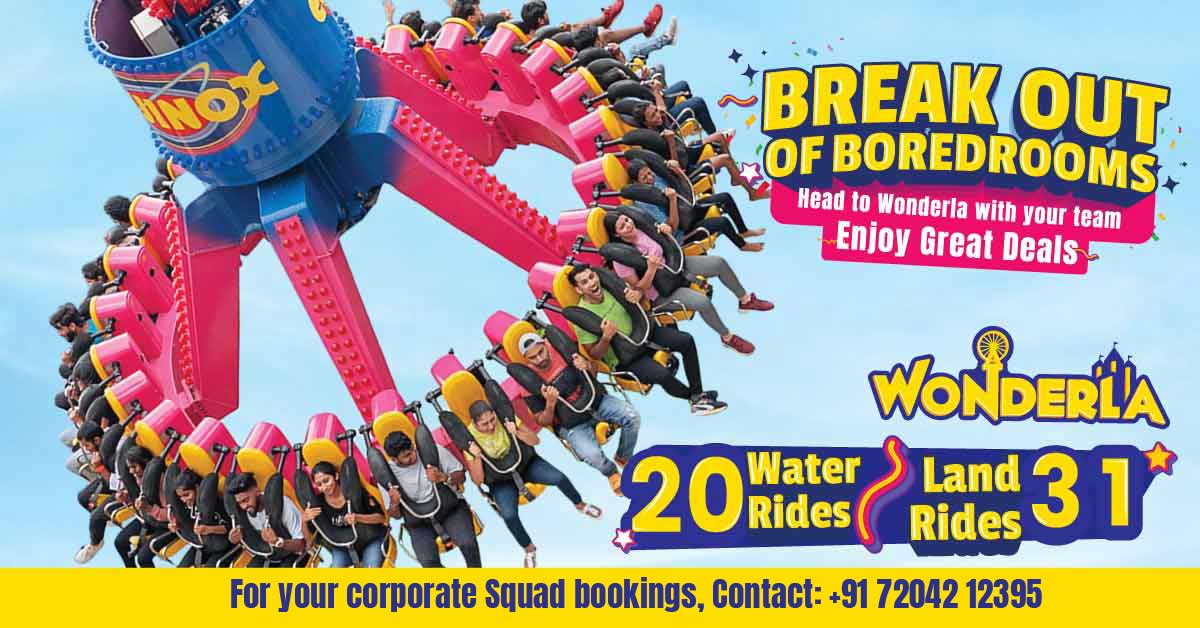
And here's the ad that proves it, one of the brand's longest-running creatives at 60 days:
"Break out of boredrooms." No discount in the hook. It names a feeling (office monotony), sells to a group (corporate squads), and sends people to an enquiry form. Tagged: problem-solution hook, workplace monotony, group discount incentive, excitement, sales objective.
That's the pattern you can act on: Wonderla's discount ads are its churn, and its problem-led ads are its keepers.
## Tagging works across categories too
Same fields, a completely different market. This Foxtale ad is a creator video:
| Field | Value |
|---|---|
| Hook text | "POV: this one serum helped me fix my fungal acne" |
| Hook type | Personal experience |
| Problem | Fungal acne, excess oil, dark spots |
| Offer | None |
| Emotion | Relief |
| Ad type | Before and after + UGC selfie |
| Social proof | User-generated content showing a skin transformation |
| Audience | Young Indians with persistent acne looking for science-backed skincare |
| Body copy | "Comment for link" |
| Length | 18 seconds |
| Longevity | Ran 136 days |
Because the fields are the same, you can ask cross-brand questions: which brands in my category run before-and-after UGC, and how long do those ads last compared with their discount ads?
## The four things a tool adds
**1. Conviction instead of "Active".** Days live plus the number of near-identical copies running is the closest public proxy for "this is working". Nobody keeps paying for a bad ad for 163 days.
**2. Tags on every creative.** Hook, offer, format, emotion, social proof, audience, scene, language, even the background track. Thousands of ads become a table.
**3. More than Meta.** Your rivals also run Google ads and bid on your brand name. One place for Meta, Google and keywords.
**4. It watches for you.** Alerts when a competitor launches, weekly digests, and fatigue scoring on your own ads.
## What to look for before you pay
| Look for | Why it matters |
|---|---|
| Days live and copy count per ad | The only honest public signal of what's working |
| A full tag set, not just "video / image" | Hook, offer, format, emotion, audience |
| Meta **and** Google **and** keywords | Rivals don't only run Meta |
| Search by meaning | "Every corporate-outing ad in my category", not just brand names |
| Alerts and digests | You hear about a launch this week, not next month |
| Your own account beside theirs | So the comparison is with your real results |
| A path from insight to finished ad | Otherwise you've bought a nicer Ad Library |
Two honest limits. No tool has real spend or ROAS for normal commercial ads; anyone quoting exact competitor spend is estimating. And coverage varies by country and platform, so check your market first.
## How Marxx does it
Marxx indexes over 100 million ads across Meta and Google. For every tracked brand you get:
- Every ad sorted by days live and copies running
- Each creative decoded into 16 attributes, the ones you saw in the tables above
- [Keyword tracking](/features/competitor-tracking) alongside the creative
- [Personas built from real comments and reviews](/features/audience-personas)
- Gap recommendations: the hooks and formats your category runs that you've never tested
- The same data inside Claude through the [Marxx MCP](/mcp), so you can just ask, "what is this brand running longest?"
Then the part most tools stop short of: take that gap into the [production canvas](/features/production-canvas), build the ad, and publish it to Meta, paused.
## Track your top 5 rivals, live
On a 30-minute demo we'll add your five biggest competitors and tear down their running ads with you: what they keep paying for, which hooks last, and the gap you can take.
[Book a demo](/book-a-demo) and bring the five brand names.
## FAQs
### Is there an official Meta Ad Library API?
Yes, but it's built for researchers and political ad transparency. Access takes an approval process, and it returns creative and date information, not spend or performance for normal commercial ads.
### Can I see how much a competitor spends on Facebook ads?
Only for political and social issue ads, where Meta publishes spend and reach ranges. For everything else, use days live and copy count as the proxy.
### How does creative tagging work?
The tool reads the ad frame by frame plus its copy, then fills fixed fields: hook text and type, problem, offer, emotion, format, social proof, audience, scene, language, length. Every ad gets the same fields, so they can be counted and compared.
### Are Meta Ad Library tools legal?
Yes. They analyse ads Meta publishes publicly for transparency. Check that any tool you use respects Meta's terms and your local data rules.
### Do these tools cover Google ads too?
Some do. Google has its own Ads Transparency Center, and tools that index both let you see a competitor's Meta creative and Google presence together. [Marxx](/features/competitor-tracking) tracks Meta, Google and keywords.
### How many competitors should I track?
Five is a good start: two direct rivals, two brands one size bigger, and one from another category whose creative you admire.
---
- [More Creative strategy articles](https://marxx.ai/posts/category/creative-strategy)
- [All articles](https://marxx.ai/posts)