# Key Services Offered by Meta Advertising Agencies -- and What to Pay For

> Every agency lists the same nine services. Here's which ones are table stakes, which are worth paying for, what the pricing models really mean, and what a useful account audit looks like.
- **Author**: Marxx
- **Published**: 2026-09-25
- **Category**: Agency operations
- **URL**: https://marxx.ai/posts/meta-advertising-agency-services

---

Most Meta agency proposals list the same nine services. The differences that matter are hidden in how each one is actually delivered, and in what you're being charged for.

This guide breaks the services into three tiers: what's table stakes, what's worth paying for, and what you should keep in-house. Then the pricing models, the questions to ask, and what a real account audit should look like.

## The nine services, and what each is worth

| Service | What it covers | Worth paying for? |
|---|---|---|
| **Account setup and structure** | Campaigns, ad sets, budgets, naming, pixel and CAPI | Table stakes. One-off, should take days not weeks |
| **Media buying** | Bids, budgets, scaling, killing losers | Table stakes now. Meta's own automation does most of it |
| **Creative strategy** | The angle, persona and hypothesis behind each ad | **Yes. This is the job** |
| **Creative production** | Statics, video, UGC, per-placement cuts | **Yes, if volume is real:** 8-20 new concepts a month, not resizes |
| **Audience and testing plan** | What's being tested, and what a result would mean | **Yes, if written down before launch** |
| **Tracking and measurement** | CAPI, events, attribution sanity, offline conversions | **Yes. Most accounts leak here** |
| **Reporting** | Weekly numbers, creative-level read, next actions | Only if it names decisions, not just charts |
| **Landing pages** | Speed, message match, form friction | Often the cheapest win available |
| **Community and lead handling** | Ad comments, WhatsApp replies, lead follow-up | Undervalued, especially for lead-gen and venues |

The old agency value was knowing which buttons to press in Ads Manager. Meta's automation has eaten most of that. What's left, and what you should pay for, is creative volume with a reason behind it, and measurement you can trust.

## The three questions that reveal the actual service

**1. How many new creative concepts a month, and what counts as "new"?**

A resize is not a concept. Ask for the number of distinct ideas, and ask what happens when one wins.

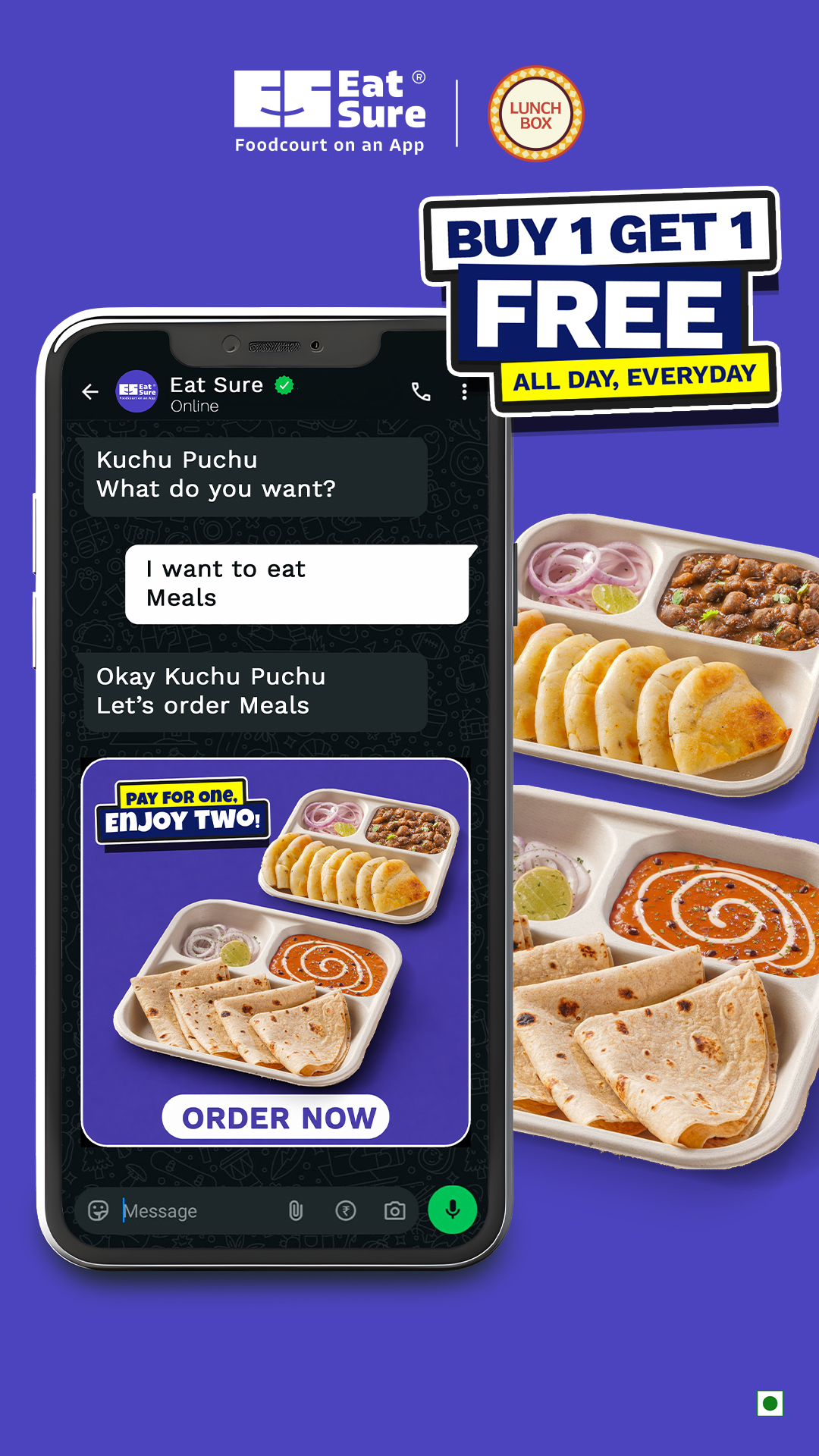
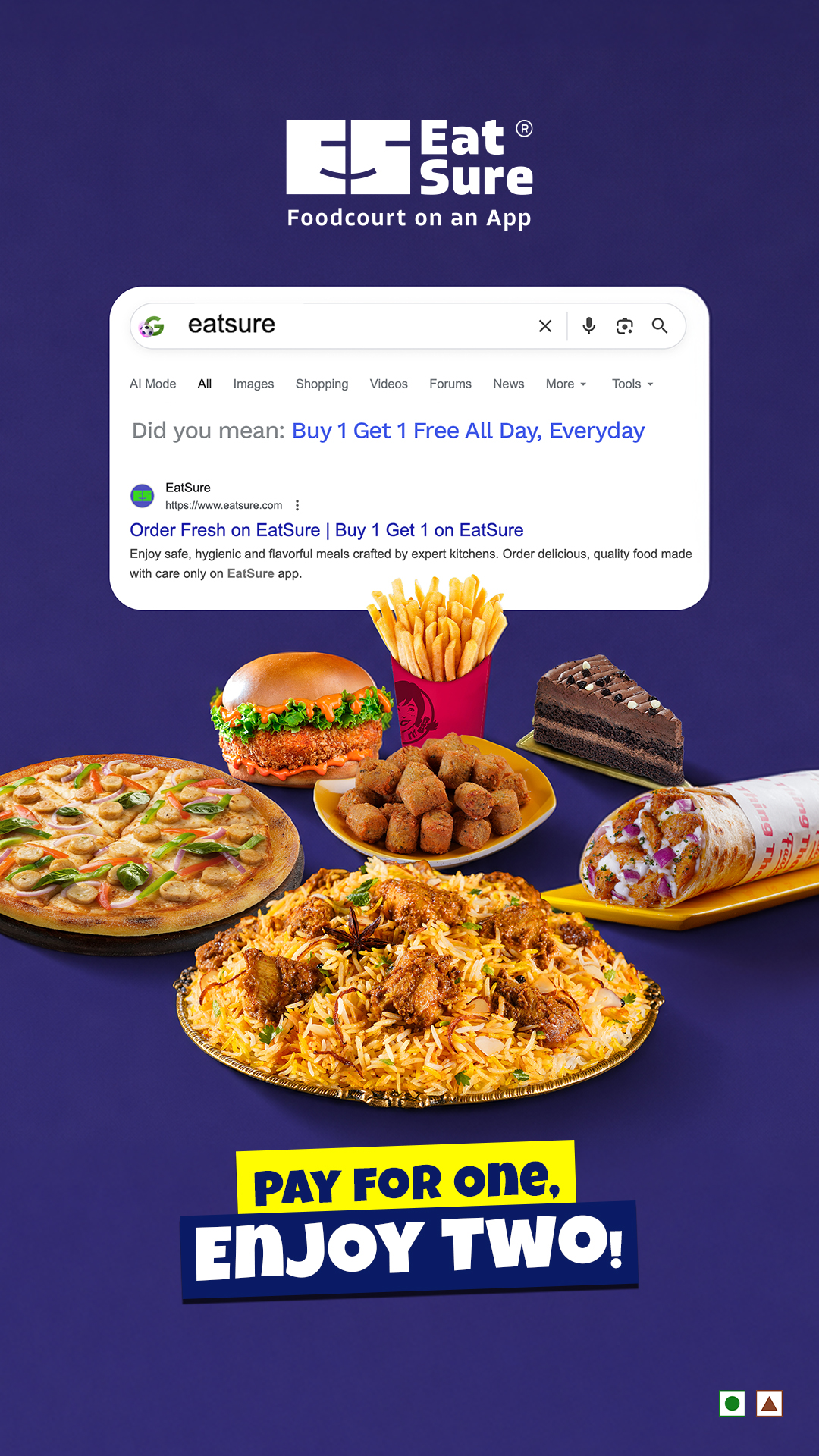
Here's a week of real output from one food-delivery advertiser. Three creatives, live at the same time:

<div style="display:flex;align-items:flex-start;gap:8px;overflow-x:auto;padding-bottom:6px;margin:8px 0">
<img src="https://marx-ad-assets.s3.amazonaws.com/ads/110730337304534/1764158344925050/2ea432a5.jpg" alt="EatSure Meta ad: &quot;Did you mean: buy 1 get 1 free all day, everyday&quot; -- double the food, same price" style="flex:0 0 32%;height:auto;border-radius:8px">
<img src="https://marx-ad-assets.s3.amazonaws.com/ads/110730337304534/1473206757971086/97ca5a9e.jpg" alt="EatSure Meta ad: a bold &quot;Buy 1 get 1 free&quot; banner, order on EatSure now" style="flex:0 0 32%;height:auto;border-radius:8px">
<img src="https://marx-ad-assets.s3.amazonaws.com/ads/110730337304534/1792340141961128/194c305c.jpg" alt="EatSure Meta ad: another buy-one-get-one-free layout for the same offer" style="flex:0 0 32%;height:auto;border-radius:8px">
</div>

Three layouts, one idea: the price. Every one of them dies with the offer window.

Now the same week, from two advertisers in other categories:

<div style="display:flex;align-items:flex-start;gap:10px;flex-wrap:wrap;margin:8px 0">
<img src="https://marx-ad-assets.s3.ap-south-1.amazonaws.com/116772528383864/528092353363693/image_0.jpeg" alt="Apollo Hospitals Meta ad: &quot;Healthcare Sundays: book now&quot; -- no more stressing about missing work for appointments" style="flex:0 0 46%;max-width:300px;height:auto;border-radius:10px">
<img src="https://marx-ad-assets.s3.amazonaws.com/ads/2142425975816266/2965151583821509/7f58624d.jpg" alt="Qubo Meta ad: a customer telling the story of why they bought a video doorbell" style="flex:0 0 46%;max-width:300px;height:auto;border-radius:10px">
</div>

Apollo sells a Sunday appointment to someone who keeps missing weekday slots -- a problem, not a discount, and it ran 112 days. Qubo lets a customer tell the story of what went missing from their doorstep before they bought. Neither is an offer ad, and neither expires on Sunday night.

That's the whole distinction you're buying against. Ads one to six are production. Ads seven and eight are strategy.

Here's why it matters. In one account we analysed, offer-led and price-led ads (61% of everything the brand ran) averaged about 12 days live. Problem-led ads and skits averaged 37.

| Hook type | Share of ads | Average days live |
|---|---|---|
| Offer-led | 31% | 13 |
| Price-focused | 30% | 12 |
| Problem-solution | 2% | 37 |

An agency that only ships offer creative is signing you up to a treadmill. One that can tell you which of your hooks lasts, and why, is doing strategy.

**2. Who writes the brief, and what's in it?**

Ask to see one. A real brief names the persona as a moment, the tension, the offer's job (hook, reward or hesitation-reducer), the format and the hypothesis. If the brief is "3 statics, festive theme", you're buying production, not thinking.

Here's the difference, side by side.

<div style="display:flex;gap:12px;flex-wrap:wrap;font-family:-apple-system,Helvetica,Arial,sans-serif;line-height:1.5;margin:8px 0">
<div style="flex:1 1 260px;background:#f6f7f9;border:1px solid #e3e6ea;border-top:3px solid #c2c7ce;border-radius:10px;padding:14px 16px">
<div style="font-size:11px;letter-spacing:.06em;color:#8a9099;font-weight:700;margin-bottom:8px">WHAT YOU USUALLY GET</div>
<div style="color:#3d4149"><b>Brief:</b> 3 statics + 1 reel, festive theme

<b>Audience:</b> 25-40, metros, interest: entertainment

<b>Message:</b> highlight the offer

<b>Deadline:</b> Thursday</div>
<div style="margin-top:10px;color:#9aa0a8;font-size:13px">Nothing in this can be wrong, which means nothing can be learned from it.</div>
</div>
<div style="flex:1 1 260px;background:#f2f8f5;border:1px solid #cfe6da;border-top:3px solid #2f9e6e;border-radius:10px;padding:14px 16px">
<div style="font-size:11px;letter-spacing:.06em;color:#2f9e6e;font-weight:700;margin-bottom:8px">WHAT A REAL BRIEF LOOKS LIKE</div>
<div style="color:#27302b"><b>Moment:</b> asked on Friday to "organise something" for the team by month-end

<b>Tension:</b> half the team won't show up, and that will be on them

<b>Offer's job:</b> hesitation-reducer, not the hook

<b>Hypothesis:</b> naming the organiser's anxiety beats naming the discount

<b>Format:</b> static, 4:5 and 9:16, headline out of the photo

<b>Kill rule:</b> replaced at day 14, or on a third straight CTR drop</div>
</div>
</div>

<div style="margin:8px 0">
<img src="https://marx-ad-assets.s3.ap-south-1.amazonaws.com/1497921286936951/1402562744616749/image_0.jpg" alt="Astrotalk Meta ad: &quot;Ghar lene ka soch rahe ho?&quot; -- first chat free with an astrologer" style="width:100%;max-width:340px;height:auto;border-radius:10px;display:block;margin:0 auto">
</div>

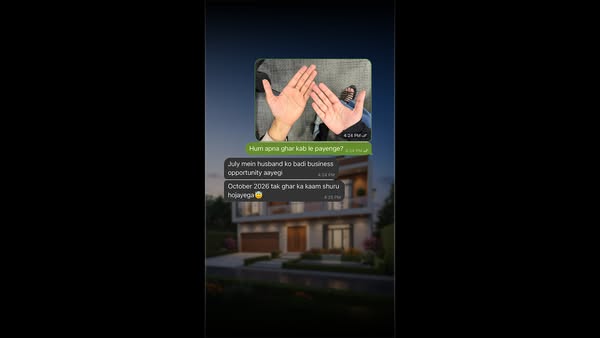
You can tell which card an ad came from. This one names the moment -- *ghar lene ka soch rahe ho?*, you're thinking about buying a house -- before it names the product, and the offer is one free chat. Nobody writes that from "3 statics, festive theme".

If the right-hand card looks like a lot of work for one ad, that's the point. It's the part you're paying an agency for.

**3. What happens in week three, when the first creative fades?**

The answer should be a specific process: fatigue thresholds, what gets refreshed versus replaced, and who decides. "We'll keep an eye on it" means no process.

Ask them to show you an ad that didn't need replacing. They exist in every category:

<div style="margin:8px 0">
<img src="https://marx-ad-assets.s3.amazonaws.com/ads/123397461095072/1449718496902191/c62f9cec.jpg" alt="Asian Paints Meta ad: Beautiful Homes Painting Service, textured walls, book our services today" style="width:100%;max-width:360px;height:auto;border-radius:10px;display:block;margin:0 auto">
</div>

This painting-service ad has run **67 days**; a grocery brand we track has run the same city-level delivery offer for **93**. Neither is clever. Both answer a standing need rather than a passing offer, which is why they survive. An agency that has never produced one of these has only ever sold you the treadmill.


## What you're actually paying for: the models

| Model | Typical shape | Best when | Watch out for |
|---|---|---|---|
| **Flat retainer** | A fixed monthly fee for a defined scope | Scope is stable and creative volume is specified | Scope creep, or creative counted in "assets" |
| **Percentage of spend** | Commonly 10-20% of ad spend | Spend is large and the work scales with it | The incentive is to spend more, not earn more |
| **Retainer plus performance fee** | Base fee, plus a share of revenue or a per-lead bonus | Tracking is trustworthy on both sides | Agree attribution rules in writing, first |
| **Per-deliverable** | Priced per creative or per campaign | Small or seasonal programmes | Nobody owns the outcome |
| **In-house plus tools** | Salaries plus software | You have 2+ marketers already | Software doesn't have ideas; someone still briefs it |

Two clauses worth insisting on whatever the model: you own the ad account and the pixel, and you own the creative files, including the raw footage.

## Twelve questions for the pitch

1. How many distinct creative concepts a month, and can I see last month's?
2. Show me a brief you wrote, unedited.
3. Which of your client's ads has run longest, and why?
4. How do you decide when to kill a creative?
5. What's your process for competitor research, and how often?
6. Who is on my account day to day, and what else do they run?
7. What's set up for tracking: pixel, CAPI, offline events, deduplication?
8. What does your weekly report decide, not just report?
9. What do you do with ad comments and leads after they arrive?
10. Which parts are done by AI, and who checks them?
11. What are your first 30 days on my account?
12. What would make you tell me not to hire you?

Question 3 is the sharpest. Anyone who can't answer it isn't watching creative at the level that matters.

## What the weekly report should look like

Most agency reports describe. A useful one decides. The difference is one column.

<div style="background:#fff;border:1px solid #e3e6ea;border-radius:12px;padding:16px 18px;font-family:-apple-system,Helvetica,Arial,sans-serif;line-height:1.5;color:#2b2f36">
<div style="font-weight:700;margin-bottom:4px">Week 38 -- paid social</div>
<div style="color:#8a9099;font-size:13px;margin-bottom:12px">Spend flat. Three creative decisions, one tracking fix.</div>
<div style="display:flex;gap:10px;flex-wrap:wrap">
<div style="flex:1 1 200px;border-left:3px solid #2f9e6e;padding-left:10px">
<b>Ad C ("organise something") is the week's winner</b>

<span style="color:#6b727c">Live 21 days, still improving, only ad not led by price.</span>

<b style="color:#2f9e6e">Decision:</b> two new concepts off the same tension, live Wednesday.
</div>
<div style="flex:1 1 200px;border-left:3px solid #d9534f;padding-left:10px">
<b>Ad A has stopped working</b>

<span style="color:#6b727c">Day 16, CTR down for the third week, 38% of spend.</span>

<b style="color:#d9534f">Decision:</b> off Monday. Budget moves to C, not to a resize of A.
</div>
<div style="flex:1 1 200px;border-left:3px solid #e0a020;padding-left:10px">
<b>Leads aren't reaching the CRM</b>

<span style="color:#6b727c">Form submits 42, CRM 31 over seven days.</span>

<b style="color:#e0a020">Decision:</b> webhook re-mapped today; recount before next week's numbers are trusted.
</div>
</div>
</div>

Read any agency's last four reports and count the decisions. If the answer is zero, you're paying for a dashboard with a human reading it aloud.

## Red flags

- **Reporting that only shows account totals.** No creative-level read means no learning.
- **Bulk "assets" counts.** 60 assets a month usually means 6 ideas, 10 sizes each.
- **No named test plan.** If nobody wrote the hypothesis, no result can teach you anything.
- **"We'll handle the tracking" with no detail.** Ask exactly which events, and how deduplication works.
- **They own your ad account.** Non-negotiable: it's yours.
- **Guaranteed leads or ROAS.** Volume depends on spend, offer, audience, form friction and competition. Anyone guaranteeing a number is pricing in the failure.

## What a real audit looks like

Every agency offers a "free audit". Most are a screenshot of your CPA next to a sales pitch. A useful one flags a problem, quantifies it, and writes the fix next to it. Something like this:

<div style="background:#0f1115;color:#e6e8ec;border-radius:12px;padding:18px 20px;font-family:-apple-system,Helvetica,Arial,sans-serif;line-height:1.5">
<div style="font-weight:700;color:#fff;margin-bottom:12px">Account audit -- findings</div>
<div style="border-left:3px solid #ff6b6b;padding:2px 0 2px 12px;margin-bottom:14px">
<b style="color:#ff8f8f">Creative fatigue, critical</b>

Two ads carrying 60% of spend have been live 90+ days, CTR down a third over 14 days.

<span style="color:#9aa0a8">Fix: replace, don't refresh. Two new concepts from the two personas that aren't being addressed, live this week.</span>
</div>
<div style="border-left:3px solid #ffc14d;padding:2px 0 2px 12px;margin-bottom:14px">
<b style="color:#ffc14d">One angle, many sizes</b>

14 live ads, 3 distinct hooks, all offer-led. Offer hooks in this category average ~12 days live.

<span style="color:#9aa0a8">Fix: add problem-led and occasion-led concepts; keep the offer as the reward, not the hook.</span>
</div>
<div style="border-left:3px solid #ffc14d;padding:2px 0 2px 12px;margin-bottom:14px">
<b style="color:#ffc14d">Placement coverage</b>

82% of spend on square creative; Reels and Stories getting cropped feed cuts.

<span style="color:#9aa0a8">Fix: 9:16 masters for the top three ads, safe zones checked.</span>
</div>
<div style="border-left:3px solid #4dd4a6;padding:2px 0 2px 12px">
<b style="color:#4dd4a6">Tracking</b>

CAPI live, but no deduplication on purchase; offline leads not imported.

<span style="color:#9aa0a8">Fix: event ID dedupe, then weekly offline import so the algorithm learns from closed leads.</span>
</div>
</div>

What that second flag looks like in the wild -- one offer, three near-identical ads:

<div style="display:flex;align-items:flex-start;gap:8px;overflow-x:auto;padding-bottom:6px;margin:8px 0">
<img src="https://marx-ad-assets.s3.amazonaws.com/ads/317724421422750/1829842651726649/95d65f32.jpg" alt="HomeRun Meta ad: &quot;Buy INR 20k, save INR 1200&quot; on tiling orders" style="flex:0 0 32%;height:auto;border-radius:8px">
<img src="https://marx-ad-assets.s3.amazonaws.com/ads/317724421422750/1047088407813282/5065a2b9.jpg" alt="HomeRun Meta ad: the same &quot;Buy INR 20k and save INR 1200&quot; offer in a different layout" style="flex:0 0 32%;height:auto;border-radius:8px">
<img src="https://marx-ad-assets.s3.amazonaws.com/ads/317724421422750/1102539982119117/c3b71565.jpg" alt="HomeRun Meta ad: &quot;Get INR 2500 off on tiling orders above INR 50,000&quot;" style="flex:0 0 32%;height:auto;border-radius:8px">
</div>

Three ads, one mechanic: spend more, save a bit. They ran 3, 5 and 15 days. An audit should say that out loud, with the day counts attached.

Three rules for judging an audit:

1. **Every flag has a fix**, written in one sentence you could hand to someone.
2. **Every flag has a number.** "Creative is tired" is an opinion; "CTR down a third in 14 days on 60% of spend" is a finding.
3. **It includes things you're doing right.** An audit that finds only disasters is a sales document.

## How we run it

Our audit reads 180 days of account history: seven performance views, creative decoded by hook, offer, format and audience, fatigue scored on five levels (healthy, watch, moderate, high, critical), and named diagnostics like "offer fatigue" or "high CTR, low sales". It sits beside competitor data, so a gap in your account is checked against what the category actually runs.

Then the part that matters: every flag comes with the fix, and the fixes that need creative can go straight onto the [production canvas](/features/production-canvas) and out to Meta, paused.

## Free account audit, with the fix next to each flag

Give us read access for 30 minutes. You'll get the findings, the numbers behind them, and the one-line fix for each, whether or not you work with us.

[Book a demo](/book-a-demo) and we'll run it live on the call.

## FAQs

### What services do Meta advertising agencies offer?

Account setup and structure, media buying, creative strategy and production, audience and testing plans, tracking and measurement, reporting, landing pages, and comment and lead handling. Creative strategy, creative volume and measurement are where the money should go.

### How much do Meta ads agencies charge?

Common models are a flat retainer, a percentage of ad spend (often 10-20%), a retainer plus performance fee, or per-deliverable pricing. What matters more than the model is what's guaranteed inside it: how many distinct creative concepts per month, and who owns the account and the files.

### Is a Meta ads agency still worth it now Meta automates the buying?

Yes, but for different work. Automation handles delivery. The agency should be earning its fee on creative strategy, creative volume, measurement and the decisions in between.

### How many ads should an agency produce each month?

Ask for distinct concepts, not assets. For most brands, 8-20 new concepts a month is a healthy pace, with the winners scaled into variations.

### What should a Meta ads audit include?

Spend and performance by campaign, creative-level performance, fatigue scoring, placement and format coverage, tracking setup (pixel, CAPI, deduplication, offline events), and a one-line fix next to every flag.

### Should I hire an agency or build in-house?

In-house wins when you have steady volume and someone who owns creative strategy. Agencies win when you need range (strategy, production, media, measurement) without hiring four people. Many teams end up hybrid: in-house strategy, outsourced production.

---
- [More Agency operations articles](https://marxx.ai/posts/category/agency-operations)
- [All articles](https://marxx.ai/posts)