# Best Social Listening Tools in 2026 (Compared for Ad Teams)
> Most listening tools were built for PR. An ad team needs the exact sentences people write, sorted by objection. Here's which tools do which.
- **Author**: Marxx
- **Published**: 2026-09-30
- **Category**: Competitive intel
- **URL**: https://marxx.ai/posts/social-listening-tools-for-ad-teams
---
Most social listening tools were built for a communications team. They answer questions a CMO asks once a quarter: what's our share of voice, is sentiment up, are we trending anywhere we shouldn't be.
An ad team needs something narrower and more useful: **the sentences people actually use**, sorted by the objection they contain, close enough to hand to a copywriter on Monday.
Same raw material, completely different output. This guide sorts the tools by which of those two jobs they're really built for, and shows what listening looks like once it reaches the ad.
## What an ad team needs from listening
| Requirement | Why | Most tools |
|---|---|---|
| **Verbatims, not summaries** | "Sentiment is 62% positive" writes no hooks | Lead with dashboards |
| **Comments on ads -- yours and rivals'** | The objection is stated where the buying happens | Rarely covered |
| **Review platforms that matter locally** | Play Store, Google Maps, Amazon, Flipkart | Patchy outside the West |
| **Indian-language and Hinglish handling** | Half the useful comments aren't in English | Frequently poor |
| **Grouping by objection, not topic** | "Price" is a topic; "will it work on my skin" is a brief | Topic clustering only |
| **A path to the creative** | Listening that ends in a PDF changes nothing | Ends in a report |
Read that column on the right before you buy. Most of the market is excellent at the thing you don't need.
## The categories
| Category | Examples | Built for | Ad-team fit |
|---|---|---|---|
| **Enterprise suites** | Brandwatch, Sprinklr, Meltwater, Talkwalker | Brand health, crisis, PR measurement | Powerful, slow, priced for a comms budget |
| **Mid-market monitors** | Brand24, Mention, Hootsuite | Mentions and alerts for smaller teams | Good value, thin on review platforms |
| **India-focused CX platforms** | Konnect Insights, Locobuzz | Omnichannel support plus listening | Strong on Indian channels and languages |
| **Review and app-store miners** | App-store analytics tools | Product feedback | Narrow, but the highest-intent language |
| **Ad-native listening** | Marxx | Turning comments into personas and hooks | Purpose-built for creative, not for PR |
Nobody needs all five. The question is whether your bottleneck is *knowing what people say about the brand* or *knowing what to put in the next ad*.
## What listening looks like when it reaches the ad
Here's the test: can you tell, from the creative alone, that someone read the comments? These six Indian ads pass it.
| Ad | The listening behind it |
|---|---|
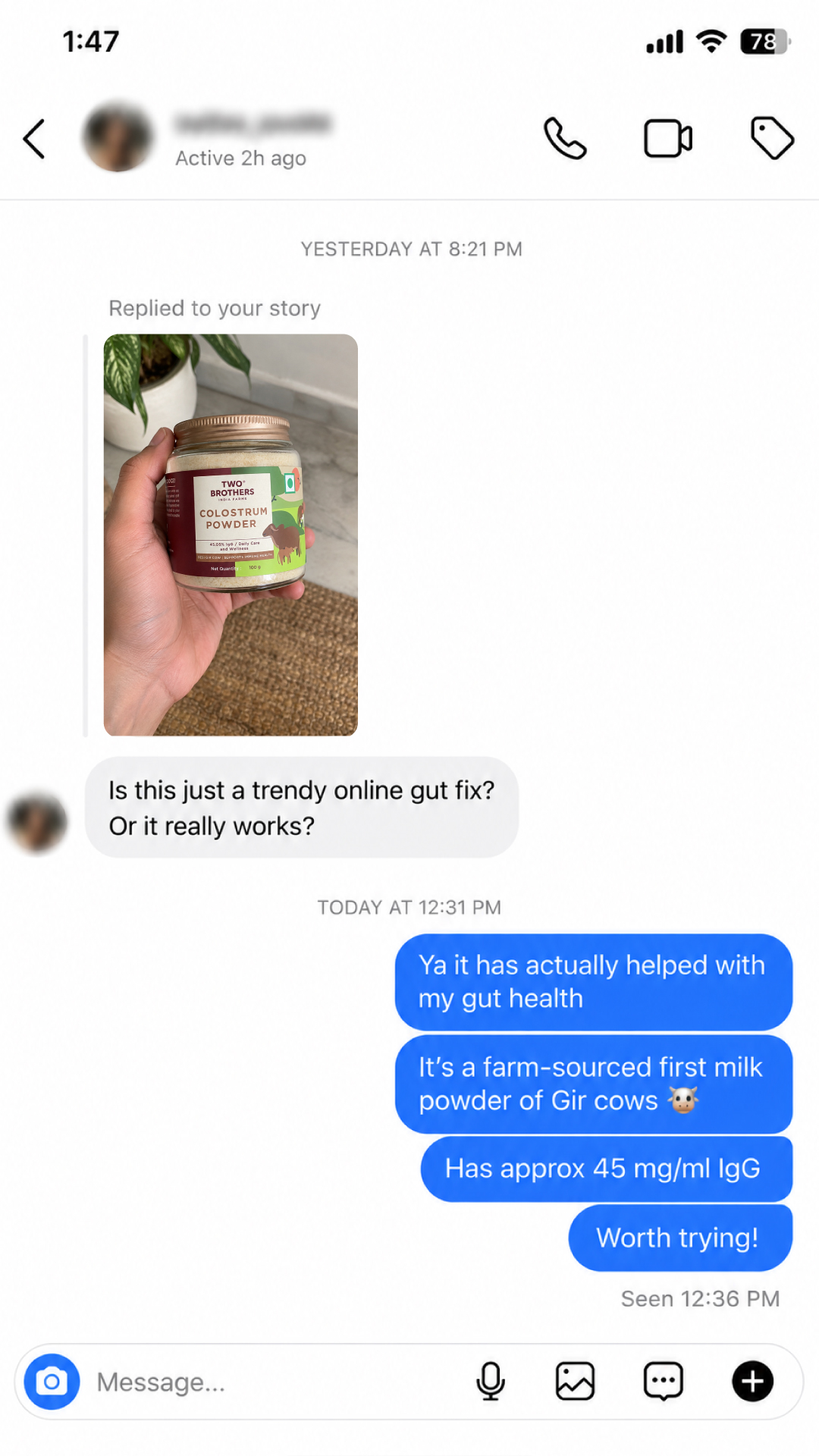
| **Two Brothers** | "Is this just a trendy online gut fix?" is the sceptic's comment, printed as the headline instead of argued with |
| **Conscious Chemist** | "No white cast, no *jhanjhat*" -- two complaints from sunscreen reviews, in the language they were written in |
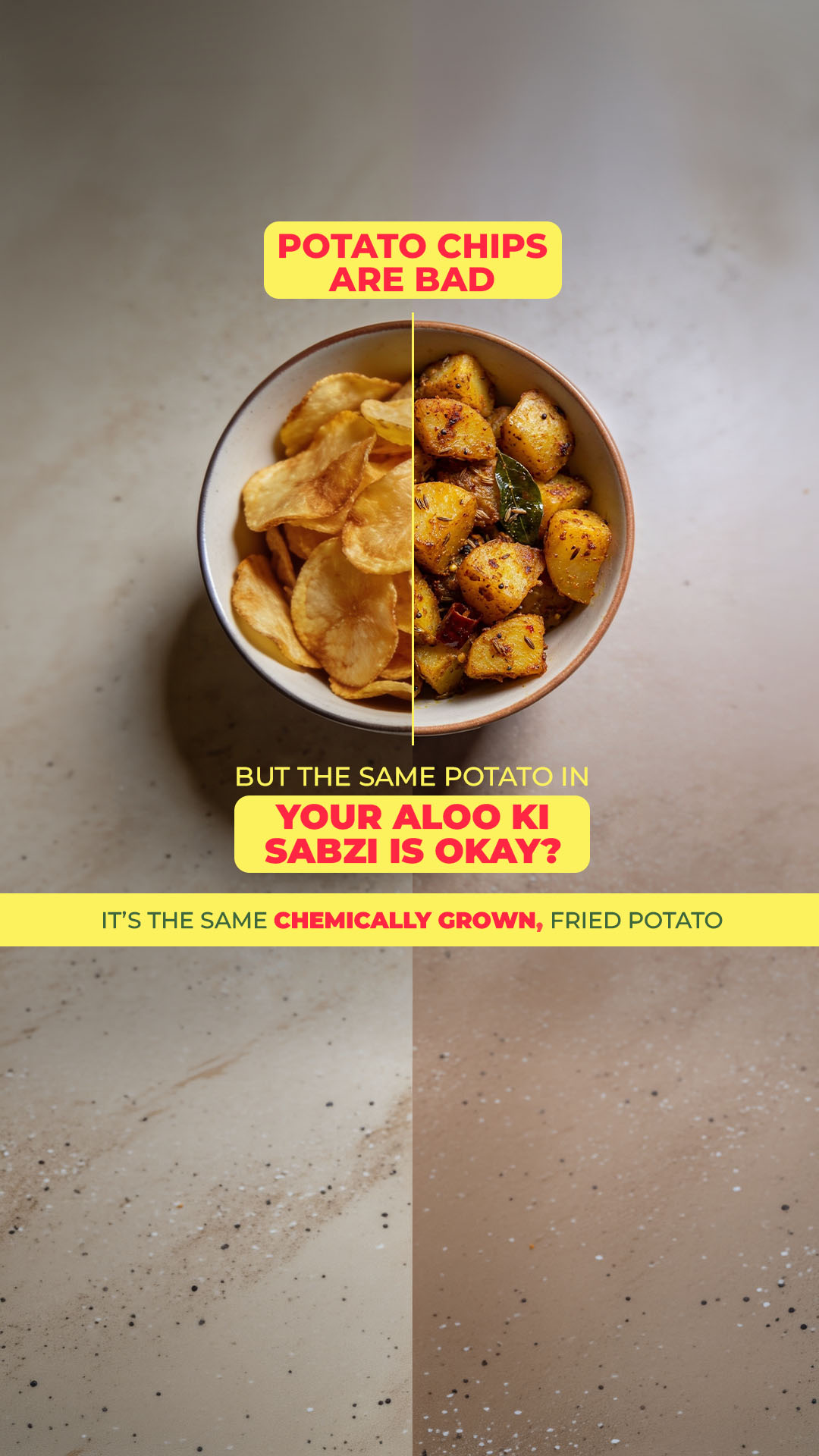
| **Bhoomi Farms** | A contradiction no customer states outright: you stopped buying chips, but the aloo comes from the same farm |
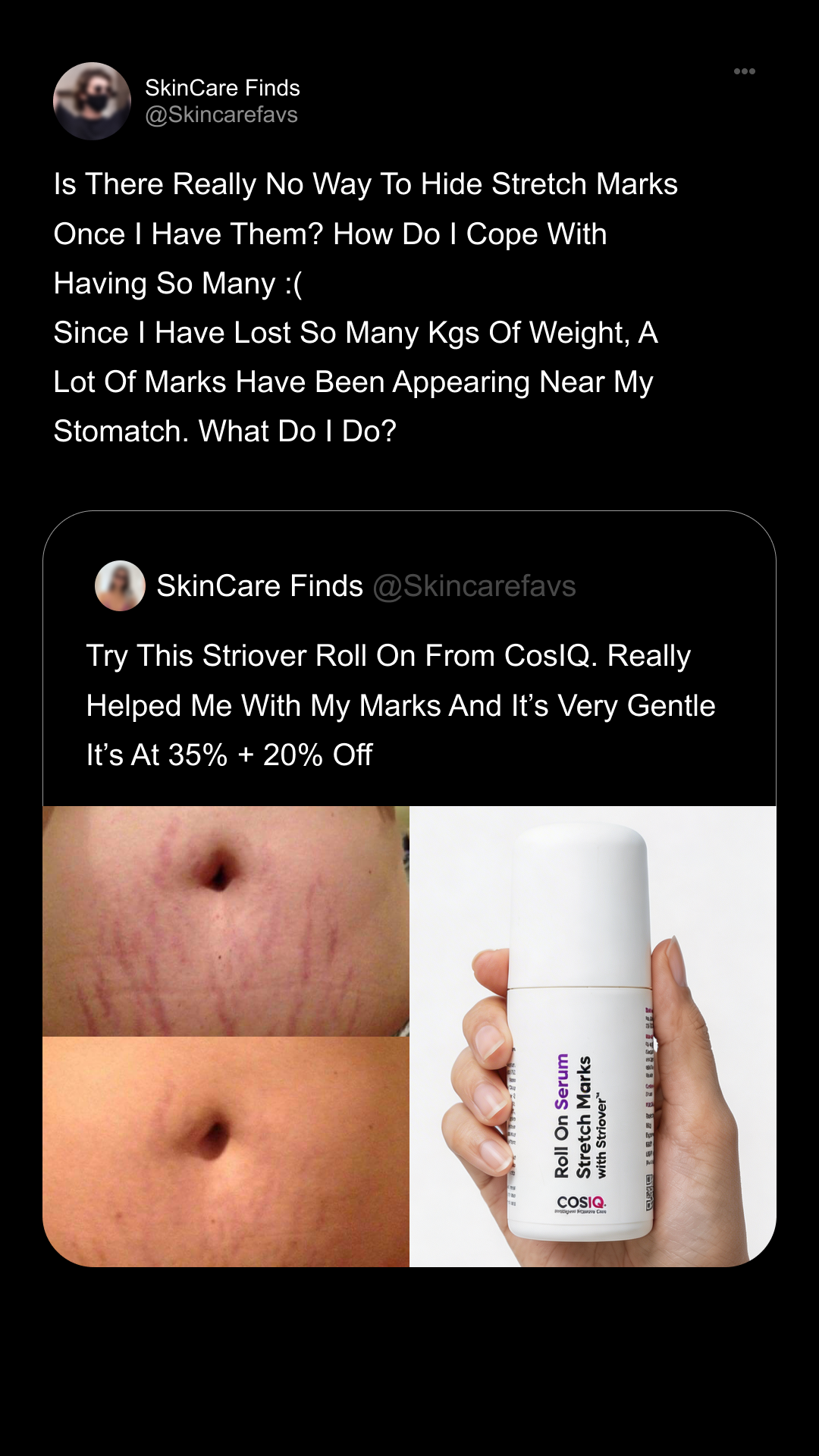
| **COSIQ** | A question asked in DMs, used verbatim as the hook -- "is there really no way to hide stretch marks once I have them?" |
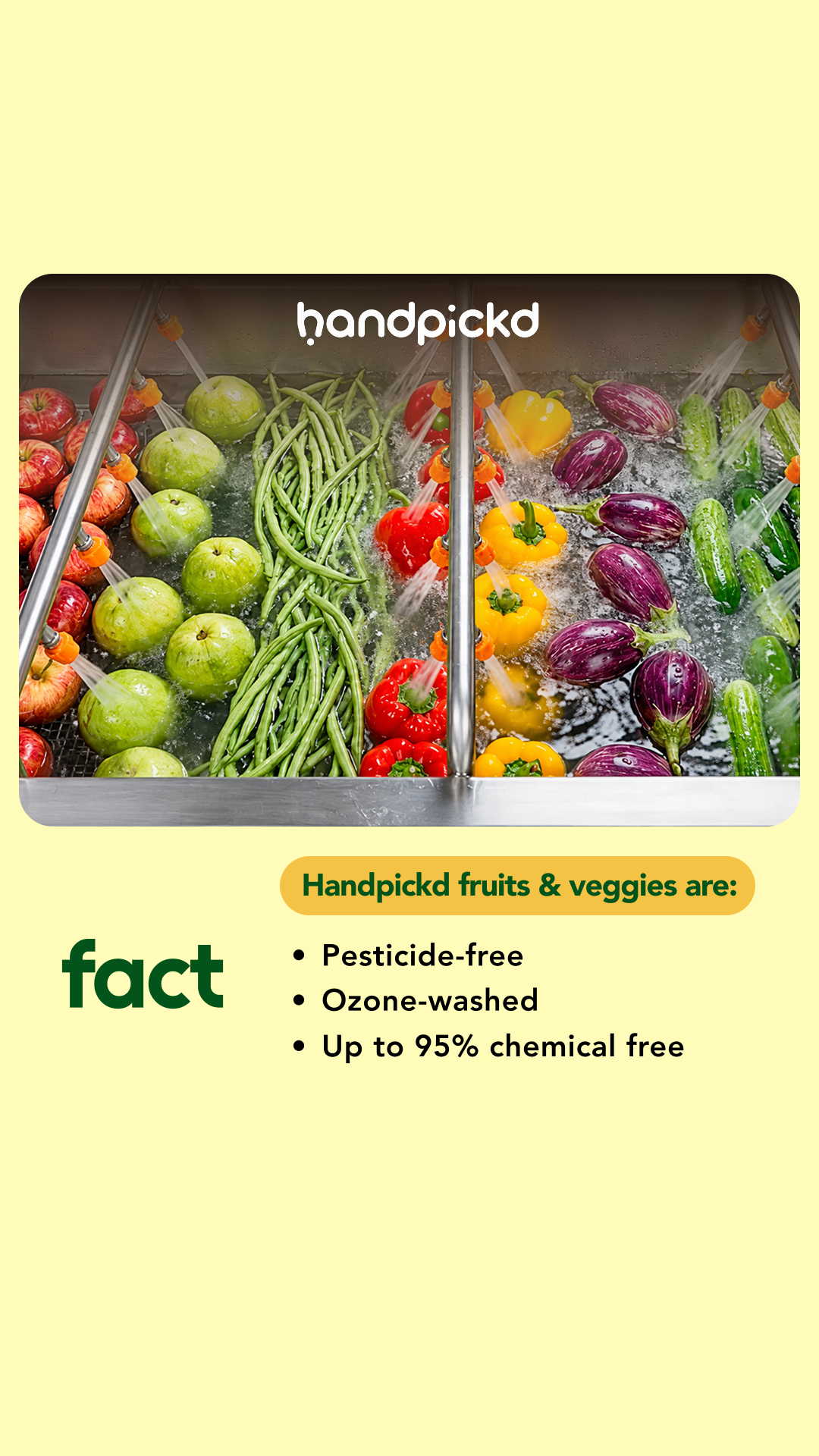
| **handpickd** | A myth-versus-fact card, which is what an FAQ becomes when it's the most repeated question |
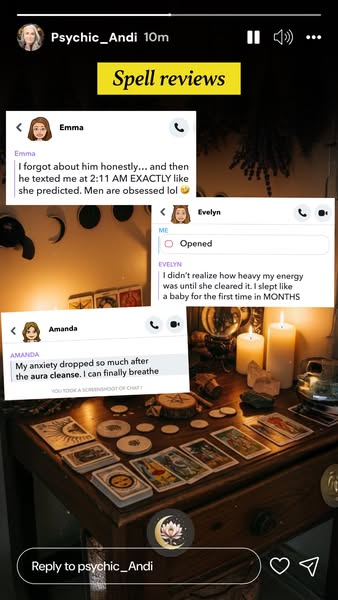
| **Astrotalk** | Proof harvested straight from chats, because the customers wrote better copy than the brand could |
Notice the pattern: none of these are summaries of sentiment. Each is **one sentence a real person wrote**, promoted to the hook. That's the whole output of listening for an ad team, and a share-of-voice dashboard will never produce it.
The Conscious Chemist line is the one worth studying. "Jhanjhat" doesn't survive translation into a report, and it's precisely the word that makes the ad feel like it came from someone who has actually used sunscreen in Indian summer.
## The channels that matter in India
Western tool coverage skews to X, Reddit and news. For an Indian consumer brand the ranked list looks different:
| Channel | What you get |
|---|---|
| **Comments on your ads and rivals'** | Objections at the point of purchase, in the platform's own language |
| **Play Store and App Store reviews** | Churn reasons and feature requests, dated and versioned |
| **Google Maps reviews** | Location-level complaints, invaluable for anything with outlets |
| **Instagram and YouTube comments** | Hinglish, slang, and the words people use for the category |
| **Amazon and Flipkart reviews** | Purchase-stage doubts, often more specific than your own site's |
| **Reddit and Quora** | Long-form advice between strangers, where the real comparison happens |
| **WhatsApp and DMs** | The highest-intent questions, and the hardest to mine at scale |
Ask any vendor which of these they actually index for India, and how they handle Hinglish. The answers vary far more than the marketing pages suggest.
## Ten questions for the demo
1. Show me raw verbatims, not a sentiment score.
2. Do you index comments on ads, including competitors' ads?
3. Which Indian review platforms do you cover, and how fresh is the data?
4. How do you handle Hinglish and transliterated text?
5. Can I group by objection rather than by topic?
6. Can I filter to one product, one city, one time window?
7. What's the export -- can a copywriter use it without you?
8. How do findings reach a brief or a creative?
9. What's the per-seat versus per-workspace pricing at my team size?
10. What happens to my data, and can I delete it?
Question five is the sorting hat. Topic clustering gives you "price, delivery, quality". Objection clustering gives you "too expensive for a trial size", "arrived leaking", "didn't work on oily skin" -- three different ads.
## How to run listening without buying anything yet
1. **Pull 200-300 comments** from your last month of ads, plus your two closest rivals'.
2. **Add your Play Store and Google reviews**, one-star and five-star first.
3. **Sort into four buckets**: pain points, questions, feature requests, praise.
4. **Keep the exact words.** No cleaning up, no translating the Hinglish.
5. **Count repeats.** Anything said three times is a hook; anything said ten times is a campaign.
6. **Write three ads from the three most repeated sentences**, and run them against your current control.
If that produces a winner, you've learned what to buy a tool for. If it doesn't, no tool would have saved you.
## Where Marxx fits
Marxx isn't a PR listening suite and doesn't try to be. It reads roughly twenty channels -- comments under your ads and your competitors' ads, App Store and Play Store reviews, Google and review-site feedback, the subreddits your category lives in, your own site -- and turns them into personas rather than dashboards.
Each persona is built from what people wrote, and every line stays traceable to the comment it came from. Nothing is invented from a demographic description. The buckets are the four above, and the output is meant to be briefed from: pain points become hooks, FAQs become objection handling, praise becomes proof, feature requests become the next angle.
Then the persona goes to the [production canvas](/features/production-canvas) and becomes an ad, which is the step most listening tools leave to you.
## Demo: personas built from your own reviews and ad comments
Bring your ad account and one review link. On a 30-minute call we'll pull comments from your ads and your competitors', mine your app and Google reviews, and build two personas from what's actually written there -- each with the verbatim quotes behind it.
[Book a demo](/book-a-demo), or see how [audience personas](/features/audience-personas) are built.
## FAQs
### What are the best social listening tools in 2026?
For brand health and PR, the enterprise suites -- Brandwatch, Sprinklr, Meltwater, Talkwalker. For smaller teams, Brand24 or Mention. For Indian omnichannel coverage, platforms like Konnect Insights and Locobuzz. For turning comments into ad creative, an ad-native tool is a better fit than any of them.
### What's the difference between social listening and social monitoring?
Monitoring tracks mentions and alerts you. Listening looks for patterns across them. For an ad team, the useful version is narrower still: collecting the exact sentences that reveal an objection.
### Can social listening tools read comments on Facebook and Instagram ads?
Some can, many can't -- and it's the single most valuable source for a performance team, because the objection is written at the point of purchase. Ask specifically, and ask whether competitors' ads are included.
### Do these tools work for Hinglish and Indian languages?
Coverage varies sharply. Sentiment models trained on English often misread transliterated Hindi entirely. If your comments are Hinglish, test the tool on your own last month of comments before signing anything.
### How much do social listening tools cost?
Enterprise suites are typically annual contracts priced for a comms budget; mid-market monitors start far lower on a monthly plan. Published pricing moves constantly, so treat any figure you read as a shape and ask for a quote at your volume.
### How do I turn listening into ads?
Sort verbatims into pain points, questions, feature requests and praise; count repeats; promote the most repeated sentence to a hook. The six ads above are what that looks like when it's done properly.
Sources: [Brand24's tool comparison](https://brand24.com/blog/social-listening-tools/), [Meltwater's 2026 list](https://www.meltwater.com/en/blog/top-social-listening-tools), [Konnect Insights on enterprise listening](https://konnectinsights.com/blogs/10-best-social-listening-tools-in-2026-for-enterprise-brands/)
---
- [More Competitive intel articles](https://marxx.ai/posts/category/competitive-intel)
- [All articles](https://marxx.ai/posts)