# Top AI Marketing Companies and Platforms in 2026
> Thirty vendors, five different jobs. The category sorted by what each one actually changes in your account -- creative intelligence, media optimisation, generation, agencies and the agent layer -- with each company's own ads as the evidence.
- **Author**: Marxx
- **Published**: 2026-10-04
- **Category**: Product
- **URL**: https://marxx.ai/posts/top-ai-marketing-companies
---
Search "top AI marketing companies" and you'll get a list of thirty vendors that do five completely different jobs, ranked by who wrote the best landing page. The category label is doing a lot of hiding.
So this list is organised by **what the company actually does to your account**, not by funding round or G2 badge. Five kinds, with the honest limits of each -- and a section at the end on the thing that's quietly becoming the dividing line in 2026, which is whether a tool can be reached by an AI assistant at all.
One useful piece of evidence runs through the whole piece: these companies all advertise, which means their own ads are public. How long a vendor's ad survives is the closest thing to an unfiltered read on whether their pitch is landing.
## The five kinds of company hiding under one label
| Type | What they change | Who it's for |
|---|---|---|
| **Creative intelligence and analytics** | What you learn from the ads you already ran | Teams with volume and no idea which attribute wins |
| **Media optimisation AI** | How budget and bids move | Accounts where structure, not creative, is the constraint |
| **Generation platforms** | How fast assets get made | Teams whose bottleneck is production |
| **AI-native agencies** | Who does the work | Teams without the headcount to run this in-house |
| **Infrastructure and agent layers** | Where the work happens | Teams who want the data inside Claude, ChatGPT or Slack |
Most buyers think they need the third and actually need the first. Making fifty variants of an idea you haven't validated is the most expensive mistake available in this category.
## 1. Creative intelligence and analytics
**Who's here:** Motion, Foreplay, Atria, Marxx.
These tools decode what you ran -- hook, offer, format, emotion, audience -- and tie it to performance, so the next brief comes from evidence rather than taste.
Foreplay is the useful case study here, because it has two long-runners doing completely different jobs. Its founder-to-camera explainer -- a person saying plainly what the product is -- has run **315 days**, the longest-running creative anywhere in this article. And this:
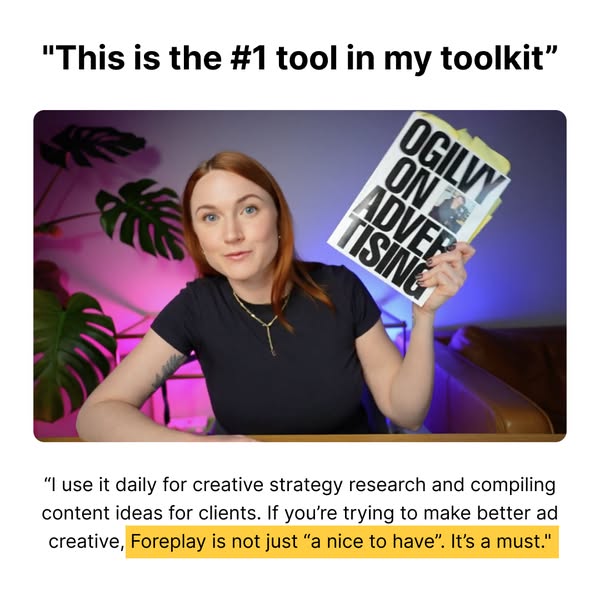
*"This is the #1 tool in my toolkit."* A named practitioner, a quote, and a highlighted line saying it isn't a nice-to-have. **Ran 89 days.** In a category where every competitor is shouting about features, the argument that holds is who already uses it -- this ad makes no product claim at all.
Motion sells the same category with considerably more theatre.
A Matrix parody -- *free your mind (and time) with Expert Agents* -- **ran 41 days**. Entertaining, well-made, and a seventh of Foreplay's run.
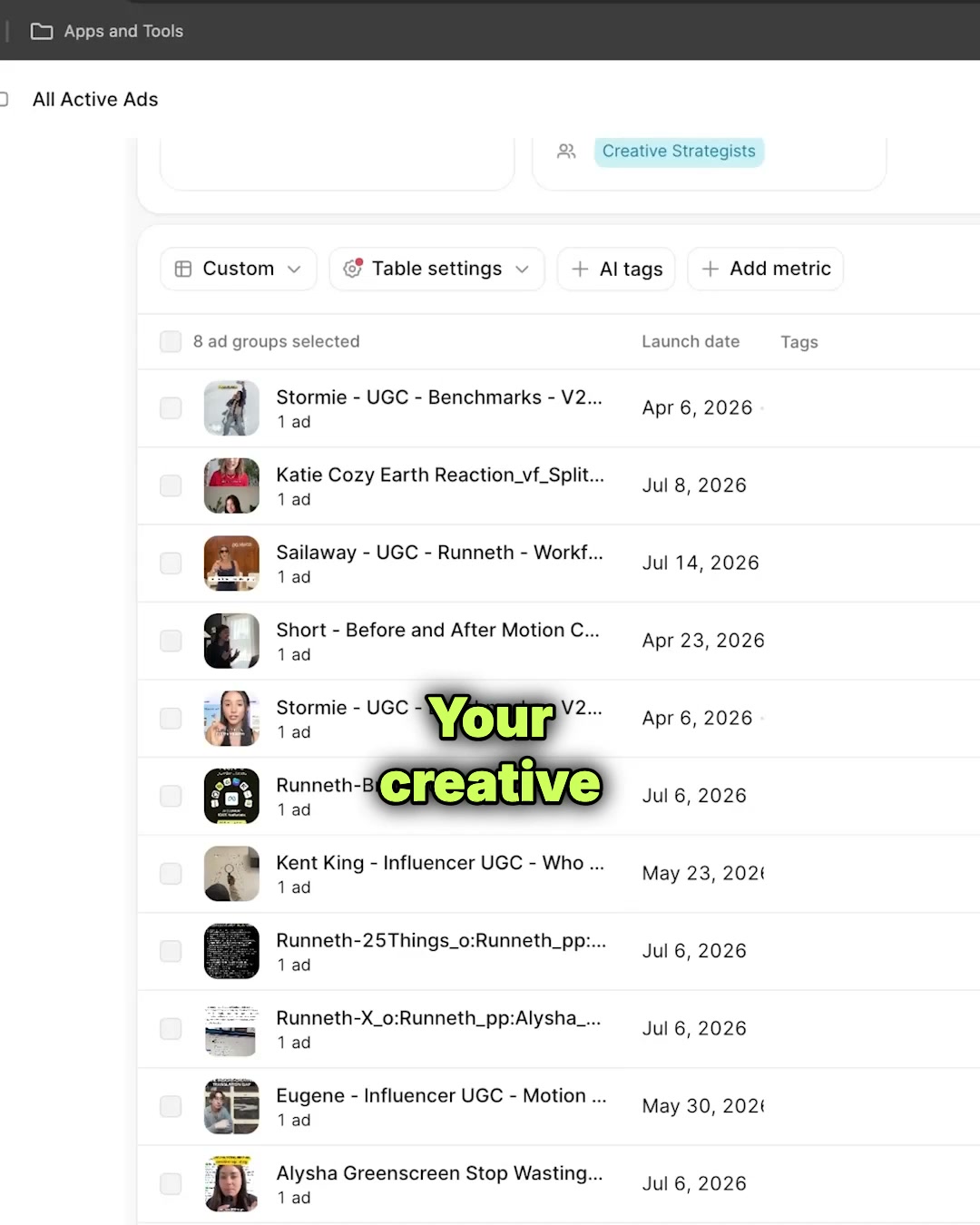
A plainer Motion execution: *your creative edge is hiding in the data you already have*, over the actual ad-grouping interface. **Ran 22 days.**
**What to check before buying any of them:** whether the tagging is consistent enough to filter on, and whether you have the volume to make tags meaningful. Below roughly twenty new creatives a quarter, you'll learn more reading your own ads by hand.
## 2. Media optimisation AI
**Who's here:** Pixis, Smartly, Albert, plus Meta's own Advantage+ and Google's Performance Max.
These adjust budgets, bids and audiences automatically. The honest framing for 2026: the platforms' native automation is now good enough that a third-party layer has to beat Advantage+ and PMax, not beat manual management.
Ask any vendor in this group one question: **what did you do that Advantage+ wouldn't have?** A good answer involves cross-platform allocation, custom constraints or rules the native tools don't expose. A bad answer is a dashboard.
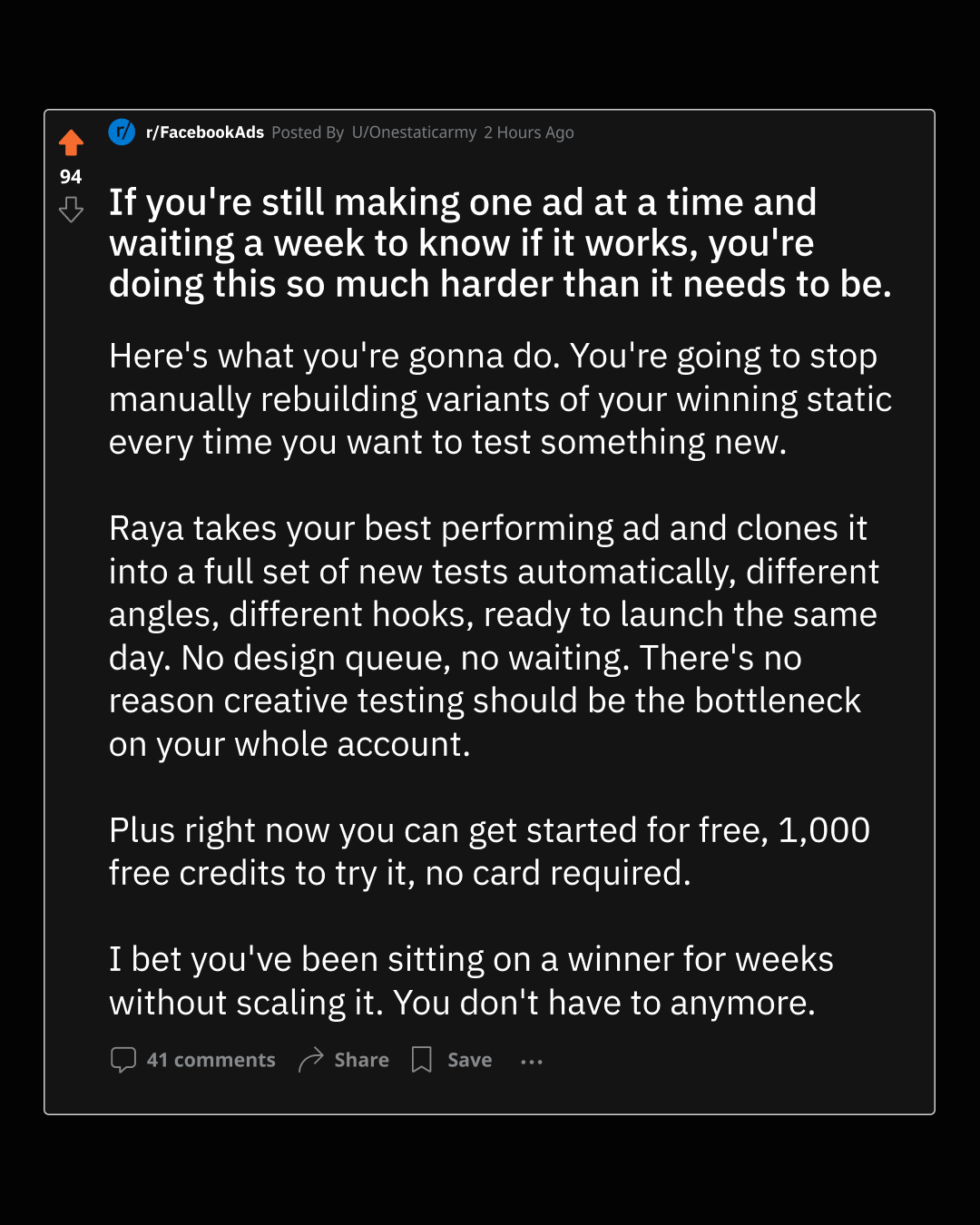
Atria's ad for this problem is the sharpest statement of the pitch I've seen:
*If you're still making one ad at a time and waiting a week to know if it works, you're doing this so much harder than it needs to be.* **Ran 46 days** -- and the brand's blunter version of the same idea, *fire your dashboard, it was never going to tell you what to do anyway*, ran 22. Both are arguments rather than feature lists: the complaint isn't that reporting is slow, it's that reporting doesn't decide anything.
## 3. Generation platforms
**Who's here:** AdCreative.ai, Creatify, Arcads, Pencil, plus the shot generators.
Brief in, assets out: statics, video, UGC-style presenters, resized placements.
AdCreative.ai's feature-list ad -- nine features in under sixty seconds -- **ran 13 days**. That's typical for this group, and the reason is structural: a feature list expires the moment the features change, and in this category they change monthly.
Atria's *this agency owner fired five people the day he switched* ran **14 days** -- same length, more aggressive claim.
**The limit worth naming:** generation solves the picture. It does not solve which picture. A tool that produces fifty variants of the wrong idea is an expensive way to be wrong faster.
## 4. AI-native agencies -- including the Indian market
**Who's here:** a fast-growing set of agencies where the AI is the delivery model rather than a line on the capabilities deck. In India, Digidarts is the clearest example of the category advertising itself properly.
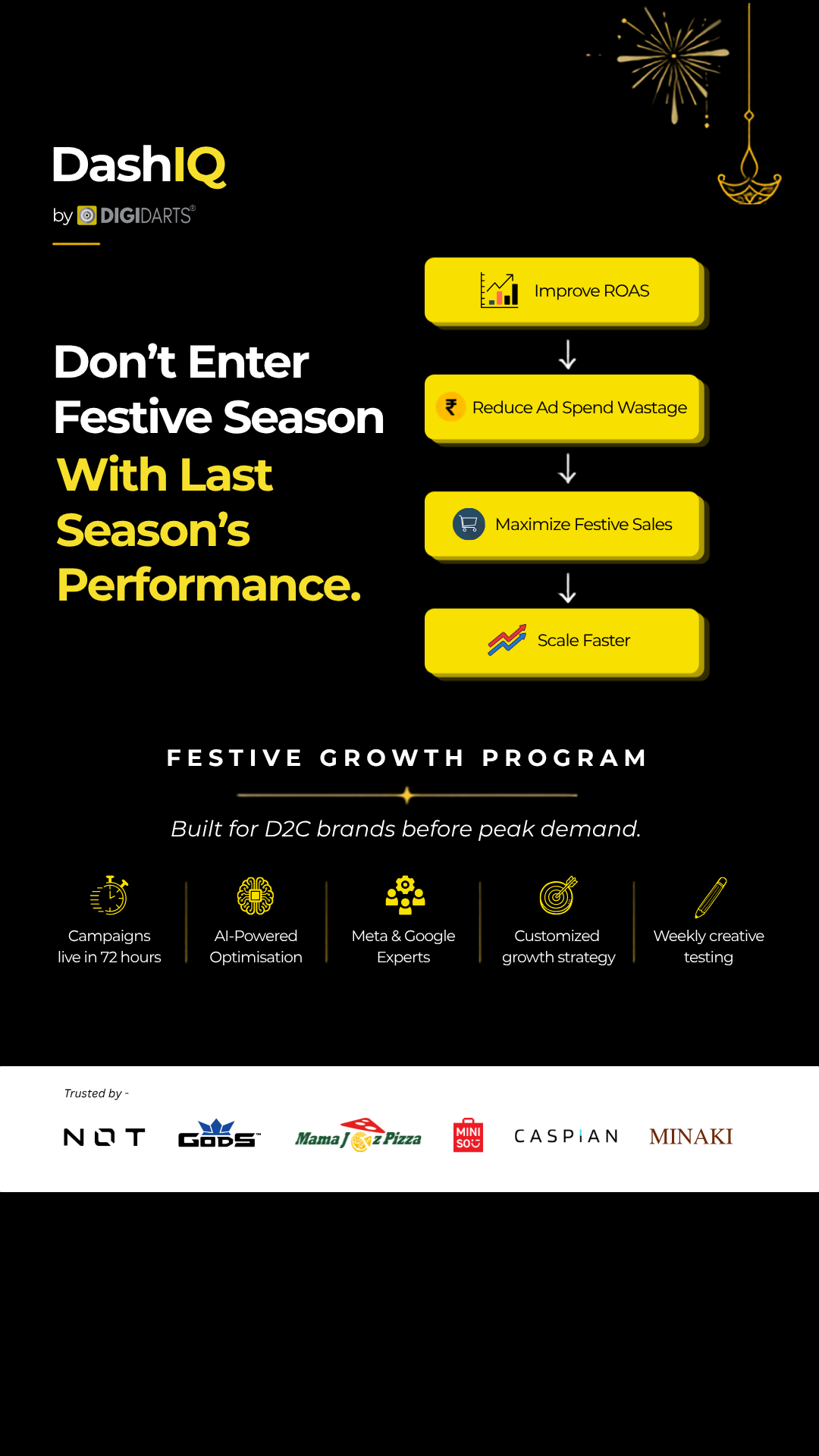
*Don't enter festive season with last season's performance.* **Still running at 56 days** -- the longest-running agency ad in this set, and the only one in the group built on a deadline the buyer already feels. Indian ecommerce plans festive in August; the ad arrives exactly then.
The same agency's results ad -- *+33% ROAS in just 60 days* for a named client -- **ran 18 days, with two near-identical copies**. A third of the festive ad's run, despite being the more conventional "proof" play.
That gap is worth sitting with if you're an agency buying your own ads: the timing-led ad outlasted the results-led one by three to one, in the same account, in the same quarter.
And the longest-running agency ad in the whole set isn't a performance agency at all. *Done-for-you services for coaches -- high-intent leads for coaches who want to scale without burnout.* **Still running at 205 days.** It names one buyer, one outcome and one fear. Nothing about AI, nothing about technology.
**How to evaluate an AI-native agency:** ask what they'd do in month one, and whether you keep the assets and the account. "Our AI finds winning creative" is not an answer; "we'll audit 180 days, name the attribute your winners share, and ship three concepts against it" is.
## 5. Infrastructure -- the 2026 dividing line
**Who's here:** MCP servers, agent frameworks, and the ad platforms' own APIs.
This is the quiet structural change. Model Context Protocol is a standard that lets an AI assistant call external tools directly -- so instead of exporting a report and pasting it into Claude or ChatGPT, the assistant queries your ad account itself, in the conversation, and you can ask follow-ups.
The practical difference: a report you read versus a report you can interrogate. "Why is that one fading?" gets an answer from live data rather than a meeting.
**The question to ask every vendor on this list in 2026:** can an assistant reach your data without me exporting a CSV? A year ago it was exotic. It's now the difference between a tool your team opens and a tool your team talks to.
And the safety question that goes with it: **is it read-only?** Anything that can pause campaigns or move budget from inside a chat window needs an approval step in front of it.
## How the category sells itself -- and what that tells you
Three Motion ads, same brand, same quarter, descending by run length:
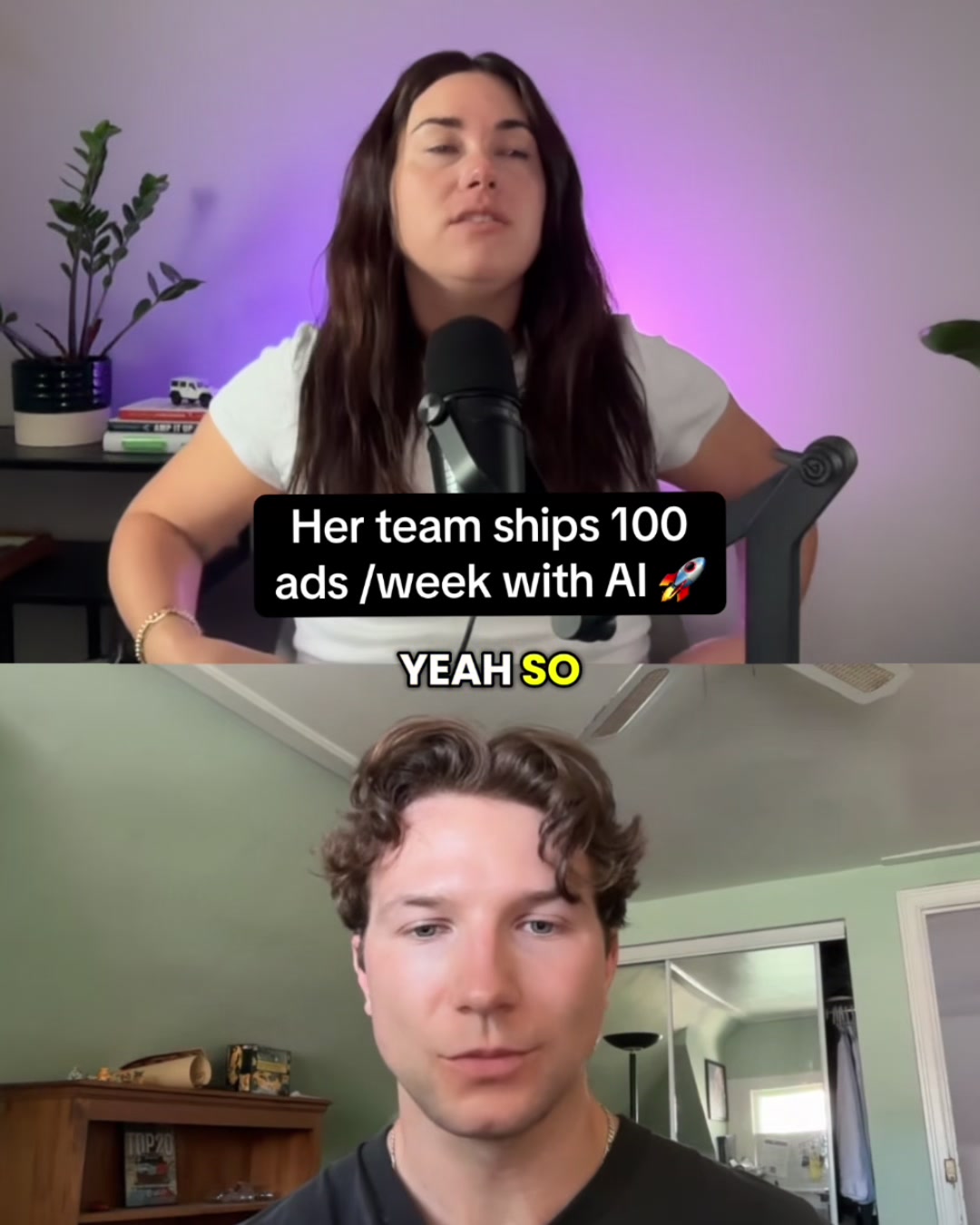
*Her team ships 100 ads a week with AI* -- a customer outcome, told by a customer. **Ran 12 days.**
*POV: you run paid ads and naming conventions are ruining your life* -- a specific, small, true irritation. **Ran 8 days.**
Set those against the 41-day Matrix parody and the 315-day Foreplay explainer, and a pattern emerges that applies to your own ads as much as theirs: **the plainest ad ran twenty-six times longer than the funniest one.** Entertainment buys attention; explanation buys shelf life.
For a buyer, there's a second read. A vendor whose ads are all feature lists and version announcements is selling output. A vendor whose ads name a problem you have is at least thinking about your account.
## How to choose, in order
1. **Name the bottleneck.** Deciding what to make, making it, allocating budget, or doing the work. One of those is costing you more than the others.
2. **Check whether the platform already does it.** Advantage+ and PMax removed most of the reason to buy a bid-management layer.
3. **Ask for the holdout, not the case study.** Any performance claim should come with how it was measured and against what.
4. **Check reachability.** Can an assistant query it, or does every question start with an export?
5. **Buy one layer.** Two tools solving the same bottleneck is the most common waste in this category.
## Where Marxx fits
Marxx sits across the first and the fifth: creative intelligence that decodes every ad by hook type, offer type, ad type, emotion, social proof type, authenticity type and intended audience, and an MCP server that puts all of it inside Claude or ChatGPT.
That means competitors, creative intelligence, gap recommendations, personas and your own ad performance are available as tools the assistant can call -- so "what changed this week, and what should we brief" is a conversation rather than an export. There's a Slack version too: ask what changed, what a competitor shipped, or for a brief on the angle you're missing.
It's **read-only** by design. Every tool on the server is a read, so it's safe to hand to a junior or a client. Publishing happens in the Marxx app, behind approvals, where campaign, ad set and ad are created paused.
## Add the Marxx MCP server to Claude or ChatGPT
Connect your ad accounts, add `https://api.marxx.ai/mcp` as a custom connector, approve it, pick your workspace, and ask for this week's read in plain language. It works with any client that supports remote MCP servers -- Claude, ChatGPT, Cursor, VS Code.
**[Book a demo](/book-a-demo)** and we'll connect it and run your first teardown live on the call. The [MCP server](/mcp) page has the setup steps, and [creative intelligence](/features/creative-intelligence) explains what gets decoded.
## FAQs
### What are the top AI marketing companies in 2026?
They fall into five groups rather than one ranking: creative intelligence and analytics (Motion, Foreplay, Atria, Marxx), media optimisation (Pixis, Smartly, Albert, plus Advantage+ and PMax), generation platforms (AdCreative.ai, Creatify, Arcads), AI-native agencies, and infrastructure or agent layers. Pick by which bottleneck is costing you most.
### What's the difference between an AI marketing platform and an AI marketing agency?
A platform gives you software and leaves the work to your team. An agency does the work and may or may not use its own software to do it. The useful question for an agency is what you keep when the engagement ends -- the assets, the account and the learning, or none of them.
### What is MCP and why does it matter for marketing tools?
Model Context Protocol is a standard way for an AI assistant to call external tools. For marketing it means Claude or ChatGPT can query your ad account directly instead of reading a pasted export -- which turns a static report into something you can ask follow-up questions of.
### Do I need an AI marketing platform if I'm already using Advantage+?
For budget and bid optimisation, often not -- Advantage+ and PMax do that well now. The gap they don't fill is creative: which hook, offer and format to make next, and what your category is already running.
### Which AI marketing companies work best for Indian brands?
Look for Indian-language handling, local review and app-store coverage, and per-workspace rather than per-seat pricing. On the agency side, Digidarts is the clearest example of an Indian performance agency advertising on its own category timing -- its festive ad has outrun its results ad three to one.
### How do I evaluate AI marketing vendors' performance claims?
Ask how it was measured, against what baseline, and on whose data. Then ask for a holdout in your own category. Treat any "estimated spend" or predicted-performance score with the scepticism you'd apply to a horoscope with a confidence interval.
### Should I buy one platform or several?
One per bottleneck. The common failure is buying a generation tool and an analytics tool that both claim to solve creative strategy, then using neither properly.
### What can I learn from these companies' own ads?
More than from their websites. In this set the longest-running ad is a founder explaining plainly what the product does -- 315 days -- while a well-produced parody from a better-funded competitor ran 41. If a vendor's own ads are version announcements and feature lists, that's what they think selling is.
---
- [More Product articles](https://marxx.ai/posts/category/product)
- [All articles](https://marxx.ai/posts)